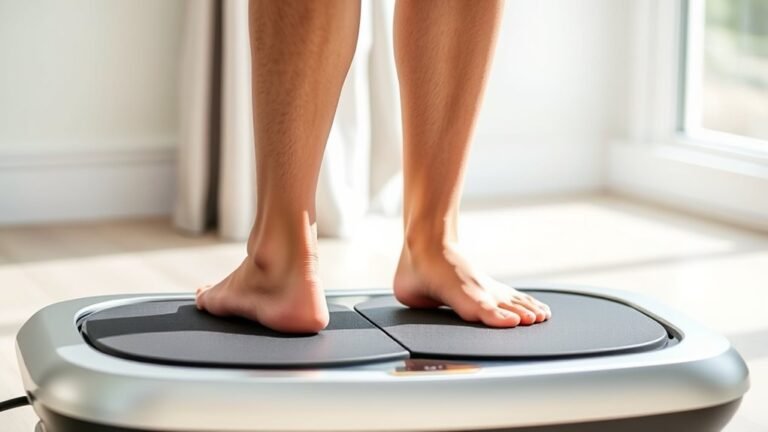
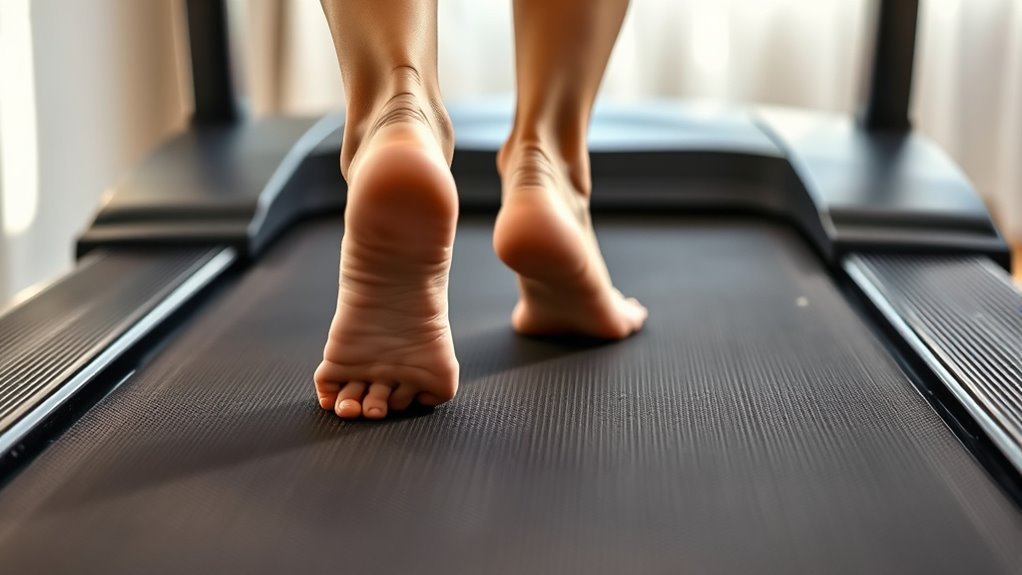
How You Can Safely Walk Barefoot on a Treadmill
To safely walk barefoot on a treadmill, start by preparing your feet. Make sure they are clean and dry, and check for any cuts or irritations. This helps prevent infections or discomfort while you’re walking.
Next, set the treadmill to a low speed and incline. This makes it easier to maintain your balance and reduces the impact on your feet. Remember to keep your posture upright and try to land on your midfoot to avoid strain.
Also, double-check that the treadmill surface is clean and free of debris. This prevents slipping and helps you stay safe. If you feel any discomfort or pain, stop immediately.
Keep these tips in mind to make your barefoot treadmill walking routine effective and enjoyable!
Key Takeaways
- Inspect and clean your feet thoroughly before walking barefoot. This helps prevent irritation or infection.
- Start the treadmill speed at 1-2 mph with a low incline. Then, increase gradually to keep your balance and comfort.
- Keep proper posture, land on your midfoot, and engage your core muscles. This reduces impact and improves stability.
- Make sure the treadmill surface is clean, dry, and free from any debris. This helps you avoid slipping or injuring your feet.
- Stop immediately if you feel pain, swelling, or discomfort. And if the issues persist, consult a healthcare professional.
Benefits of Walking Barefoot on a Treadmill
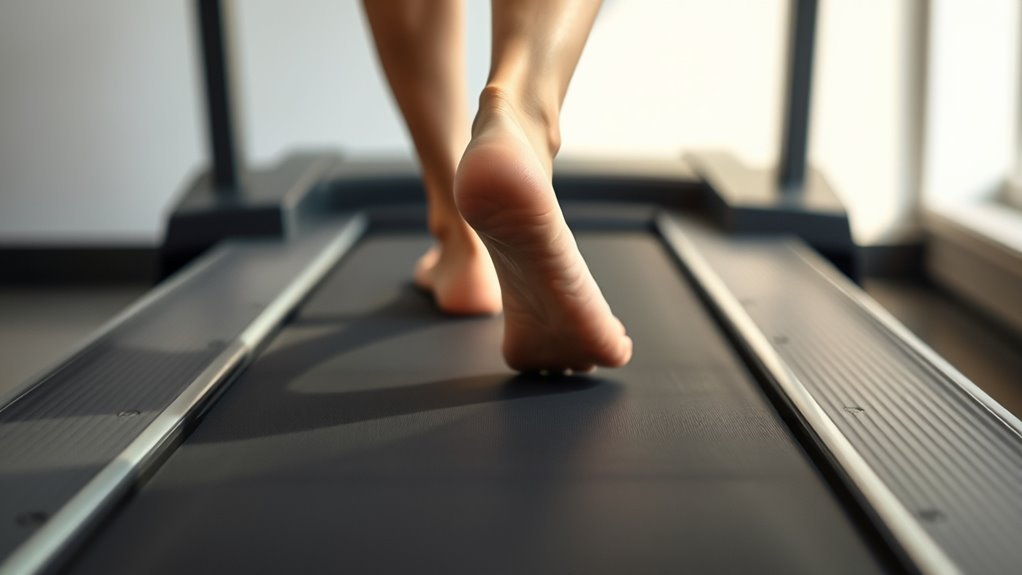
Although walking barefoot on a treadmill might feel unusual at first, you’ll quickly notice several benefits. You’ll improve your balance and posture since your feet engage more muscles to stabilize your body.
This natural movement helps strengthen your foot arches, which can reduce the risk of injuries like plantar fasciitis. Walking barefoot also enhances proprioception, meaning your brain gets better feedback about your foot position, helping you move more efficiently.
Plus, without shoes, you minimize the impact on your joints because your feet absorb shock more naturally. Over time, this can lead to less foot and leg fatigue.
Preparing Your Feet for Barefoot Treadmill Walking
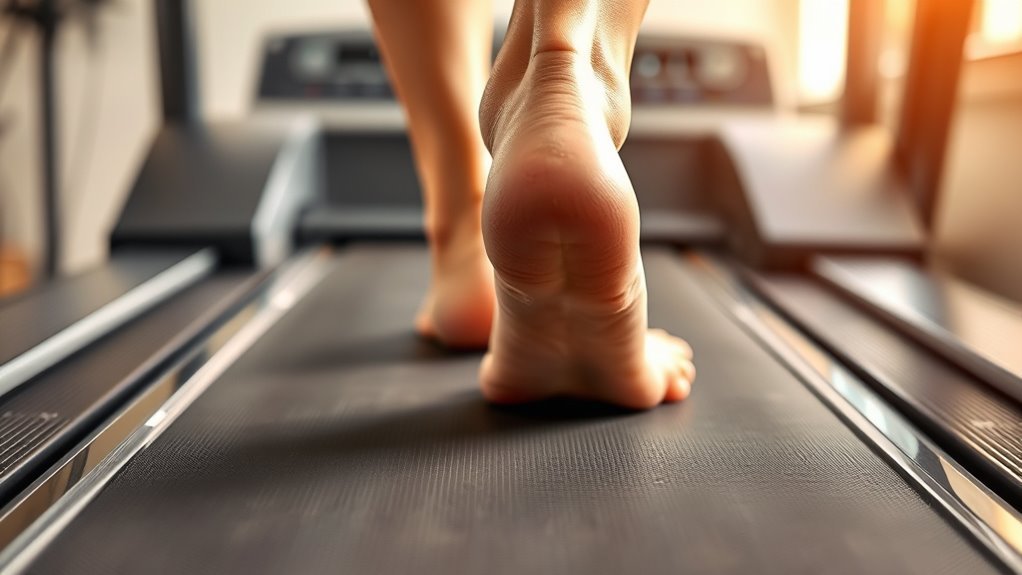
Before you start walking barefoot on a treadmill, you need to prepare your feet to prevent discomfort and injury. Begin by inspecting your feet for any cuts, blisters, or infections. Clean and dry them thoroughly to reduce the risk of irritation.
Prepare your feet by checking for injuries and keeping them clean and dry before barefoot treadmill walking.
Gradually build up your barefoot tolerance by walking barefoot on safe surfaces like carpet or grass for short periods daily. This helps toughen your soles and enhances foot strength.
Stretch your feet and calves to improve flexibility and reduce strain during treadmill walking. Pay attention to your toenails; keep them trimmed to avoid pressure or injury.
Finally, moisturize your feet to prevent cracking but avoid slippery lotions that may cause you to slip. Proper preparation ensures a safer, more comfortable barefoot treadmill experience.
Choosing the Right Treadmill Settings
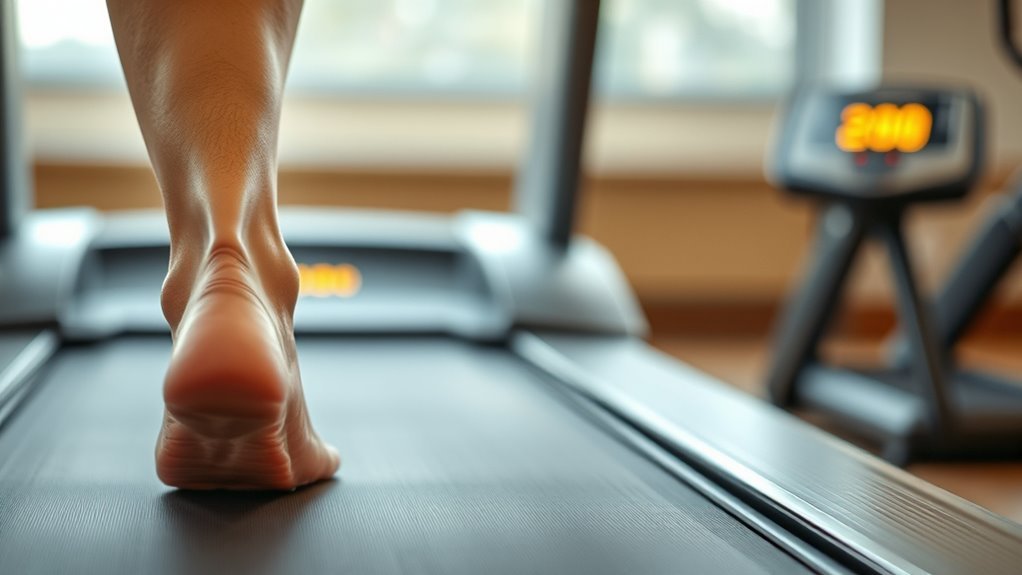
You’ll want to start by selecting a comfortable speed that lets you maintain balance without putting too much strain on your feet.
Adjusting the incline can also help mimic natural walking conditions and reduce impact.
Let’s explore how to find the settings that work best for your barefoot treadmill walk.
Optimal Speed Selection
When selecting the right treadmill speed for walking barefoot, you need to balance comfort and safety carefully. Start at a slow pace—around 1 to 2 miles per hour—to let your feet adjust to the moving surface. This speed reduces the risk of slips and lets you focus on your footing.
As you feel more confident, gradually increase the speed in small increments, never rushing the process. Pay close attention to how your feet and balance respond; if you notice any discomfort or instability, slow down immediately.
Avoid speeds that feel too fast for a relaxed barefoot walk, as higher speeds can increase impact and the chance of injury. Sticking to a moderate, controlled pace ensures a safe and enjoyable barefoot treadmill experience.
Incline Adjustment Tips
Although walking barefoot on a treadmill requires careful attention, adjusting the incline can really enhance your workout and engage different muscle groups. Start with a low incline, around 1-2%, to reduce strain on your feet while building strength.
Gradually increase the incline as you get comfortable, but try to avoid steep angles that put too much pressure on your arches and toes. Pay attention to how your feet feel—if you notice discomfort, it’s a good sign to lower the incline.
Use incline changes to simulate walking uphill, which activates your calves, glutes, and hamstrings more effectively. And don’t forget to keep your pace steady and maintain good posture to prevent injury.
Ensuring a Clean and Safe Treadmill Surface
Before you start walking barefoot on a treadmill, make sure the surface is clean and free of debris. Dust, dirt, or small objects can cause discomfort or even injury to your feet.
Ensure your treadmill surface is clean and debris-free to avoid discomfort or foot injuries when walking barefoot.
Use a damp cloth or mild cleaning solution to wipe down the belt thoroughly. Just avoid harsh chemicals that might leave residues, which could irritate your skin.
Also, check the treadmill for any worn or damaged areas that might pose risks, like rough patches or exposed edges. Keeping the surface clean not only protects your feet but also helps preserve the machine’s longevity.
Taking these simple steps ensures a safer, more comfortable barefoot walking experience every time you use your treadmill. It’s worth the little extra effort!
Techniques for Proper Barefoot Walking Form
Mastering proper barefoot walking form on a treadmill helps you avoid injury and maximize comfort. To do this effectively, focus on three key techniques:
First, land midfoot. Instead of striking with your heel or toes, place your foot flat in the middle. This reduces impact stress and promotes better balance.
Next, maintain an upright posture. Keep your back straight and shoulders relaxed. This alignment supports natural movement and prevents strain.
Finally, engage your core muscles. Activate your abs to stabilize your body, which enhances control and reduces the risk of overcompensation injuries. Give these a try, and you’ll notice the difference!
Monitoring Your Feet for Signs of Discomfort or Injury
You’ll want to keep a close eye on your feet for any early signs of injury or discomfort while walking barefoot on a treadmill. Regularly check your skin for cuts, blisters, or irritation that could worsen over time.
Pay attention to any unusual pain or sensations and stop immediately if something feels off. It’s better to be safe and give your feet a break than to push through pain. Keep in mind, your feet are working hard, so treat them with care!
Early Injury Signs
How can you tell if walking barefoot on a treadmill is causing harm to your feet? Pay close attention to early injury signs so you can stop before problems worsen.
Here are three key indicators to watch for:
- Persistent pain: If you feel ongoing soreness or sharp pain during or after your walk, it’s a red flag.
- Swelling: Noticeable puffiness around your toes, arches, or heels signals irritation or injury.
- Reduced mobility: Stiffness or difficulty moving your foot or toes means something’s off.
If you spot any of these signs, pause your barefoot treadmill sessions and give your feet time to recover. Early detection lets you adjust your routine and prevent more serious damage.
Skin Condition Checks
Keeping an eye on your skin’s condition helps catch discomfort or injury early when walking barefoot on a treadmill. After each session, take a moment to inspect your feet closely. Look for redness, blisters, cuts, or any unusual marks that weren’t there before.
Pay special attention to pressure points like the heels, balls of your feet, and toes. If you notice any skin peeling or rough patches, it might indicate friction or irritation. Regular checks let you address minor issues before they worsen.
Clean your feet thoroughly to prevent infections, especially if you spot broken skin. By staying vigilant about your skin’s health, you’ll maintain comfort and reduce risks while enjoying barefoot treadmill walking safely and effectively.
Pain and Sensation Monitoring
Although walking barefoot on a treadmill can feel natural, pay close attention to any pain or unusual sensations in your feet. Ignoring discomfort can lead to injuries or worsen existing issues.
To monitor your feet effectively:
- Stop immediately if you feel sharp or persistent pain to prevent further damage.
- Inspect your feet regularly during breaks for redness, swelling, or blisters indicating irritation.
- Adjust your pace or treadmill settings if you notice numbness or tingling, which may signal nerve stress.
Incorporating Barefoot Walking Into Your Fitness Routine
When you add barefoot walking to your fitness routine, you engage muscles in your feet and legs that shoes often neglect. Start slowly by incorporating short barefoot sessions on the treadmill, allowing your body to adapt.
Gradually increase the duration as your feet strengthen and your balance improves. Focus on maintaining good posture and a steady pace to maximize benefits and reduce the risk of injury.
Barefoot walking can enhance proprioception, improve foot arch support, and promote natural gait patterns. Combine it with other exercises like stretching and strength training for a well-rounded approach.
Remember to listen to your body—if you feel discomfort or unusual pain, pause and reassess. With consistent practice, barefoot walking can become a valuable, effective part of your fitness regimen.
When to Avoid Barefoot Walking on a Treadmill
If you experience foot pain, skin irritations, or balance issues, you should avoid walking barefoot on a treadmill. Your safety and comfort come first.
Here are three specific situations when barefoot walking isn’t a good idea:
- Open wounds or cuts: Walking barefoot can worsen infections or cause further injury.
- Slippery treadmill surface: If the belt is slick, you risk slipping and falling without shoes to grip.
- High-speed workouts: Barefoot walking at faster speeds increases the chance of losing balance and hurting yourself.
Pay attention to how your body feels and the treadmill’s condition. If any of these factors apply, stick to wearing proper footwear until it’s safe to go barefoot again.
Frequently Asked Questions
Can Barefoot Treadmill Walking Improve Balance Outside of Exercise?
Yes, walking barefoot on a treadmill can improve your balance outside exercise by strengthening foot muscles and enhancing proprioception.
Just be careful to start slow and make certain the treadmill surface is clean and safe for barefoot use.
Is Barefoot Treadmill Walking Suitable for Children?
Barefoot treadmill walking for kids is a double-edged sword; you shouldn’t rush it.
If you guarantee proper supervision and gradual introduction, you can help your child develop balance and foot strength safely without risking injury.
It’s all about taking it slow and keeping an eye on them. That way, they get the benefits without the setbacks.
How Does Barefoot Treadmill Walking Affect Foot Odor?
Barefoot treadmill walking can increase foot odor since sweat directly contacts the belt, creating bacteria-friendly conditions. You should clean your feet and treadmill regularly to minimize odor and maintain hygiene after your barefoot workouts.
It’s a good idea to give your feet a quick wash and dry after you finish walking. Also, wiping down the treadmill belt helps keep things fresh and prevents smelly buildup. Taking these simple steps can make a big difference!
Can Barefoot Treadmill Walking Help With Plantar Fasciitis?
Sure, barefoot treadmill walking can help with plantar fasciitis by strengthening your foot muscles and improving flexibility.
Just don’t expect it to magically erase pain overnight—your feet aren’t superheroes, after all!
Are There Specific Treadmill Brands Better for Barefoot Walking?
Yes, some treadmills like NordicTrack and Sole offer cushioned belts ideal for barefoot walking.
You’ll want a model with shock absorption and a smooth surface to protect your feet and enhance comfort during barefoot sessions.
These features help reduce impact and make your barefoot walk more enjoyable.
Conclusion
Walking barefoot on a treadmill lets you reconnect with your body’s natural rhythm, like feeling the earth beneath your feet even indoors. By preparing properly and tuning your settings, you’ll glide safely, turning each step into a mindful dance.
Listen closely to your feet’s whispers, and weave barefoot walking thoughtfully into your routine. When done right, it’s not just exercise—it’s a barefoot journey toward balance and strength, grounding you in every stride.
Barefoot treadmill walking can boost your foot muscles and improve posture. Just make sure your treadmill surface is clean and your pace is comfortable to avoid slips or injuries. With the right care and attention, walking barefoot on a treadmill becomes a safe and effective practice that enhances your connection to your body and promotes overall wellness.