3 Key Factors That Determine How Heavy a Treadmill Is
You’ll find a treadmill’s weight mainly depends on three key factors: the frame material, motor size, and added features. These elements play a big role in determining how heavy your treadmill is, so understanding them can help you pick the right one for your needs.
Steel frames make your treadmill heavier but sturdier, while aluminum keeps it lighter but less durable. Bigger motors with stronger components add significant weight for smooth performance.
Plus, extra features like incline systems and touchscreens contribute additional mass. Keep these in mind if you want the perfect balance between portability and durability, and there’s more to explore about each factor.
Key Takeaways
- The treadmill frame material and build quality significantly affect its weight. Steel frames tend to be heavier and more stable compared to aluminum ones.
- Motor size and internal components, like belts and rollers, also add to the treadmill’s weight. Bigger motors usually mean a heavier machine.
- Extra features such as built-in speakers, touchscreens, and motorized incline systems add weight because they increase mechanical complexity.
- Structural reinforcements, including thicker tubing and reinforced joints, make the treadmill heavier too. But these add-ons boost durability and safety.
- There’s always a balance between durability and portability when it comes to treadmill weight. Heavier treadmills offer more stability but can be tougher to move around.
Frame Material and Build Quality

Because the frame forms the treadmill’s core structure, its material and build quality directly affect the machine’s weight. When you choose a treadmill with a steel frame, expect it to be heavier and sturdier, providing better stability during workouts.
Aluminum frames, on the other hand, tend to be lighter but might sacrifice some durability. You’ll notice that higher-quality frames often feature reinforced joints and thicker tubing, which add to the overall weight but improve longevity and safety.
If you want a treadmill that feels solid underfoot and won’t wobble, look for models with robust construction. Keep in mind, though, that a heavier frame usually means less portability, so if you plan to move your treadmill frequently, consider the trade-off between durability and ease of transport.
Motor Size and Components

When you choose a treadmill, the motor size and internal components play a major role in determining its weight. Larger motors designed for higher horsepower add significant heft, as do robust internal parts like heavy-duty belts and reinforced rollers.
These elements guarantee durability and smooth operation but increase the treadmill’s overall mass. Understanding how motor specs relate to weight helps you pick the right model for your needs and space.
| Motor Size (HP) | Typical Weight Impact | Component Notes |
|---|---|---|
| 1.5 HP | Light (50-100 lbs) | Basic motor, lightweight |
| 2.5 HP | Medium (100-150 lbs) | Moderate components |
| 3.5 HP+ | Heavy (150+ lbs) | Heavy-duty motor & parts |
Heavier motors mean sturdier machines but more weight to manage. So, it’s a trade-off between durability and portability. Keep that in mind when making your choice!
Additional Features and Accessories
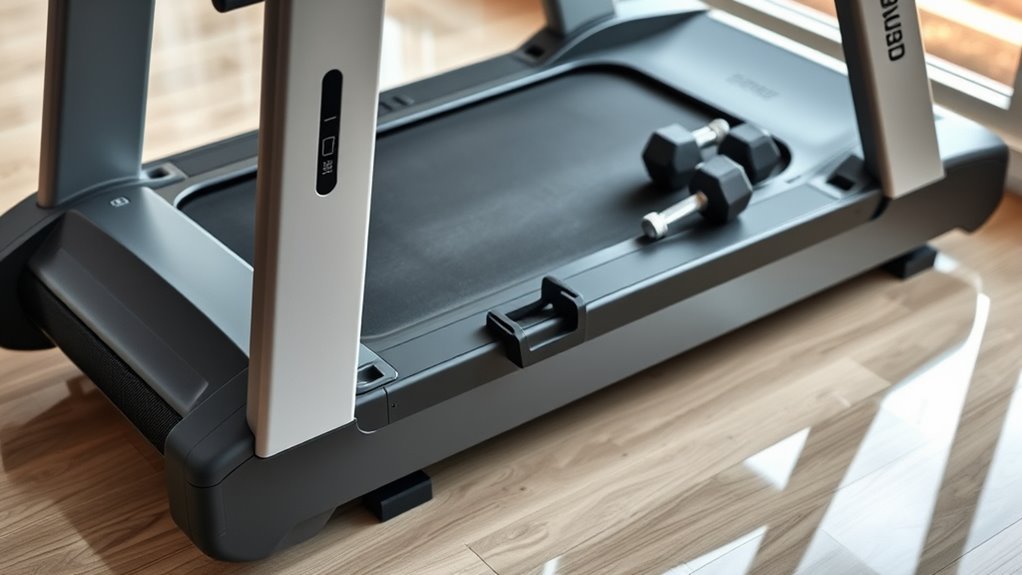
Although additional features and accessories can enhance your treadmill experience, they often add extra weight to the machine. Items like built-in speakers, touchscreens, and cooling fans require sturdy frames and extra wiring, contributing to the treadmill’s overall heft.
You’ll also find that features such as motorized incline systems and advanced cushioning add bulk due to their mechanical complexity. If your treadmill includes storage compartments, water bottle holders, or accessory trays, these add small but noticeable weight increments.
While these extras improve convenience and enjoyment, they make the treadmill less portable and harder to move around. So, if you prioritize a lightweight treadmill, consider limiting additional features.
Balancing your need for functionality and portability will help you select a treadmill that fits your lifestyle without unnecessary heaviness.
Frequently Asked Questions
How Does Treadmill Weight Affect Shipping Costs?
Treadmill weight directly increases your shipping costs since heavier items require more fuel and handling. You’ll likely pay more for heavier treadmills, especially if the shipping service charges by weight or size.
Can Treadmill Weight Impact Floor Damage Risk?
Yes, heavier treadmills can cause creaks and cracks, crushing your floors. You’ll want to place protective padding or mats to prevent pressure points.
This helps preserve your pristine flooring from potential pounding and permanent pits. It’s a simple step that can save you a lot of trouble down the line.
Does Treadmill Weight Influence Noise Levels?
Yes, heavier treadmills generally produce less noise because their weight helps stabilize the machine and reduce vibrations.
You’ll find lighter models tend to be noisier since they don’t absorb impact as well during workouts. So, if noise is a concern, leaning towards a heavier treadmill might be a smart move.
Are Heavier Treadmills Harder to Assemble?
Heavier treadmills can be harder to assemble because they’re bulkier and more cumbersome to handle.
But with clear instructions and a helper, you’ll manage the process smoothly without too much hassle or frustration.
How Does Treadmill Weight Relate to Workout Stability?
Picture steady roots anchoring a tree; heavier treadmills provide that same solid foundation. So you won’t wobble during your workout.
You’ll feel stable, confident, and focused. That lets you push harder without distraction or risk.
Conclusion
When choosing a treadmill, remember its weight is like the heartbeat of its strength and durability. The frame material and build quality form its sturdy skeleton, while the motor size powers its pulse.
Additional features add layers, like muscles and skin, making it heavier but more capable.
By understanding these key factors, you’ll carry the weight of your decision with confidence. Knowing your treadmill’s weight helps ensure it supports your fitness journey every step of the way. So, keep these three key factors in mind when looking for a treadmill to find the perfect balance of durability, power, and functionality. This way, you’ll choose a treadmill that’s just right for your home gym and workout needs.