How Long Does a Treadmill Stress Test Last?
A treadmill stress test typically lasts about 10 to 15 minutes, including warm-up, exercise, and cool-down phases.
This test helps evaluate how your heart responds to physical activity by gradually increasing the speed and incline of the treadmill.
You’ll start slowly, then the speed and incline will increase to raise your heart rate.
The test’s length may vary based on your fitness and health.
If you experience symptoms or reach your target heart rate sooner, the test might end early.
Keep exploring to understand what happens before, during, and after the test.
It’s a straightforward way to check your heart’s health, and knowing what to expect can make the experience less intimidating.
Key Takeaways
- A treadmill stress test typically lasts between 10 to 15 minutes, including warm-up, exercise, and cool-down phases.
- The exercise phase involves gradually increasing speed and incline to raise heart rate safely. Overall health, fitness level, and test protocol can affect the test’s total duration.
- The test may end early if the target heart rate is reached or symptoms occur.
- After the test, monitoring continues for a few minutes until heart rate and blood pressure stabilize. This helps make sure everything is back to normal before you leave.
Purpose of a Treadmill Stress Test

Although you might feel nervous, the purpose of a treadmill stress test is to evaluate how well your heart functions during physical activity. When you walk or run on the treadmill, your heart rate increases, allowing doctors to observe how your heart responds under stress.
This test helps identify any abnormal heart rhythms, reduced blood flow, or other issues that might not appear when you’re at rest. By monitoring your heart’s electrical activity with electrodes, the test provides valuable information about your heart’s health and endurance.
It’s especially useful if you’ve been experiencing chest pain, shortness of breath, or fatigue during exercise. Ultimately, the treadmill stress test helps your healthcare provider make informed decisions about your treatment and overall heart health.
Typical Duration of the Test
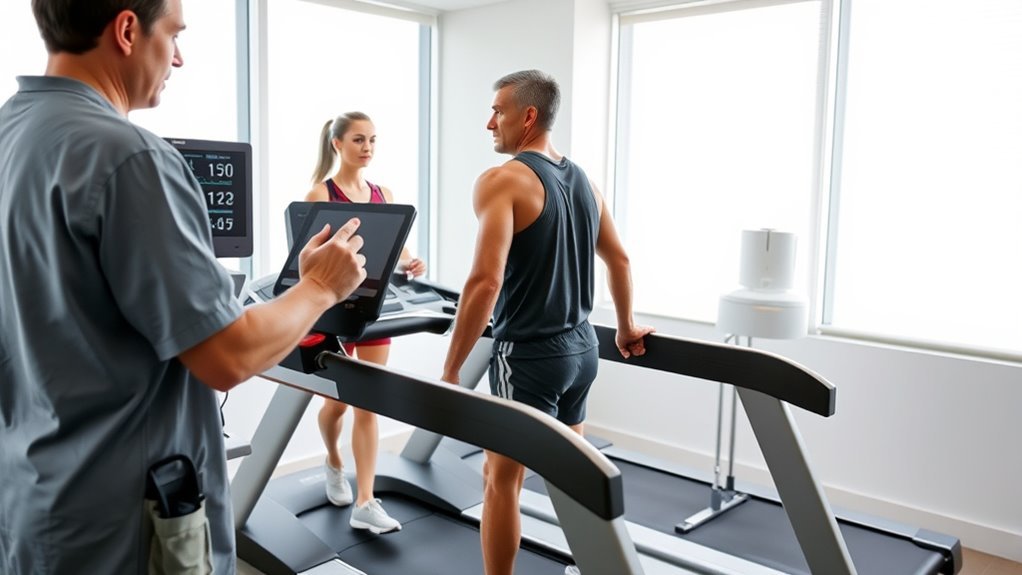
While the exact length can vary, a typical treadmill stress test usually lasts between 10 to 15 minutes. During this time, you’ll walk on the treadmill while the speed and incline gradually increase.
The goal is to raise your heart rate to a target level that helps doctors assess your heart’s performance under stress.
Here’s a quick breakdown of what to expect:
- Warm-up phase: A few minutes at a slow pace to get your body ready.
- Exercise phase: The treadmill speeds up and inclines incrementally as you continue walking or jogging.
- Cool-down phase: A short period where the treadmill slows down, allowing your heart rate to return to normal.
This entire process gives your doctor valuable insights into your cardiovascular health.
Factors That Affect Test Length
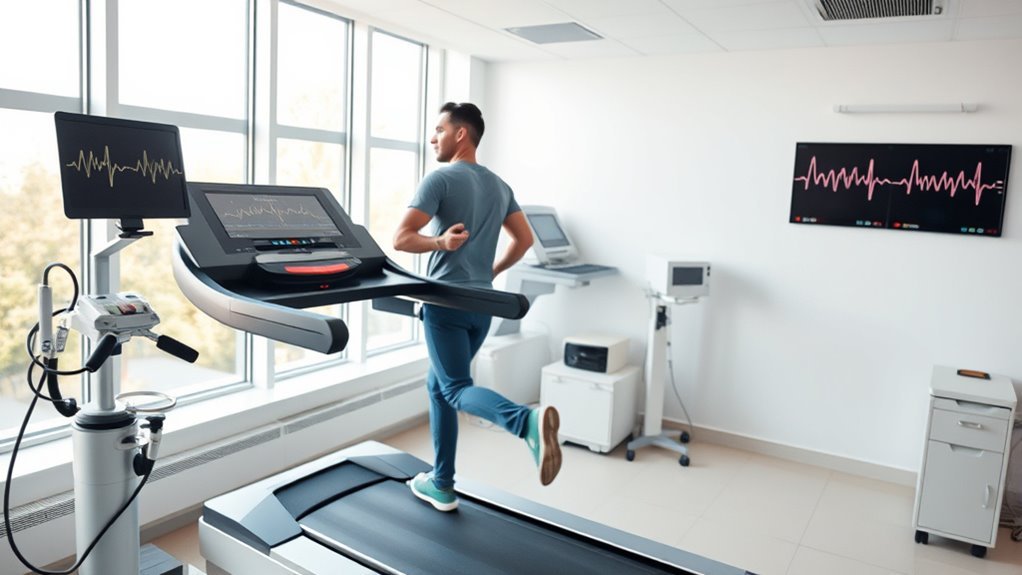
Because everyone’s fitness level and medical condition differ, the length of your treadmill stress test can vary accordingly. Your overall health plays a big role; if you have heart issues or symptoms, the test might end sooner for safety.
Your fitness level also matters—if you’re in great shape, you can usually keep going longer, pushing through higher speeds and inclines. The specific protocol your doctor chooses impacts timing too, as some use shorter or longer stages depending on what they’re checking.
Additionally, how your body responds during the test affects its duration; if your heart rate reaches a target or you experience discomfort, the technician will stop the test. Understanding these factors helps you know why your test might last more or less than average.
What Happens Before the Test
Before your treadmill stress test, you’ll undergo a medical evaluation to guarantee it’s safe for you to proceed.
You’ll also get instructions on how to prepare, like what to wear and when to avoid eating or drinking. Following these steps helps make the test accurate and comfortable.
Pre-Test Medical Evaluation
Although the treadmill stress test itself only takes a short time, your doctor will first conduct a thorough pre-test medical evaluation to make certain of your safety and accuracy of results.
This evaluation helps identify any risks and guarantees the test is appropriate for you.
During this evaluation, your doctor will:
- Review your medical history, including heart conditions, medications, and symptoms.
- Perform a physical exam to check essential signs like blood pressure and heart rate.
- Discuss any factors that might affect the test, such as recent illnesses or injuries.
Preparing for the Test
When you arrive for the treadmill stress test, staff will guide you through the steps to get ready, making sure you understand what to expect and feel comfortable throughout the process.
First, they’ll ask you to change into comfortable clothing and shoes suitable for exercise. You’ll then lie down so technicians can attach electrodes to your chest, which monitor your heart’s electrical activity during the test.
They’ll also place a blood pressure cuff on your arm to track your blood pressure at intervals. Before starting, the technician will explain the treadmill’s speed and incline changes and remind you to inform them if you feel dizzy or experience any discomfort.
This preparation helps guarantee accurate results and your safety throughout the test.
Stages of the Stress Test Procedure
Since the treadmill stress test measures how well your heart performs under physical exertion, it follows a series of carefully timed stages. You’ll move through these phases to guarantee accurate results while monitoring your heart’s response.
- Resting Phase: Before you start walking, you’ll rest while your baseline heart rate, blood pressure, and ECG are recorded.
- Exercise Phase: You’ll walk on the treadmill as speed and incline gradually increase, pushing your heart to work harder. Meanwhile, continuous monitoring happens to keep track of how your heart responds.
- Recovery Phase: After you stop exercising, you’ll rest while the technician observes how quickly your heart rate and blood pressure return to normal.
Each stage is essential. The entire procedure usually lasts about 10 to 15 minutes.
What to Expect After the Test
After the treadmill stress test ends, you’ll spend a few minutes resting while the technician continues to monitor your heart rate and blood pressure to make certain everything returns to normal safely.
You might feel tired or a bit lightheaded, but these sensations usually fade quickly.
Once the technician confirms your vitals are stable, you’re free to leave.
Your doctor will review the results and discuss any necessary next steps with you.
| Feeling After Test | What It Means |
|---|---|
| Fatigue | Normal, due to exertion |
| Lightheadedness | Temporary, should subside |
| Relief or Anxiety | Common emotional responses |
How to Prepare for the Test
Although the treadmill stress test is straightforward, preparing properly can help guarantee accurate results and a smooth experience. To get ready, follow these steps:
Proper preparation ensures accurate results and a smooth experience during your treadmill stress test.
- Wear comfortable clothing and shoes. Choose lightweight clothes and supportive sneakers so you can move freely during the test.
- Avoid eating, smoking, or drinking caffeine for at least three hours before the test. This helps prevent interference with your heart rate and blood pressure.
- Take your medications as directed. Unless your doctor tells you otherwise, keep taking your regular medications to make sure the monitoring is accurate.
Signs That May End the Test Early
Getting ready for the treadmill stress test sets the stage, but knowing what might cause the test to stop early is just as important. If you experience chest pain, dizziness, or severe shortness of breath, the technician will immediately halt the test for your safety.
Irregular heart rhythms or a significant drop in blood pressure also signal the need to stop. You might feel extreme fatigue or muscle weakness, which can end the test sooner than planned.
Additionally, if your heart rate reaches a targeted maximum or if the ECG shows concerning changes, the test will conclude early. Recognizing these signs helps guarantee your well-being while providing accurate results to your healthcare provider.
Always communicate any discomfort during the test to avoid risks. It’s better to speak up than push through something that could be harmful.
Frequently Asked Questions
Can I Eat or Drink Before a Treadmill Stress Test?
You shouldn’t eat a heavy meal before your treadmill stress test, but drinking small sips of water is usually fine.
It’s a good idea to avoid caffeine or alcohol for at least a few hours beforehand. This helps guarantee accurate test results.
Is the Treadmill Stress Test Painful?
The treadmill stress test isn’t painful, like walking up a gentle hill.
You might feel tired or short of breath, but your doctor monitors you closely to keep you safe and comfortable throughout the test.
It’s all about checking how your heart handles exercise without causing discomfort.
Are There Any Risks Associated With the Treadmill Stress Test?
Yes, there are some risks, like irregular heartbeats or chest pain, but they’re rare. Your doctor monitors you closely to keep things safe, so don’t worry—
you’re in good hands during the treadmill stress test.
How Accurate Is a Treadmill Stress Test?
Think of a treadmill stress test as a detective—it’s pretty accurate at spotting heart issues during exercise, but it’s not perfect.
You’ll get valuable clues, though sometimes additional tests are needed for a full picture.
Can a Treadmill Stress Test Detect All Heart Problems?
No, a treadmill stress test can’t detect all heart problems. It’s great for spotting issues during exercise, but some conditions might need other tests.
Things like echocardiograms or angiograms might be necessary to get a full picture and make a complete diagnosis. So, it’s often just one part of the puzzle.
Conclusion
A treadmill stress test usually lasts about 10 to 15 minutes, but remember, your heart’s performance is the real clockkeeper here. You’ll go through stages that gradually push your limits, giving doctors a clear picture of your heart health.
Preparing well and knowing what to expect can make the process smoother. So, stay calm and trust the test—it’s like a spotlight shining on your heart’s strength.
This test helps catch issues before they grow, making it an important tool in evaluating your cardiovascular health. Understanding how long a treadmill stress test lasts and what happens during it can ease any anxiety you might have. In short, the treadmill stress test is a key step in monitoring your heart’s condition, giving doctors valuable insights to keep you healthy.