How Many Calories Do You Burn on a Vibration Plate
You can burn between 90 and 250 calories in a 30-minute session on a vibration plate, depending on your body weight and workout intensity.
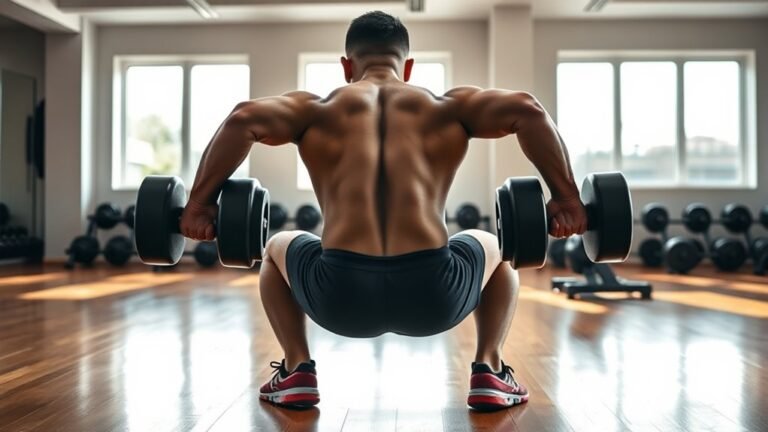
Using higher vibration speeds, adding dynamic movements like squats, and engaging multiple muscle groups boosts calorie burn.
While it burns fewer calories than running, it strengthens muscles, improves circulation, and supports flexibility.
This makes vibration plate workouts a great addition to your fitness routine.
Keep going to discover how to maximize your results and combine vibration with other exercises for the best effect.
It’s all about finding what works best for you and staying consistent!
Key Takeaways
- A 30-minute vibration plate session typically burns between 90 and 250 calories depending on intensity and exercise type.
- Light vibration exercises burn about 90–110 calories, while intense workouts can burn up to 250 calories per session.
- Combining vibration with strength training increases calorie burn, reaching around 220–250 calories in 30 minutes.
- Body weight, workout duration, and vibration settings significantly influence total calories burned on the plate.
- Vibration plates burn fewer calories than traditional cardio but enhance muscle tone, circulation, and overall fitness benefits.
So, while you might not torch as many calories as a run or bike ride, the other perks make vibration plates worth considering.
Understanding Vibration Plate Technology
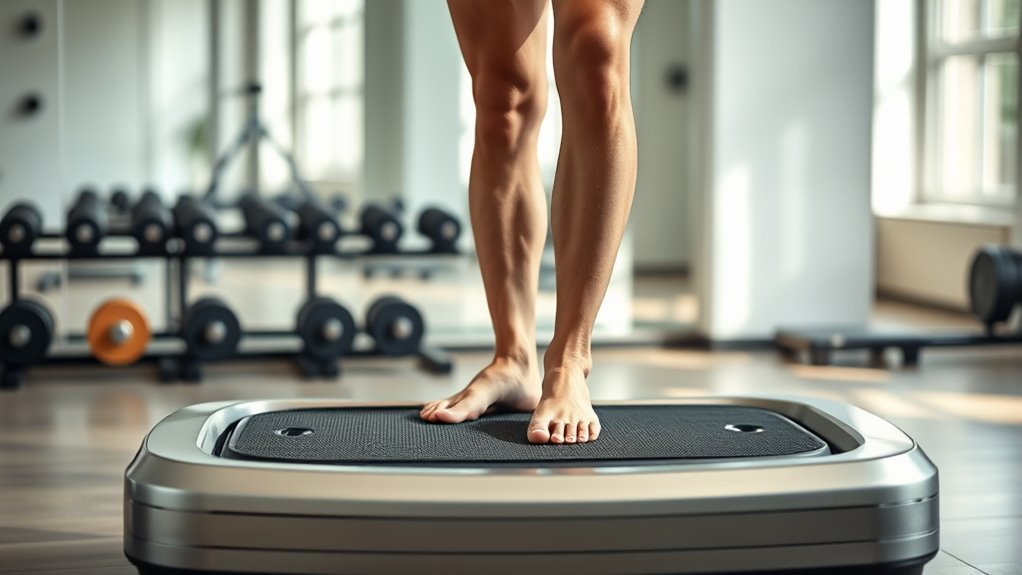
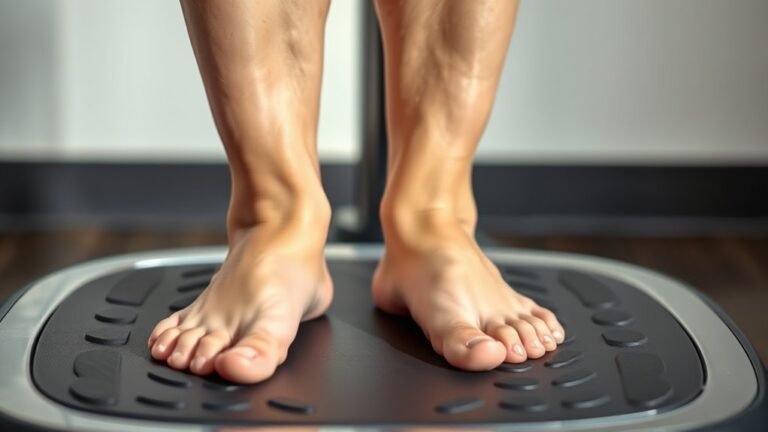
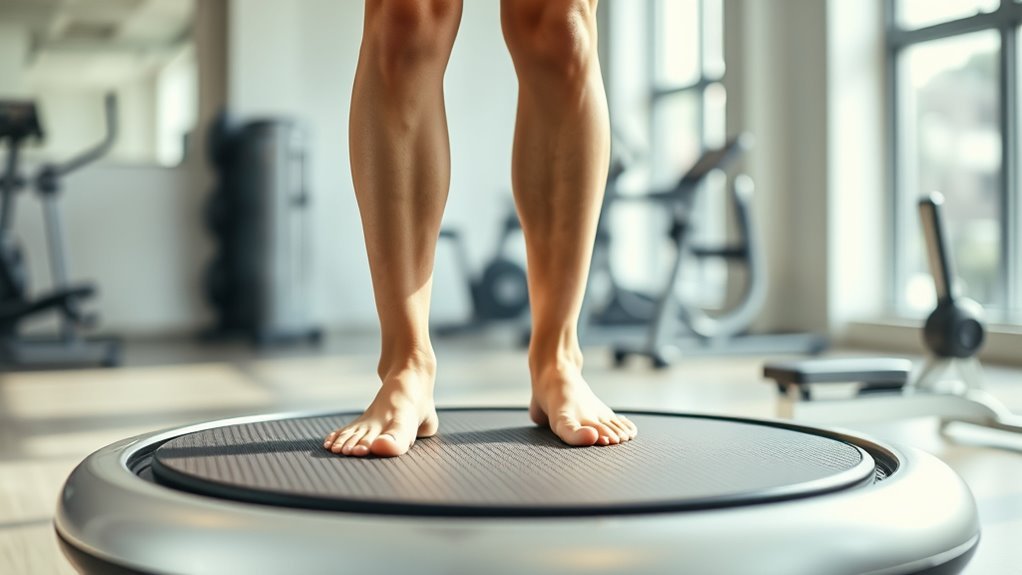
Although vibration plates might seem like simple exercise tools, they use advanced technology to stimulate your muscles. When you stand or perform exercises on the plate, it rapidly vibrates, creating mechanical oscillations.
These vibrations cause your muscles to contract and relax multiple times per second, much faster than you could on your own. This involuntary muscle activation enhances muscle engagement, making your workout more efficient.
The vibration frequency and amplitude determine how intensely your muscles respond. By activating more muscle fibers in less time, the technology boosts muscle strength, coordination, and circulation.
Understanding this mechanism helps you appreciate how vibration plates can complement your fitness routine, offering a unique way to engage muscles without traditional movement. Pretty cool, right?
Factors Affecting Calorie Burn on Vibration Plates
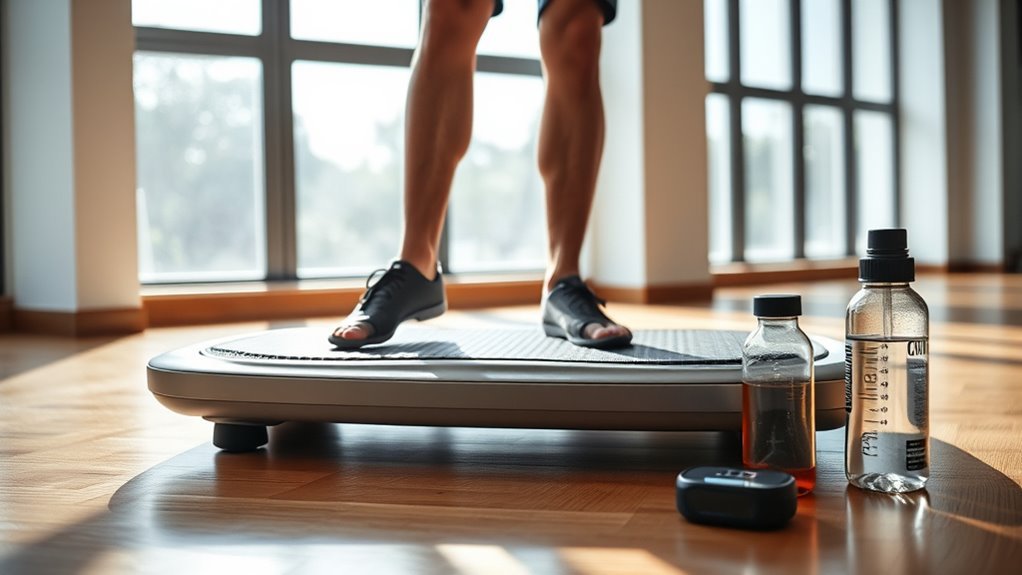
Because calorie burn varies widely on vibration plates, you need to understand the key factors that influence how many calories you can burn during a session. First, your body weight plays a major role—heavier individuals tend to burn more calories.
Next, the intensity and duration of your workout affect the total calorie burn; longer and more intense sessions increase energy expenditure. The vibration frequency and amplitude also matter since higher settings stimulate more muscle contractions, boosting calorie use.
Increasing workout intensity, duration, and vibration settings amplifies muscle contractions and boosts calorie burn.
Additionally, the types of exercises you perform on the plate impact results; dynamic movements engage more muscles than simply standing still. Finally, your fitness level influences efficiency—beginners might burn fewer calories initially but improve over time as muscle engagement increases.
Tailoring these factors will help you maximize your calorie burn. So, mix it up and find what works best for you!
Average Calorie Burn Estimates During Vibration Plate Use
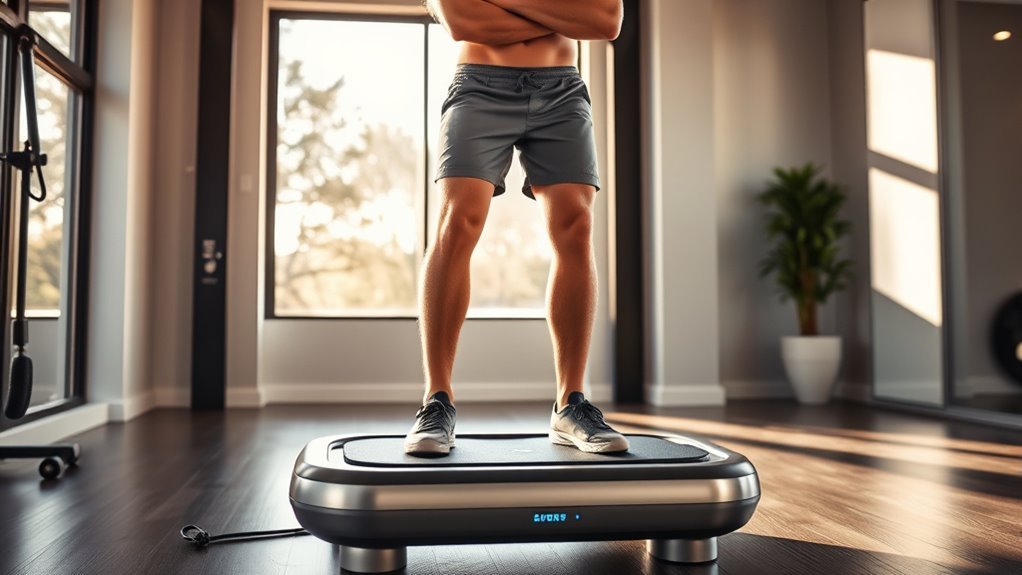
While the exact number of calories you burn on a vibration plate depends on various factors, you can expect to burn between 90 and 250 calories during a typical 30-minute session. The range varies based on intensity, body weight, and workout type.
Here’s a quick look at average calorie burn estimates:
| Activity Type | Calories Burned (30 min) |
|---|---|
| Light Vibration Standing | 90 – 110 |
| Moderate Vibration Exercises | 130 – 180 |
| Intense Vibration Workouts | 200 – 250 |
| Combined Vibration & Strength Training | 220 – 250 |
These estimates give you a good idea of how much energy you might expend. It makes it easier to plan your workouts and keep track of your progress.
Comparing Vibration Plate Workouts to Traditional Exercises
Now that you know how many calories you can burn on a vibration plate, it’s helpful to see how these workouts stack up against traditional exercises. Vibration plates typically burn fewer calories than activities like running or cycling because they rely more on muscle stimulation than sustained cardiovascular effort.
However, they can still complement your routine by engaging muscles in a way traditional exercises might not. For example, while running can burn 600+ calories per hour, a 30-minute vibration plate session might burn around 100-150 calories.
This doesn’t mean vibration plates are ineffective; they’re great for improving muscle tone, flexibility, and circulation. If your goal is calorie burn alone, traditional cardio exercises usually outperform vibration workouts.
But, combining both can maximize overall fitness benefits. So, why not mix them up for the best results?
How Workout Intensity Influences Calorie Expenditure
Although vibration plate workouts offer unique benefits, the intensity of your session plays a crucial role in how many calories you burn. When you increase the speed, amplitude, or duration of your exercises on the plate, your muscles have to work harder, boosting calorie expenditure.
Adding dynamic movements like squats or lunges instead of just standing still also raises intensity, making your body engage more muscle groups. The harder you push yourself, the more energy your body consumes both during and after your workout.
However, maintaining proper form is essential to avoid injury as you ramp up intensity. So, if you want to maximize calorie burn on a vibration plate, focus on challenging yourself progressively and incorporating active, intense movements rather than just passive vibration.
Combining Vibration Plates With Other Fitness Activities
You can boost your calorie burn by combining vibration plate sessions with cardio and strength training. Using them together helps you work muscles more efficiently and enhances overall workout benefits.
Let’s explore how to sync these activities for maximum results. It’s all about finding the right balance and timing so you get the most out of each workout.
Synergizing Workouts Efficiently
When you combine vibration plate exercises with traditional workouts, you can boost your overall calorie burn and muscle engagement. The vibration plate activates more muscle fibers, making your strength training or stretching sessions more effective.
By alternating between vibration and conventional exercises, you maximize workout efficiency without extending your gym time. Here’s a quick guide to synergizing your workouts:
| Workout Type | Vibration Plate Benefit |
|---|---|
| Strength Training | Increases muscle activation |
| Yoga & Stretching | Enhances flexibility and balance |
| Bodyweight Exercises | Boosts calorie burn and endurance |
Mix these smartly, and you’ll see improvements in strength, tone, and stamina while torching more calories than doing each alone. Give it a try—you might just love the results!
Enhancing Cardio Benefits
Building on how vibration plates amplify strength and flexibility workouts, they also offer unique advantages when paired with cardio activities. You can enhance your cardio sessions by incorporating a vibration plate before or after your routine to boost circulation and muscle activation.
For example, using the plate for a few minutes prior can warm up muscles, making your cardio more effective and reducing injury risk. After cardio, it aids recovery by promoting blood flow and reducing muscle soreness.
Additionally, combining light aerobic exercises like step-ups or jogging in place on the vibration plate increases calorie burn and challenges your balance and coordination. This combination makes your cardio workouts more dynamic and efficient, helping you burn more calories in less time while improving overall fitness.
Strength Training Integration
Although vibration plates offer standalone benefits, integrating them with your strength training routine can substantially enhance muscle activation and overall workout effectiveness. When you perform exercises like squats, lunges, or push-ups on the plate, the vibrations force your muscles to contract more intensely, boosting strength gains.
You’ll also increase calorie burn by engaging more muscle fibers simultaneously. To maximize results, start with simple bodyweight moves on the plate, then gradually add weights as you get comfortable.
This combination not only improves muscle tone but also enhances balance and coordination. By blending vibration plate sessions with traditional strength workouts, you create a dynamic exercise environment that challenges your body in new ways.
It helps you burn more calories and build muscle more efficiently. So, why not give it a try and see the difference it makes in your fitness routine?
Benefits Beyond Calorie Burning on Vibration Plates
Since vibration plates stimulate your muscles through rapid oscillations, they offer more than just calorie burning. You’ll notice improved muscle strength and tone as the vibrations force your muscles to contract and relax multiple times per second.
Vibration plates enhance muscle strength and tone by rapidly contracting and relaxing your muscles multiple times per second.
This boosts circulation, helping reduce muscle soreness and stiffness. Using a vibration plate regularly can also enhance your balance and coordination by activating your core muscles and stabilizers.
Plus, it promotes better flexibility by loosening tight muscles and joints. For those struggling with bone density, the mechanical stimulation may support bone health.
Additionally, vibration plates can aid relaxation and stress relief by increasing blood flow and releasing tension. So, even if calorie burn isn’t your main goal, these plates provide a range of wellness benefits worth exploring.
Tips to Maximize Calorie Burn Using a Vibration Plate
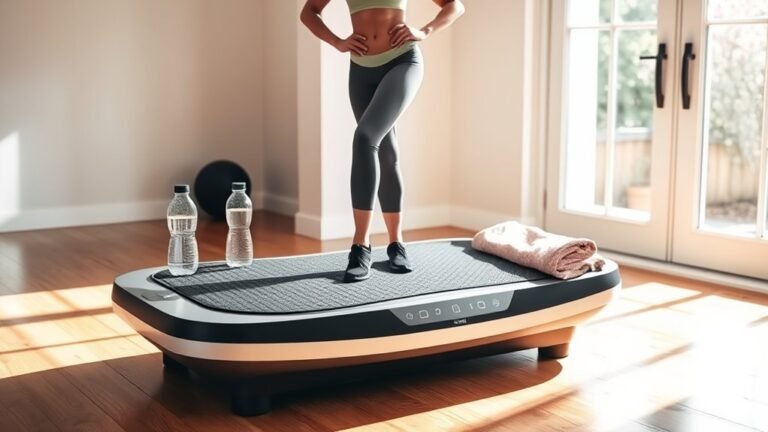
To get the most out of your vibration plate workouts, you’ll want to focus on proper posture and engaging multiple muscle groups simultaneously. Stand with knees slightly bent, core tight, and shoulders back to maintain balance and optimize muscle activation.
Try incorporating dynamic movements like squats, lunges, or push-ups on the plate to really ramp up calorie burn. Changing things up keeps your muscles guessing and working harder.
Vary your session intensity by adjusting vibration speed and duration, challenging your muscles differently each time. And don’t forget to combine vibration exercises with strength training or cardio off the plate for even better results.
Try to stay consistent by aiming for at least three sessions weekly. Also, make sure to hydrate and listen to your body to prevent injury and get the most benefit.
Frequently Asked Questions
Are Vibration Plates Safe for People With Joint Problems?
Yes, vibration plates can be safe for people with joint problems if you use them properly. Always start slowly and avoid high intensity.
It’s really important to consult your doctor first to prevent aggravating any existing issues or pain. Taking these precautions can help you use the vibration plate safely.
How Often Should Beginners Use a Vibration Plate Weekly?
You should hop on that vibration plate about 2-3 times a week, unless you want to shake so much you start vibrating through walls.
Keep sessions short and sweet—about 10-15 minutes—to avoid feeling like jelly.
Can Vibration Plates Help Improve Bone Density?
Yes, vibration plates can help improve bone density by stimulating bone cells and increasing circulation.
You’ll benefit most when combining vibration training with weight-bearing exercises.
And remember, consistent use over time is key for stronger, healthier bones.
Do Vibration Plates Have Any Impact on Muscle Recovery?
You can boost muscle recovery by up to 20% using vibration plates. They increase blood flow and reduce soreness, helping your muscles repair faster after workouts.
Are There Specific Diets Recommended When Using Vibration Plates?
You don’t need a specific diet for vibration plates, but focusing on balanced nutrition with protein, healthy fats, and carbs helps maximize muscle recovery and energy.
Staying hydrated is also vital while using the plates regularly. It really supports your overall performance and helps you get the most out of your sessions.
Conclusion
Using a vibration plate can burn around 100 to 200 calories in just 30 minutes, depending on your workout intensity. While it might not replace a full cardio session, it’s a handy way to boost your calorie burn, especially when combined with other exercises.
So, next time you step on the plate, remember: even small vibrations can add up to real results. Keep moving, and maximize every shake for better fitness! Using a vibration plate regularly can be a great addition to your exercise routine, helping you burn calories and improve muscle tone without putting too much strain on your body.