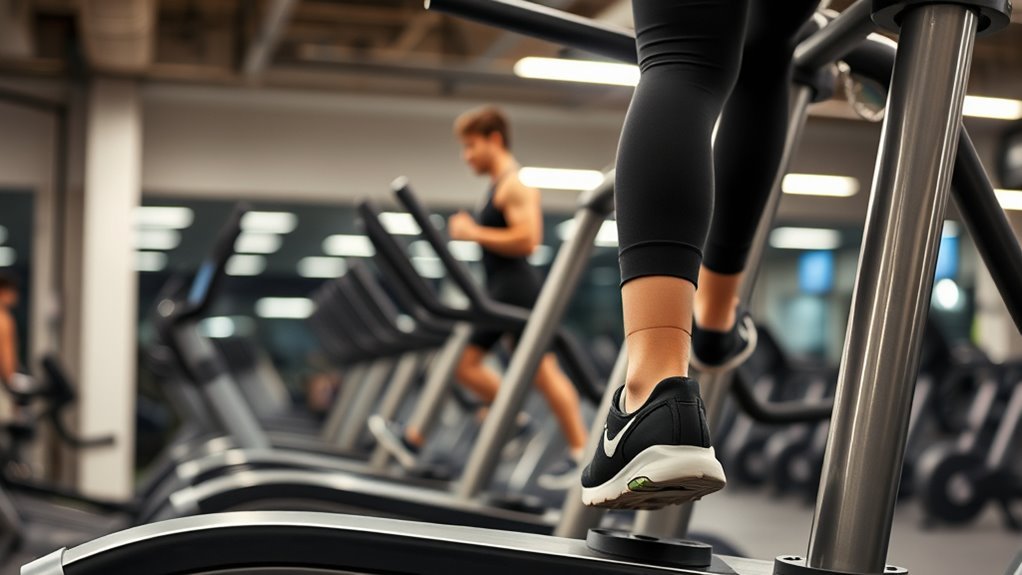
How Many Inches of Stride Does an Elliptical Need at the Gym?
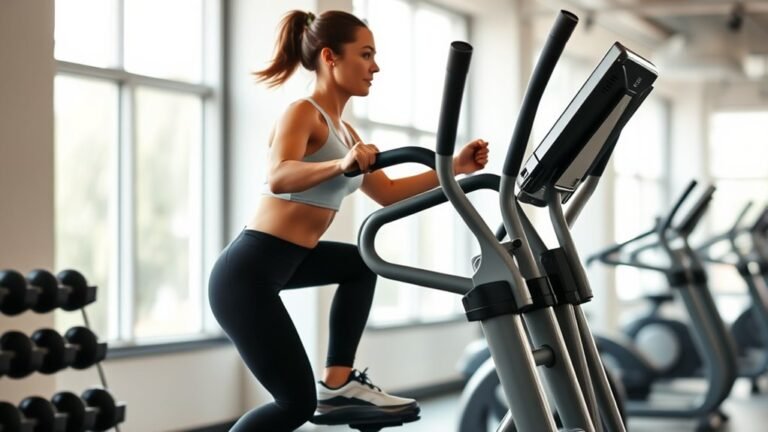
You’ll want an elliptical stride length between 16 and 22 inches at the gym, depending on your height and comfort. Finding the right stride length is key to getting the most out of your workout without putting unnecessary strain on your joints.
If you’re under 5’5”, aim for 16-18 inches; between 5’5” and 6’0”, 18-20 inches works well; and if you’re over 6’0”, go for 20-22 inches. Choosing the right stride length helps you move naturally and makes your exercise feel more comfortable.
This way, you reduce joint strain and improve workout effectiveness. Keep reading to discover how stride length impacts workout intensity and joint health. It’s a small adjustment that can make a big difference in your elliptical sessions!
Key Takeaways
- Most gym ellipticals feature stride lengths between 16 and 22 inches to accommodate various user heights and workout styles.
- Users under 5’5” typically need a stride length of 16-18 inches for comfortable motion.
- Those between 5’5” and 6’0” benefit from an 18-20 inch stride length for natural movement.
- Taller users over 6’0” require stride lengths of 20-22 inches or more to match their gait.
- Choosing the correct stride length enhances workout comfort, reduces injury risk, and improves exercise effectiveness.
Understanding Elliptical Stride Length
Although stride length varies between machines, understanding elliptical stride length helps you choose the right model for your workout. Stride length refers to the distance your foot travels during one complete elliptical motion.
Grasping elliptical stride length is key to selecting the perfect machine for your fitness routine.
You’ll find most gym ellipticals offer stride lengths between 16 to 22 inches. Shorter strides suit users with shorter legs or those focused on lower-impact cardio, while longer strides mimic natural running or walking patterns.
This benefits taller users or those seeking a more intense workout. Keep in mind, a stride length that feels too short or too long can limit your range of motion and reduce exercise effectiveness.
When selecting an elliptical, consider your height and typical stride to ensure the stride length feels comfortable and matches your fitness goals. It really makes a difference in how you feel during and after your workout!
How Stride Length Affects Workout Comfort
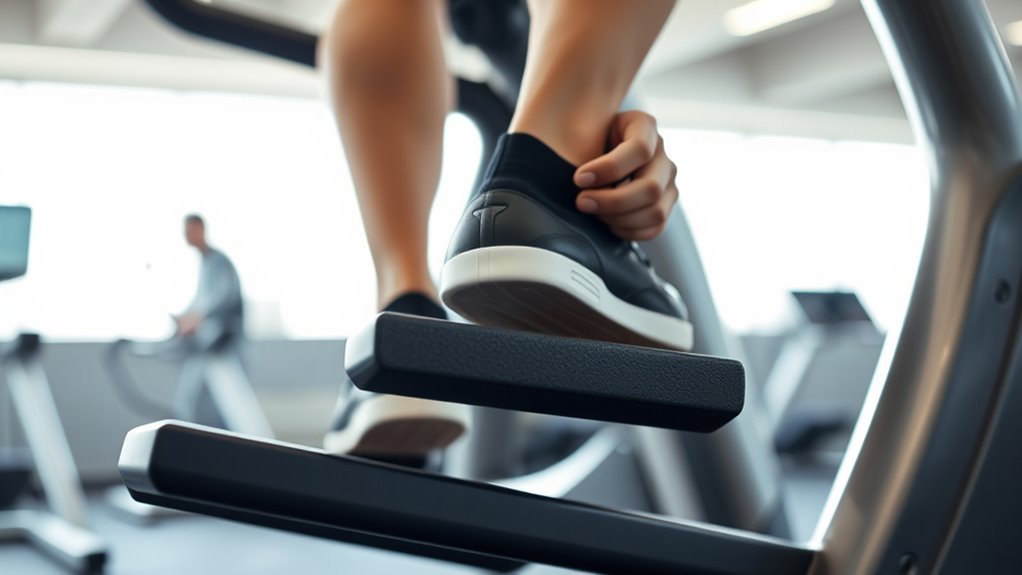
When your elliptical’s stride length matches your natural movement, you’ll enjoy greater comfort throughout your workout. A stride that’s too short can make your motion feel cramped, forcing you to bend your knees excessively and putting extra strain on your joints.
On the other hand, a stride that’s too long may cause you to overextend, leading to muscle fatigue and discomfort in your hips and lower back. By using a stride length that complements your natural gait, you reduce the risk of injury and maintain proper posture.
This alignment lets you focus on your workout without distraction, helping you sustain longer sessions with less fatigue. Prioritizing the right stride length enhances your overall exercise experience and supports consistent progress.
Ideal Stride Length for Different Heights
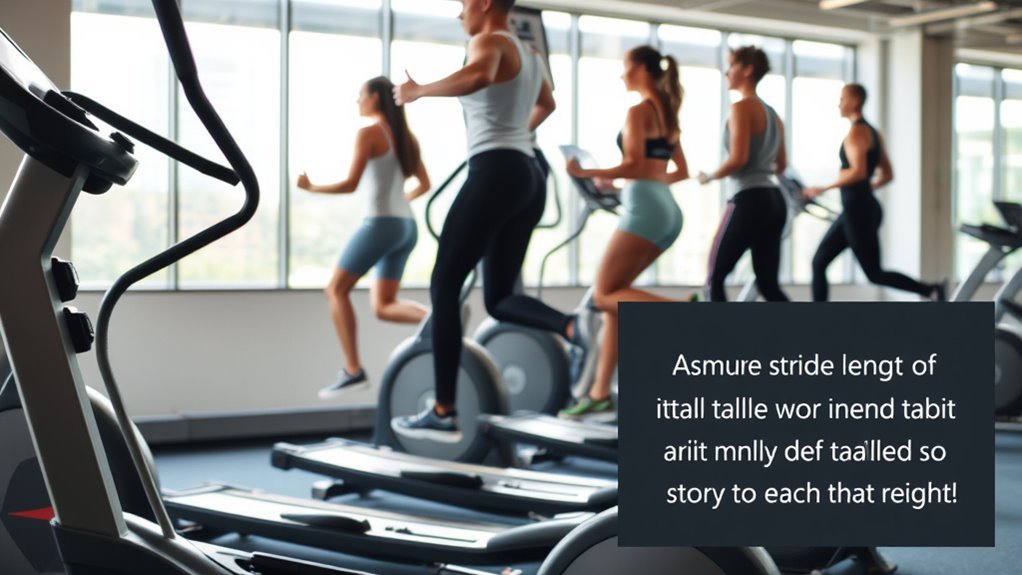
How do you know which stride length suits your height best? Generally, if you’re under 5’5”, a stride length of 16 to 18 inches works well.
For those between 5’5” and 6’0”, aim for 18 to 20 inches to ensure comfortable, natural movement. If you’re over 6’0”, look for ellipticals offering 20 to 22 inches or more to accommodate your longer legs.
Matching stride length to your height helps maintain proper form and reduces strain on your joints. When you choose the right stride, your workout feels smooth and efficient, letting you focus on fitness goals.
Keep your height in mind when testing ellipticals—try stepping on and off to see if the motion feels natural before deciding.
Comparing Short vs. Long Stride Ellipticals
Why choose between a short or long stride elliptical? It really depends on your height, workout goals, and comfort.
Short stride ellipticals typically range from 16 to 18 inches and suit shorter users or those seeking a more compact, low-impact motion. If you’re shorter or limited on space, this might be your best bet.
Long stride ellipticals, around 20 to 22 inches or more, accommodate taller users and provide a more natural running or walking motion. They can feel more comfortable for longer workouts and reduce joint strain.
When choosing, consider how the stride length matches your natural gait to avoid discomfort. Ultimately, pick the stride length that fits your body and feels smooth during your workout, ensuring an effective, enjoyable exercise session.
Impact of Stride Length on Exercise Intensity
Although stride length might seem like a minor detail, it directly affects your workout’s intensity and effectiveness. When you adjust the stride length on an elliptical, you change how your muscles engage and how hard your cardiovascular system works.
Here’s how stride length impacts your workout:
- Muscle Engagement – Longer strides activate more muscle groups, especially your glutes and hamstrings, increasing overall effort.
- Calorie Burn – With a longer stride, each step requires more energy, boosting calorie expenditure and workout intensity.
- Joint Impact – Shorter strides reduce joint strain, allowing you to exercise longer or recover faster, though with less intensity.
Choosing the right stride length helps you match your fitness goals, whether it’s burning calories or building endurance. So, it’s definitely worth paying attention to!
How to Measure Your Optimal Stride Length
Since everyone’s body mechanics and fitness goals differ, finding your ideal stride length requires a bit of experimentation and measurement. Start by standing straight and measuring your leg length from the hip joint to just below your ankle. This gives a baseline for what feels natural.
Next, try different stride lengths on an elliptical, beginning with a moderate stride close to your leg length. Pay attention to comfort and how your muscles engage. If your stride feels cramped or overextended, adjust accordingly.
You can also track your workout efficiency and fatigue levels to identify the best fit. Remember, your perfect stride length should allow smooth, comfortable motion without forcing your body into awkward positions.
This approach helps you maximize workout effectiveness while minimizing discomfort. Give it a try and see what works best for you!
Stride Length and Joint Health Considerations
Finding the right stride length not only boosts your workout efficiency but also plays a big role in protecting your joints. When your elliptical’s stride matches your natural movement, you reduce strain on your knees, hips, and ankles.
Here’s what you should keep in mind:
- Avoid Overextension: A stride that’s too long forces your joints to stretch unnaturally, increasing injury risk.
- Prevent Compression: A stride that’s too short can lead to a cramped motion, putting extra pressure on your joints and muscles.
- Maintain Smooth Motion: Choose a stride length that allows fluid, comfortable movement, which helps minimize joint wear and tear over time.
Tips for Choosing the Right Elliptical at the Gym
How do you pick the elliptical that fits your workout goals and body best? First, consider stride length—make sure it matches your leg length for comfort and efficiency. Test machines with adjustable stride options if possible.
Next, check the resistance levels and program variety to keep your workouts challenging and engaging. Pay attention to the machine’s size and footprint to ensure it fits your gym space.
Also, look for smooth, quiet operation to avoid distractions. Handlebar movement and ergonomics matter too; choose one that supports natural arm motion and reduces strain.
Finally, don’t forget to assess the console features like heart rate monitoring and workout tracking. Trying different models before committing helps you find the elliptical that motivates you and supports your fitness journey.
Frequently Asked Questions
How Often Should I Clean the Elliptical Machine at the Gym?
You should clean the elliptical machine at the gym after every use or at least daily to keep it hygienic and functioning well.
Wipe down handles, pedals, and screens with disinfectant wipes to prevent germs and sweat buildup. It really helps keep things fresh and safe for everyone using it.
Can I Use an Elliptical for Weight Loss Effectively?
Yes, you can use an elliptical effectively for weight loss by combining consistent workouts with proper intensity and duration.
It burns calories, boosts metabolism, and tones muscles, helping you shed pounds when paired with a balanced diet.
What Is the Average Cost of Gym Ellipticals?
You’ll find gym ellipticals typically cost between $1,000 and $3,000, depending on brand and features.
High-end models with advanced tech can go beyond that, but mid-range machines offer solid performance without breaking the bank.
Are There Elliptical Machines Suitable for Beginners?
Yes, you’ll find elliptical machines designed for beginners with adjustable resistance and stride lengths. They’re user-friendly, allowing you to build fitness gradually without strain.
Look for models with simple controls and smooth motion for comfort. It really helps make your workout feel easier and more enjoyable.
How Do Ellipticals Compare to Treadmills for Cardio Workouts?
Ellipticals offer low-impact cardio, protecting your joints, while treadmills provide high-impact, weight-bearing workouts. You’ll burn calories differently, so choose based on your fitness goals and any joint concerns you might have.
Basically, if you want something easier on your knees, ellipticals are great. But if you’re aiming to build bone strength and don’t mind more impact, treadmills might be the way to go.
Conclusion
Just like Goldilocks sought the perfect fit, you want an elliptical stride that’s “just right” — not too short to feel cramped, nor too long to strain your joints. Finding the ideal stride length tailored to your height guarantees comfort and maximizes your workout’s effectiveness.
So next time you hit the gym, remember: choosing the right elliptical stride is your first step toward a smoother, more powerful fitness journey. An elliptical with a stride length that matches your body helps reduce joint stress and improves workout efficiency. Whether you’re a beginner or a seasoned gym-goer, paying attention to stride length can make all the difference in your fitness routine.