How Much Does a Standard Gym Bar Weigh?
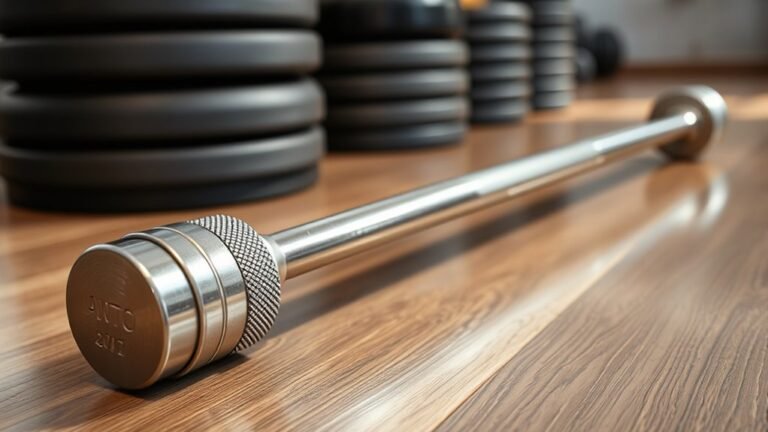
A standard gym barbell usually weighs 45 pounds (20 kilograms), which is the norm for most Olympic bars you lift at the gym. This weight is important to know because it forms the foundation of your lifting routine.
When you’re aware of the bar’s weight, you can plan your workouts safely and track your progress correctly.
Women’s bars are lighter, usually around 33 pounds (15 kilograms), making them more manageable for many lifters.
Some specialty bars vary in weight too, depending on their design and purpose.
If you want to understand different bar types, materials, and how these affect your lifting, there’s more to explore.
It’s pretty interesting once you dive into it!
Key Takeaways
- A standard Olympic barbell typically weighs 20 kg (44 lbs). You’ll find these commonly used in most gyms for strength training.
- Men’s Olympic bars weigh 20 kg (44 lbs), while women’s bars weigh 15 kg (33 lbs). They also differ in length and diameter, which is good to know.
- Specialty bars like trap bars or safety squat bars usually vary between 45 to 60 lbs. It depends on the design and manufacturer.
- Standard non-Olympic bars are lighter, usually around 33 to 35 lbs. They’re also shorter than Olympic bars.
- To be sure about the bar’s weight, check for stamped markings. Or better yet, weigh it on a calibrated scale for accurate load tracking.
Understanding the Standard Olympic Barbell Weight
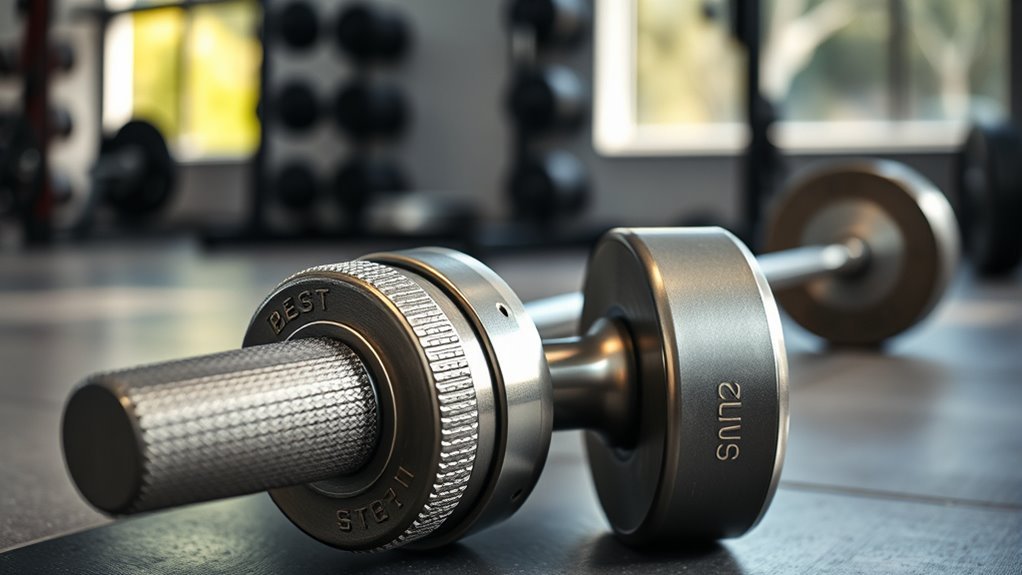
Although it might seem straightforward, understanding the standard Olympic barbell weight is essential for anyone serious about strength training. You’ll find that the typical Olympic barbell weighs 20 kilograms, or about 44 pounds.
Understanding that a standard Olympic barbell weighs 20 kilograms (44 pounds) is key for serious lifters.
This weight is consistent across most gyms and competitions, making it a reliable benchmark for tracking your progress. The bar itself measures approximately 7 feet long and has a diameter designed to fit standard weight plates.
It’s built to handle heavy loads, often supporting weights up to 700 pounds or more. Knowing this standard helps you plan your workouts accurately and guarantees you’re lifting the intended amount.
When you add plates, you can easily calculate your total load, keeping your training efficient and safe. So, once you get familiar with these numbers, you’ll be better equipped to hit your strength goals.
Differences Between Men’s and Women’s Bars

You’ll notice men’s and women’s bars differ in weight, length, and diameter. These differences affect how the bar feels in your grip and how it handles during lifts.
Let’s explore what makes each bar unique for your workout. It’s pretty interesting once you get into the details!
Weight Comparison
When comparing men’s and women’s gym bars, you’ll notice a difference in weight that reflects their design and intended use. Men’s bars typically weigh 20 kilograms (44 pounds), while women’s bars usually weigh 15 kilograms (33 pounds).
This 5-kilogram difference allows the women’s bars to accommodate lifters who may prefer a lighter starting point without sacrificing performance quality. You’ll find that this weight difference helps tailor your workout to your strength level and lifting goals.
Both bars are sturdy and designed to handle heavy loads, but the lighter women’s bar offers more manageable weight for those new to lifting or focusing on technique. Understanding this weight difference helps you select the right bar for your training needs and maximizes your progress safely.
Length and Diameter
Because men’s and women’s gym bars serve different purposes, their length and diameter vary to suit specific lifting needs.
When you pick up a men’s bar, it’s typically longer and thicker, offering more stability for heavier lifts. Women’s bars, on the other hand, are designed to be lighter and easier to handle.
Here’s a quick comparison to help you see the differences:
| Feature | Men’s Bar |
|---|---|
| Length | 7.2 feet (2.2 m) |
| Diameter | 28 mm |
| Weight | 20 kg (44 lbs) |
| Purpose | Heavier lifts |
| Grip Size | Larger |
| Feature | Women’s Bar |
| Length | 6.6 feet (2 m) |
| Diameter | 25 mm |
| Weight | 15 kg (33 lbs) |
| Purpose | Lighter lifts |
| Grip Size | Smaller |
This design helps you optimize your workout based on strength and comfort.
Grip and Knurling
Although both men’s and women’s gym bars have similar purposes, their grip and knurling differ to enhance comfort and performance for each user. When you pick up a men’s bar, you’ll notice its knurling is typically more aggressive and extends closer to the center. This provides a stronger, more secure grip ideal for heavier lifts.
Women’s bars, on the other hand, feature a slightly less aggressive knurl pattern and usually leave a smooth center area to protect your chest during exercises like cleans. The diameter also plays a role—women’s bars are thinner, making them easier to hold for smaller hands.
Understanding these subtle differences helps you choose a bar that suits your grip strength and lifting style, ultimately improving your workout experience. It’s all about finding the right fit for you so you can lift safely and confidently.
Specialty Bars and Their Typical Weights
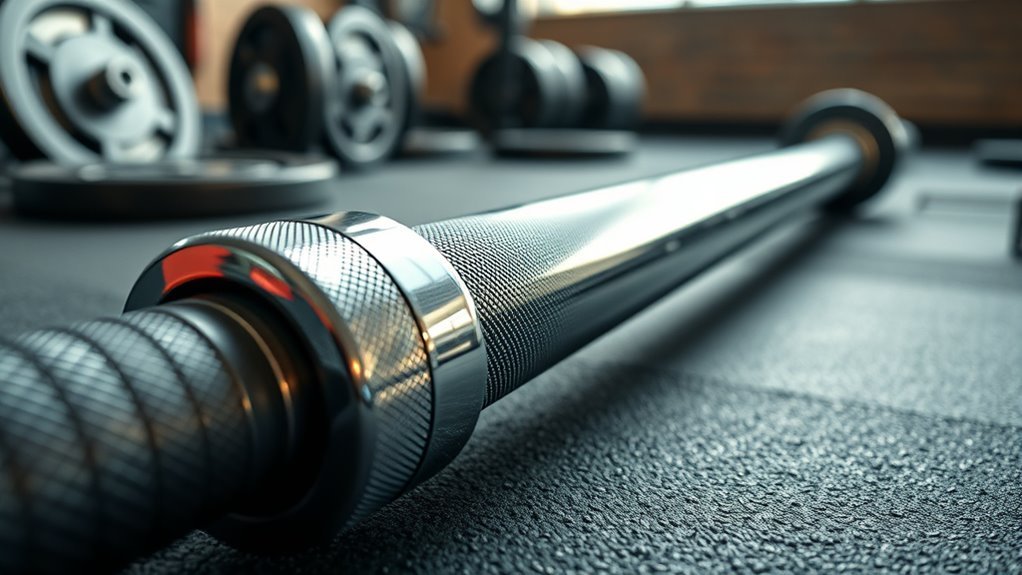
If you’re looking to diversify your workouts, specialty bars offer unique designs that target specific lifts and muscle groups. For example, the trap bar, commonly used for deadlifts, typically weighs around 45 to 55 pounds. It allows you to maintain a neutral grip, reducing stress on your shoulders.
The Swiss bar, designed for pressing movements, usually weighs about 25 to 35 pounds and features multiple grip options to ease wrist strain. Meanwhile, the safety squat bar, popular for squats, generally weighs between 45 and 60 pounds, adding padding and handles for comfort.
Each specialty bar’s weight varies slightly depending on the manufacturer, but knowing these typical weights helps you plan your workout effectively and ensures you’re lifting safely. It’s always good to check the exact weight before you start your session!
Materials Used in Gym Bars and Their Impact on Weight
Specialty bars come in various weights, but what really influences those differences is the material they’re made from. Most gym bars use steel, known for its strength and durability, which keeps the bar sturdy without adding unnecessary weight.
The material of specialty bars, mainly steel, determines their weight and durability for effective workouts.
Some bars feature stainless steel, offering corrosion resistance and a smoother finish, slightly affecting weight depending on thickness. Others might use aluminum, making the bar lighter and easier to handle but less durable for heavy lifts.
Occasionally, you’ll find bars coated with chrome or zinc to prevent rust; these coatings add minimal weight but improve longevity. Understanding these materials helps you choose a bar that suits your needs, whether you want something lightweight for speed or heavier for stability.
Material choice directly impacts how the bar feels and performs during your workouts. So, knowing what your bar is made of can really make a difference in your lifting experience.
How Bar Weight Affects Your Workout Performance
The weight of your gym bar directly impacts how you lift and the intensity of your workouts. Using a heavier bar can challenge your technique and force you to engage muscles more effectively.
Understanding this helps you adjust your training to meet your fitness goals. It’s all about finding the right balance for your body and progress.
Impact on Lifting Technique
Although the weight of a standard gym bar might seem minor compared to the plates you add, it considerably influences your lifting technique and overall workout performance. When you lift, the bar’s weight affects your balance and control.
If you ignore the bar’s weight, you might misjudge the total load, leading to improper form. Proper technique relies on feeling the bar’s weight evenly distributed across your hands, helping you engage the right muscles and avoid injury.
The bar’s rigidity also impacts how the weight moves; a flexible bar requires you to stabilize more, enhancing your technique. Paying attention to the bar weight ensures you lift safely and efficiently, making every rep count without compromising your form.
Influence on Training Intensity
When you factor in the bar’s weight, you can better gauge your workout’s intensity and progress. The bar itself adds a significant baseline load, so neglecting it might make your lifts seem lighter than they truly are.
This affects how you plan sets, reps, and progression. For example, if you think you’re lifting 100 pounds but the bar weighs 45 pounds, your muscles are actually working harder than expected.
Accounting for bar weight helps you set realistic goals and avoid plateaus. It also influences fatigue levels; a heavier bar means more energy spent stabilizing during each rep.
Measuring Bar Weight at the Gym
If you’re unsure about a gym bar’s weight, you can usually find this information stamped or engraved on the bar itself. Checking the bar directly is the quickest way to measure its weight before you start lifting.
Here’s how you can do it effectively: Look near the sleeves or the center knurling; most bars have their weight marked there. If you don’t see any markings, no worries.
You can use a scale—just place the bar on a calibrated gym scale for an accurate reading. Another easy option is to ask gym staff or check the gym equipment guides. They often keep records of bar weights for your convenience.
Tips for Choosing the Right Barbell for Your Training
Because selecting the right barbell can considerably impact your performance and safety, you should consider your training goals, the types of lifts you perform, and the bar’s specifications before making a choice.
Focus on factors like bar length, weight, and tensile strength to match your workout needs. For instance, Olympic bars suit heavy lifts, while shorter bars fit home gyms.
| Bar Type | Best For | Typical Weight (lbs) |
|---|---|---|
| Olympic Bar | Powerlifting | 44-45 |
| Standard Bar | General Fitness | 33-35 |
| Technique Bar | Beginners | 15-25 |
| Specialty Bar | Specific Lifts | Varies |
Choose wisely to enhance your training efficiency and avoid injury. It really makes a difference when you pick the right bar for what you want to achieve!
Common Misconceptions About Gym Bar Weights
Although gym bars may look similar, you might be surprised by the common misconceptions surrounding their actual weights. Many people assume all bars weigh the same, but variations exist based on design and purpose.
Here are three common misunderstandings to clear up:
- All standard bars weigh 45 pounds – While many do, some bars, especially those for women or beginners, weigh less.
- Olympic bars and standard bars are interchangeable – Olympic bars typically weigh 44 pounds and have different dimensions, affecting your lift.
- Bar weight includes collars – Usually, the stated weight excludes collars, so adding them changes the total load.
Knowing these facts helps you choose the right bar and track your lifting progress accurately. It’s always good to double-check before you start loading up!
Frequently Asked Questions
How Often Should Gym Bars Be Inspected for Safety?
You should inspect gym bars before every use to guarantee safety. Regularly check for bends, cracks, or rust.
Also, perform a thorough inspection monthly. This helps prevent accidents and keeps your equipment reliable.
It’s a simple step that makes a big difference in staying safe while you work out!
Can Gym Bars Be Used for Outdoor Workouts?
Yes, you can use gym bars for outdoor workouts, but you should protect them from moisture and rust.
It’s a good idea to regularly clean and inspect your bars. This helps keep them safe and in good condition despite exposure to outdoor elements.
Taking these simple steps means you can enjoy your workouts outside without worrying about damage.
What Is the Average Lifespan of a Standard Gym Bar?
Think of your gym bar as a trusty steed—it can last 10 to 15 years if you treat it right.
Keep it dry, clean, and stored properly, and it’ll serve you through countless workouts without faltering.
Are There Specific Bars for Beginners Versus Advanced Lifters?
Yes, you’ll find bars designed for beginners with lighter weights and easier grip. These make it simpler to get started and build your confidence.
On the other hand, advanced lifters use heavier, more specialized bars. Choosing the right bar helps you progress safely and effectively in your training.
How Do Temperature Changes Affect Barbell Weight and Performance?
Like metal dancing with seasons, temperature changes slightly expand or contract your barbell. Though weight barely shifts, extreme cold can stiffen the bar’s movement,
while heat might make it feel a bit more flexible during lifts. It’s pretty subtle, but you might notice the difference if you’re lifting in really cold or hot conditions.
Conclusion
Now that you know a standard Olympic barbell weighs 45 pounds, imagine lifting that solid steel rod loaded with plates, totaling hundreds of pounds. That 45-pound bar is the foundation of countless workouts, from your first deadlift to your heaviest squat.
Understanding its weight helps you track progress and choose the right bar for your goals. So next time you step up, you’ll know exactly what you’re lifting—and why it matters.
Knowing how much a standard gym bar weighs is essential for anyone serious about strength training. It sets the baseline for your lifts and ensures you’re accurately measuring your progress. Whether you’re training for muscle gain or improving athletic performance, the weight of the bar plays a crucial role. Remember, the standard gym bar’s 45-pound weight is more than just a number—it’s the starting point for your fitness journey.