How Much Does a Treadmill Weigh: 3 Key Factors
You’ll find treadmill weight largely depends on three key factors: frame material and construction, motor size and type, and added features. These elements play a big role in how much a treadmill weighs, which is important to consider when choosing one for your home or gym.
Steel frames and welded joints make treadmills heavier but more stable. On the other hand, aluminum frames keep them lighter, making it easier to move them around.
Bigger motors add weight too, as do extras like screens and cushioning systems.
Knowing these factors helps you pick the right treadmill for your space and workout style. Keep exploring to see how each influences your choice.
Key Takeaways
– Frame material significantly affects weight; steel frames are heavier and more stable, while aluminum frames are lighter and more portable.
Think of it like this: steel gives you durability, but aluminum makes moving the treadmill easier.
– Motor size and type influence weight, with larger, continuous-duty AC motors being heavier than smaller DC motors.
So, if your treadmill has a big motor, expect it to weigh more, but that usually means it’s built for tougher workouts.
– Additional features like built-in screens, speakers, cushioning, and folding mechanisms add extra weight to the treadmill.
These extras are great for comfort and entertainment, but they do add some pounds.
– Welded joints increase frame strength and weight, whereas bolted connections result in lighter treadmill frames.
It’s a bit of a trade-off: stronger frames are heavier, while lighter ones may be a bit less sturdy.
– Overall treadmill weight balances durability, stability, and portability based on construction, motor, and accessories.
So, when choosing a treadmill, think about what matters most to you—whether it’s toughness, ease of moving it around, or having all the bells and whistles.
Frame Material and Construction

Although it might not seem obvious at first, the frame material and construction play a huge role in determining how much a treadmill weighs.
When you choose a treadmill built with steel, expect it to be heavier and more durable. Steel frames provide stability, which is great if you want a solid workout experience.
On the other hand, aluminum frames are lighter and easier to move but may sacrifice some sturdiness.
The way the frame is constructed also matters—welded joints typically add strength and weight compared to bolted connections.
If you plan to move your treadmill often, you’ll want to contemplate a lighter frame.
But if stability during intense workouts is your priority, a heavier, well-constructed frame is worth the extra weight.
Motor Size and Type

How much power does a treadmill’s motor really add to its weight? The motor size and type play a significant role in determining the overall weight of your treadmill.
Larger motors, measured in horsepower (HP), tend to be heavier because they contain more robust components designed to handle intense workouts and longer running sessions. If you choose a treadmill with a powerful continuous-duty motor, expect it to add more weight compared to smaller, lower-powered motors.
Additionally, the motor type—whether it’s a direct current (DC) or alternating current (AC) motor—impacts weight. AC motors are generally heavier and more durable, suited for commercial-grade treadmills, while DC motors are lighter and common in home models.
Additional Features and Accessories
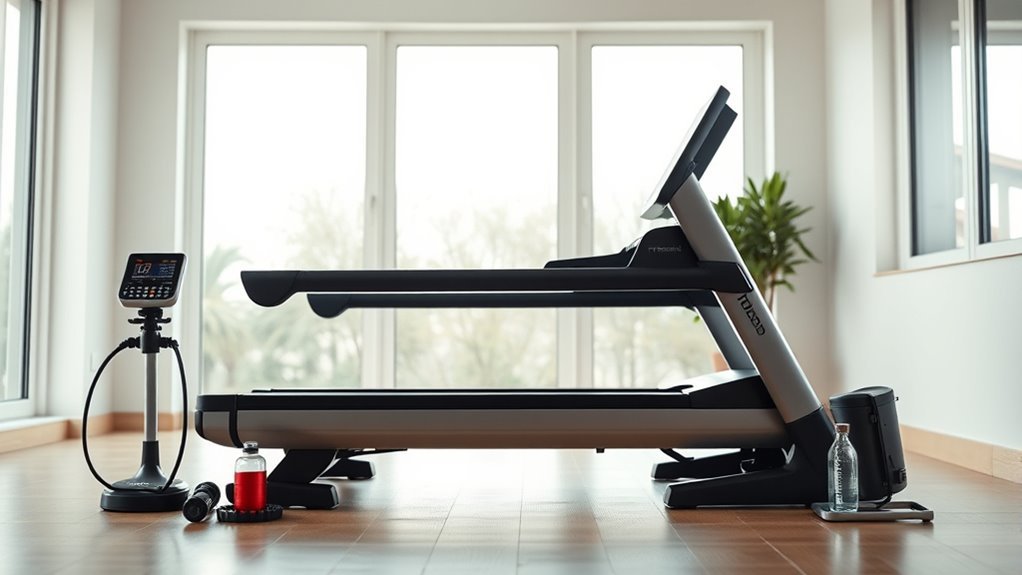
Beyond the motor, additional features and accessories can add noticeable weight to your treadmill. If you want a treadmill with a built-in screen, speakers, or a larger console, expect extra pounds.
Likewise, features like folding mechanisms, cushioning systems, or water bottle holders also contribute to overall weight. Knowing how each accessory impacts weight helps you pick a treadmill that’s easy to move yet packed with conveniences.
| Feature | Weight Impact |
|---|---|
| Touchscreen Console | +15-25 lbs |
| Built-in Speakers | +5-10 lbs |
| Folding Mechanism | +10-20 lbs |
| Cushioning System | +8-15 lbs |
Frequently Asked Questions
How Does Treadmill Weight Affect Shipping Costs?
Treadmill weight directly impacts your shipping costs because heavier machines require more fuel, special handling, and sometimes freight shipping.
You’ll pay more if your treadmill is bulky or heavy, so consider weight when budgeting for delivery. It’s definitely something to keep in mind before you buy!
Can Treadmill Weight Impact Floor Damage?
Yes, treadmill weight can impact floor damage. Heavier treadmills put more pressure on your floor, increasing the risk of dents or scratches.
Using a mat underneath can help protect your flooring and distribute the weight evenly. It’s a simple step that can save you from costly repairs later on.
Is Treadmill Weight a Factor in Assembly Difficulty?
Yes, treadmill weight definitely affects assembly difficulty. Heavier models require more strength and sometimes an extra person to lift and position parts.
This makes the process tougher and more time-consuming for you. So, if you’re dealing with a bulky treadmill, be prepared to take your time or ask for help.
How Does Treadmill Weight Influence Portability?
You’ll find heavier treadmills less like featherweights and more like steady anchors, making them tougher to move around.
Lighter models, on the other hand, let you glide them effortlessly from room to room with ease. It’s like having a little help whenever you want to switch things up.
Does Treadmill Weight Affect Workout Stability?
Yes, treadmill weight directly affects workout stability.
Heavier treadmills stay firmly in place during intense workouts, reducing wobbling or shaking. So, you’ll get a safer, more comfortable exercise experience with a sturdier machine.
Conclusion
When you picture yourself stepping onto your treadmill, feel its sturdy frame beneath your feet, the hum of the motor powering your stride, and the convenience of added features at your fingertips.
The weight you’re carrying isn’t just metal and parts—it’s the promise of progress and strength. Knowing what affects your treadmill’s weight helps you choose the perfect balance.
So every workout feels just right, steady, and ready to support your journey. Understanding how much a treadmill weighs and the key factors influencing it ensures you pick one that fits your space and fitness goals perfectly.