How Much Does a Gym Barbell Weigh?
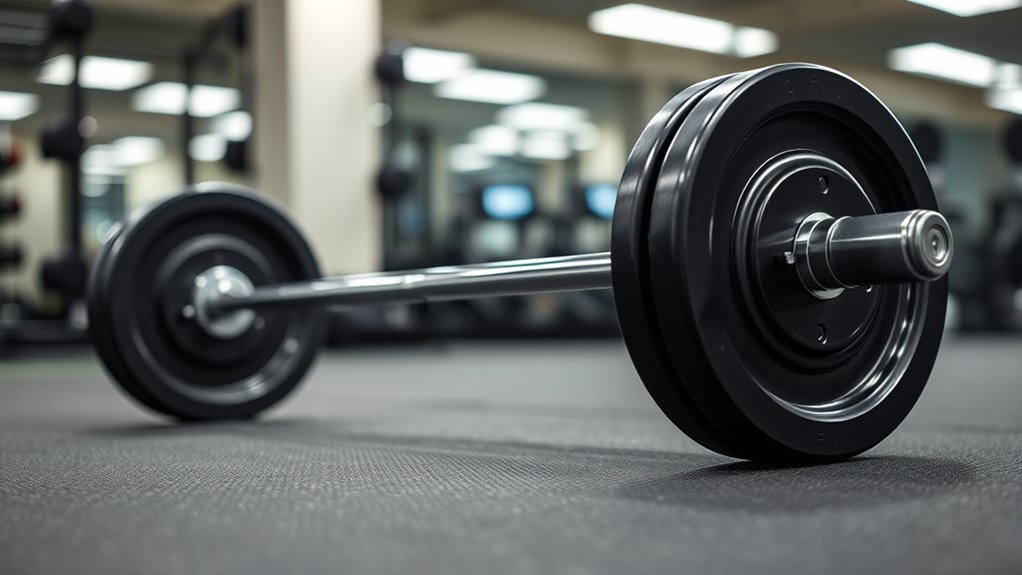
A standard gym barbell usually weighs 45 pounds (20.4 kg) and measures about 7 feet long with a 28 mm diameter. This bar is what you’ll typically see in most gyms and is great for a variety of lifts like squats, deadlifts, and bench presses.
Women’s Olympic barbells are a bit lighter, around 33 pounds (15 kg), and they’re shorter too, making them easier to handle.
Then, there are specialty bars, like trap bars or curl bars, which can weigh anywhere from 15 to 55 pounds depending on their design and purpose.
If you’re just starting out, training bars might weigh as little as 15 pounds, so you can get comfortable with the movements before adding more weight.
Keep exploring, and you’ll discover how different bars suit specific workouts and fitness goals. It’s all about finding the right bar for your needs!
Key Takeaways
- A standard Olympic barbell typically weighs 45 pounds (20.4 kg) and measures about 7 feet in length.
- Women’s Olympic barbells usually weigh 33 pounds (15 kg) with a shorter length of around 6.5 feet.
- Beginner or training barbells often weigh between 15 to 35 pounds, designed for easier handling.
- Specialty barbells like trap bars or curl bars vary widely, generally weighing from 15 to 55 pounds.
- Barbell weight can be confirmed by markings, dimensions, or using a scale for accuracy.
Standard Olympic Barbell Weight
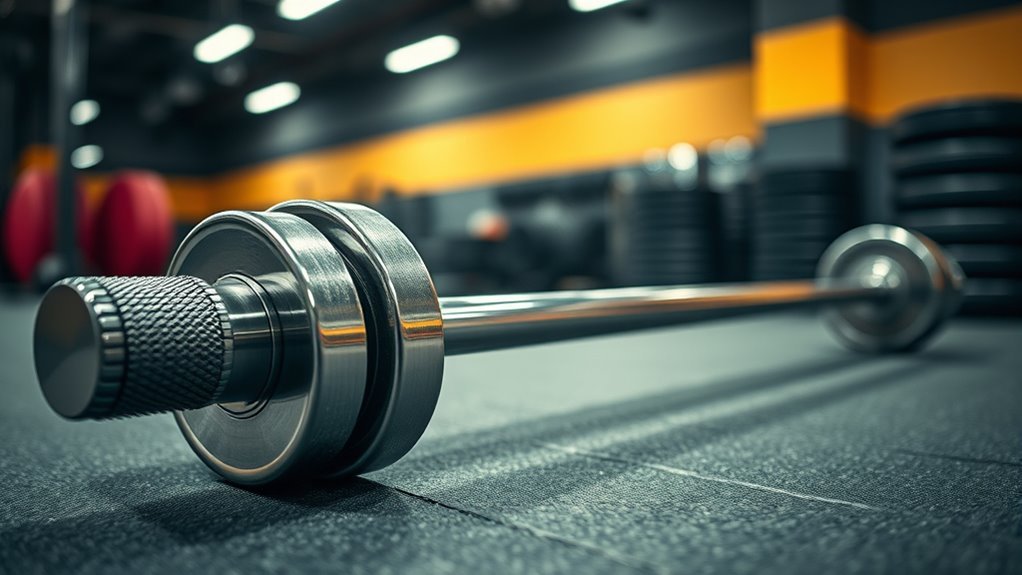
A standard Olympic barbell weighs 45 pounds (20.4 kilograms), making it the most common choice in gyms worldwide. When you pick it up, you’ll notice its length, typically around 7 feet (2.2 meters), providing ample space for adding weight plates.
The standard Olympic barbell weighs 45 pounds and measures about 7 feet, perfect for adding plates.
The bar’s diameter is about 28 millimeters, offering a comfortable grip for most lifters. Designed to handle heavy loads, it usually supports up to 1,500 pounds (680 kilograms).
You’ll appreciate its rotating sleeves, which reduce stress on your wrists during lifts like cleans and snatches. Whether you’re deadlifting, squatting, or bench pressing, this barbell is versatile and durable.
It’s an essential piece of equipment for serious training. Plus, its standardized weight and dimensions ensure consistency across competitions and gyms.
Women’s Olympic Barbell Weight
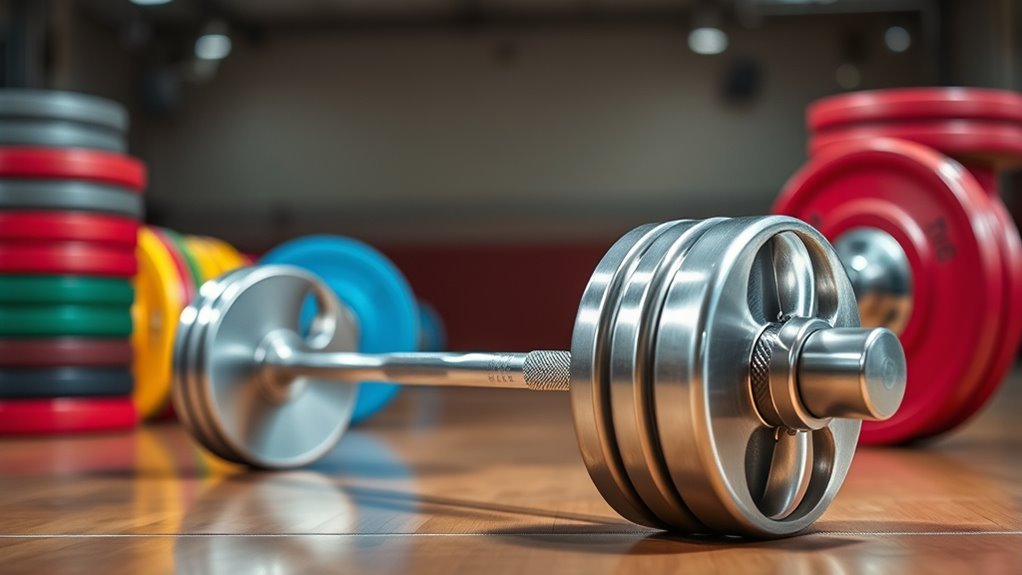
When you pick up a women’s Olympic barbell, you’ll notice it weighs 15 kilograms, which is lighter than the men’s 20-kilogram bar. Its design is also slightly different, with a shorter length and smaller diameter to fit better in your hands.
Comparing the two helps you understand why women’s bars are tailored for performance and comfort. It’s all about making sure the bar feels just right when you’re lifting.
Standard Weight Specifications
Although men’s Olympic barbells often get more attention, women’s Olympic barbells have specific weight standards designed for ideal performance.
When you pick up a women’s Olympic barbell, you’re handling a piece of equipment that’s precisely calibrated to meet competition rules and training needs.
Here are the standard weight specifications you should know:
- The barbell weighs exactly 15 kilograms (33 pounds). It’s lighter than the men’s 20-kilogram bar to accommodate different strength levels.
- The weight distribution is balanced to ensure consistent lifting performance. Plus, the barbell includes specific markings to meet International Weightlifting Federation standards.
Knowing these specs helps you choose the right barbell for your workouts or competitions. It’s all about making sure you get the best performance possible.
Design and Dimensions
Since you’re focusing on women’s Olympic barbells, understanding their design and dimensions is essential for proper handling and performance. These barbells are lighter and shorter than men’s bars, making them easier to control and ideal for athletes with smaller frames.
The diameter and length affect grip and lift mechanics, so knowing these details helps you choose the right barbell.
| Feature | Specification |
|---|---|
| Length | 6.5 feet (2 meters) |
| Weight | 15 kg (33 lbs) |
| Diameter | 25 mm |
| Sleeve Length | 410 mm |
These dimensions ensure balance and compatibility with standard Olympic plates. So, you get a reliable and efficient lifting experience every time.
Comparison With Men’s Bars
Understanding the design and dimensions of women’s Olympic barbells sets the stage for comparing them with men’s bars, especially regarding weight differences. When you look closely, you’ll find that women’s bars are lighter and slightly shorter, tailored for better handling and technique.
Here’s how they compare:
- Weight: Women’s bars weigh 15 kg (33 lbs), men’s bars weigh 20 kg (44 lbs).
- Length: Women’s bars are about 2.01 meters; men’s bars are 2.2 meters long.
- Diameter: Women’s bars have a 25 mm diameter; men’s bars are thicker at 28 mm.
- Grip: Women’s bars feature less aggressive knurling for comfort, while men’s bars have a more pronounced grip.
This comparison highlights the ergonomic differences designed to suit each gender’s typical strength and size. Pretty interesting how these small changes make a big difference, right?
Specialty Barbells and Their Weights
When you explore specialty barbells, you’ll find they come in various weights tailored for specific exercises or training goals. For example, trap bars usually weigh between 45 to 55 pounds, allowing you to perform deadlifts and shrugs with a different grip and reduced strain on your lower back.
Curl bars, designed for arm workouts, often weigh around 15 to 25 pounds. This gives you a lighter option to focus on biceps and triceps.
Safety squat bars typically weigh about 55 pounds. They provide a padded yoke that eases shoulder stress during squats.
You might also come across hex bars and multi-grip bars, each with unique weights suited for their intended lifts. Knowing these weights helps you plan your workouts efficiently and avoid surprises during training.
Differences Between Powerlifting and Weightlifting Bars
You’ll notice powerlifting and weightlifting bars differ in length, sleeve diameter, and weight capacity. These factors affect how the bar handles and what lifts you can perform.
Let’s break down these key differences so you can choose the right bar for your training. It’s pretty interesting once you see how each bar is designed with specific lifts in mind.
Bar Length Comparison
Although both powerlifting and weightlifting bars serve the same basic purpose, their lengths vary to meet the specific demands of each sport. When you’re choosing a barbell, understanding these differences helps you pick the right one for your training goals.
Here’s how their lengths compare:
- Powerlifting bars typically measure about 7 feet (2.1 meters). They’re designed for stability during heavy lifts like squats, bench presses, and deadlifts.
- Weightlifting bars are usually slightly longer, around 7.2 feet (2.2 meters). This extra length allows for smooth rotation during dynamic lifts like snatches and clean & jerks.
- The extra length in weightlifting bars also accommodates wider grips and better balance during explosive movements.
- On the other hand, powerlifting bars prioritize rigidity. So, their length stays consistent to support heavier loads without flexing.
Knowing these differences will definitely help you choose a bar that matches your lifting style.
Sleeve Diameter Differences
Since sleeve diameter affects how smoothly your barbell spins, it plays a crucial role in your lifting performance. Weightlifting bars usually have larger sleeve diameters, around 50mm, allowing for more precise bearing systems that ensure smooth rotation.
This helps you execute fast, explosive movements with less wrist strain. On the other hand, powerlifting bars often feature slightly smaller sleeves, typically near 40mm, which provide a tighter, more stable feel with less spin—ideal for controlled, heavy lifts like squats and deadlifts.
Understanding these differences helps you pick the right bar for your training goals. So, if you’re focusing on Olympic lifts, opt for bars with larger sleeves. But if powerlifting is your priority, bars with smaller sleeves will better suit your needs.
Weight Capacity Variations
When selecting a barbell, understanding the weight capacity variations between powerlifting and weightlifting bars can considerably impact your training safety and effectiveness. Powerlifting bars generally handle heavier loads since they focus on maximal lifts like squats and deadlifts, while weightlifting bars prioritize dynamic movements like snatches and cleans, requiring some flexibility.
Here’s what you should know about their weight capacities:
- Powerlifting bars typically support 1,000 to 1,500 pounds.
- Weightlifting bars usually handle 700 to 1,000 pounds.
Powerlifting bars are stiffer to prevent bending under extreme loads. Weightlifting bars have more whip, allowing for better momentum during explosive lifts.
Choosing the right bar ensures you train safely and optimize your performance. So, picking the right one really makes a difference!
How to Identify the Weight of a Barbell
If you want to quickly figure out how much a barbell weighs, start by checking its length and diameter—these physical characteristics often correspond to standard weights.
For example, a standard Olympic barbell typically measures about 7 feet long and has a diameter of 2 inches, usually weighing 45 pounds (20.4 kg). In contrast, smaller barbells for beginners or women often weigh 15 to 35 pounds.
Look for any markings or labels on the bar, as manufacturers sometimes stamp the weight directly on the shaft. If you’re in a gym, ask staff or check the equipment manual.
When in doubt, use a scale to get an exact measurement. By paying attention to these details, you’ll confidently identify the barbell’s weight without guesswork.
Factors Affecting Barbell Weight Variations
Although most barbells look similar, several factors cause their weights to vary. When you pick up a barbell, its weight isn’t just about the length or thickness.
Knowing what influences this helps you choose the right one for your workout.
Understanding these factors ensures you select the perfect barbell tailored to your training needs.
- Material Composition – Steel, aluminum, or other metals impact overall weight.
- Length and Diameter – Longer and thicker bars generally weigh more.
- Design Features – Knurling, sleeves, and collars add extra ounces or pounds.
- Intended Use – Powerlifting, Olympic lifting, or general training bars have different standard weights.
Weight of Training and Technique Bars
Understanding the factors that affect barbell weight sets the stage for exploring specific types like training and technique bars. These bars are designed to help you perfect form and build foundational strength without the heavy load of standard barbells.
Typically, training bars weigh less than Olympic bars, usually around 15 to 25 pounds (7 to 11 kg). Technique bars are even lighter, often ranging from 5 to 15 pounds (2 to 7 kg). This allows you to focus on movement mechanics with minimal resistance.
When you’re starting out or rehabbing an injury, these lighter bars let you practice safely and confidently. Keep in mind that their shorter length and reduced weight make them easier to handle. This helps you develop proper technique before moving on to heavier bars.
Tips for Choosing the Right Barbell Weight
When choosing the right barbell weight, you need to balance your current strength, fitness goals, and experience level. Picking a weight that’s too heavy can lead to poor form and injury. On the other hand, too light won’t challenge you enough.
Balancing strength, goals, and experience is key to picking the right barbell weight safely and effectively.
Here are four tips to help:
- Start Light: Begin with a manageable weight to master form and technique.
- Progress Gradually: Increase weight in small increments as you build strength.
- Match Your Goals: Use heavier weights with fewer reps for strength; lighter weights with more reps for endurance.
- Listen to Your Body: Stop if you feel pain or excessive strain. Just don’t push through pain — that’s a no-go!
Frequently Asked Questions
How Do Barbell Weights Impact Workout Effectiveness?
Barbell weights impact your workout effectiveness by challenging your muscles appropriately.
If you choose weights that are too light, you won’t build strength; too heavy, and you risk injury.
Adjust weights to match your goals and progress. It’s all about finding that sweet spot that pushes you without overdoing it.
What Materials Are Gym Barbells Typically Made From?
Gym barbells are typically made from steel, which gives you strength and durability. Some have a chrome or zinc coating to prevent rust.
Others use knurled grips for better handling during your workouts. This helps you maintain a firm grip, especially when things get intense.
How Should I Maintain and Clean My Barbell?
You should clean your barbell after every workout; studies show 70% of gym equipment harbors bacteria.
Use a nylon brush, mild soap, and dry it well to prevent rust. This keeps your barbell safe and durable.
Can Barbell Weight Affect My Lifting Form?
Yes, barbell weight can affect your lifting form. If you use a weight that’s too heavy, your technique may suffer, increasing injury risk.
Start with manageable weights and focus on proper form before progressing. It’s way better to lift lighter with good form than heavier with bad form. Take your time and listen to your body!
Are There Adjustable Barbells for Home Use?
Yes, you can find adjustable barbells for home use. They let you easily change weight plates, so you can customize resistance without needing multiple bars.
They’re perfect if you want versatility and space-saving equipment. Plus, they make switching up your workouts super convenient.
Conclusion
Whether you’re lifting a standard Olympic barbell or a lighter women’s barbell, knowing the weight makes all the difference. Specialty bars might surprise you with their unique heft, while training bars feel almost featherlight by comparison.
Powerlifting bars stand firm and heavy, weightlifting bars glide with precision. You’ll want to choose wisely—sometimes heavier means stronger, sometimes lighter means better form.
Understanding these contrasts helps you lift smarter, not just harder. Knowing how much a gym barbell weighs can improve your workout efficiency and safety. So next time you hit the gym, pay attention to the barbell type and its weight. It’s not just about lifting more—it’s about lifting right.