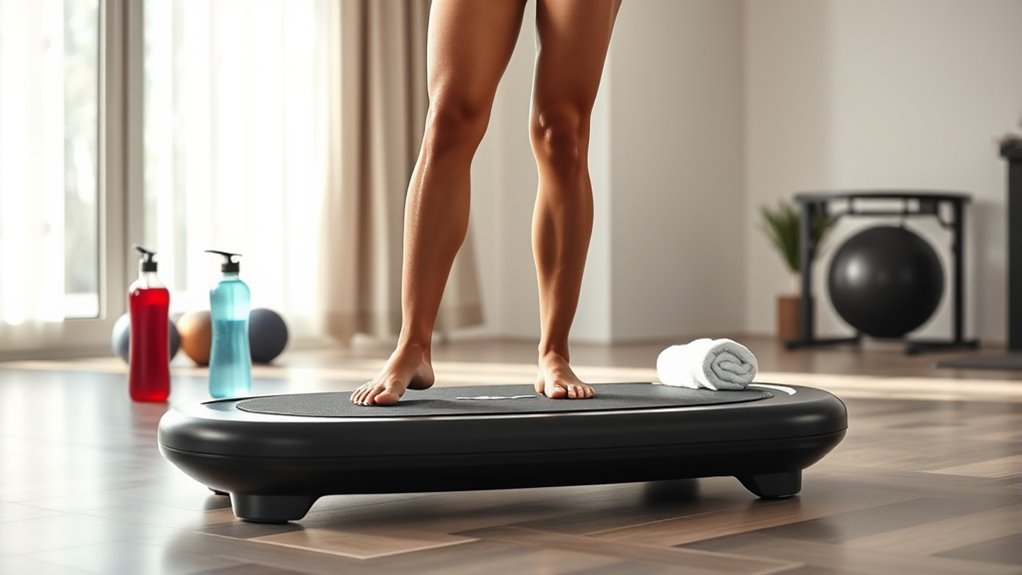
How Often Should You Use a Vibration Plate
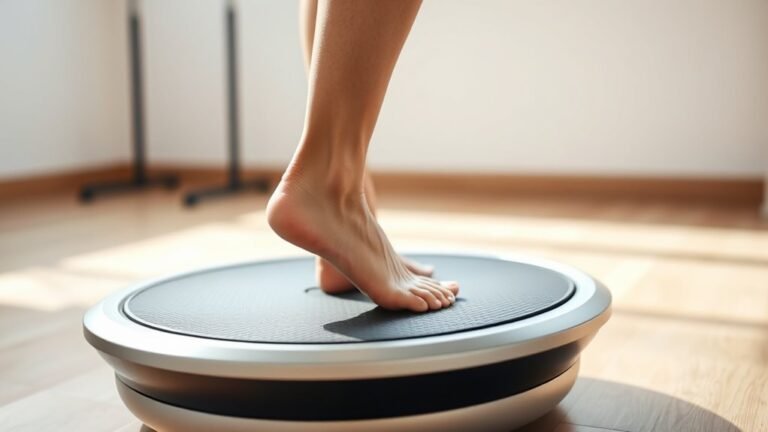
You should use a vibration plate about three to four times a week, adjusting based on your fitness level and how your body feels. This frequency helps maximize benefits like improved muscle strength and circulation without overdoing it.
Beginners should start with shorter sessions, around 10-15 minutes, and gradually increase time and intensity as they get more comfortable.
Intermediate and advanced users often train 15-20 minutes, mixing exercises and allowing for proper recovery.
It’s important to listen to your body to avoid soreness or fatigue. Taking breaks and not pushing too hard will help you stay consistent and injury-free.
Keep going to discover how to get the most from your vibration plate safely and effectively.
Key Takeaways
- Beginners should start with 3-4 sessions per week, each lasting 10-15 minutes. Gradually increase the duration and intensity as you get more comfortable.
- Intermediate and advanced users can train 3-5 times weekly. Try balancing 15-20 minute sessions with proper recovery to get the most out of your workouts.
- Adjust how often you use the vibration plate based on your fitness level, the intensity of your sessions, your personal goals, and how well you recover.
- Mix up your exercises and always keep good form. This helps you maximize benefits and lowers the risk of injury.
- Listen to your body. If you notice persistent soreness, fatigue, or discomfort, it’s a good idea to reduce your frequency to avoid overtraining.
Understanding the Benefits of Vibration Plate Training
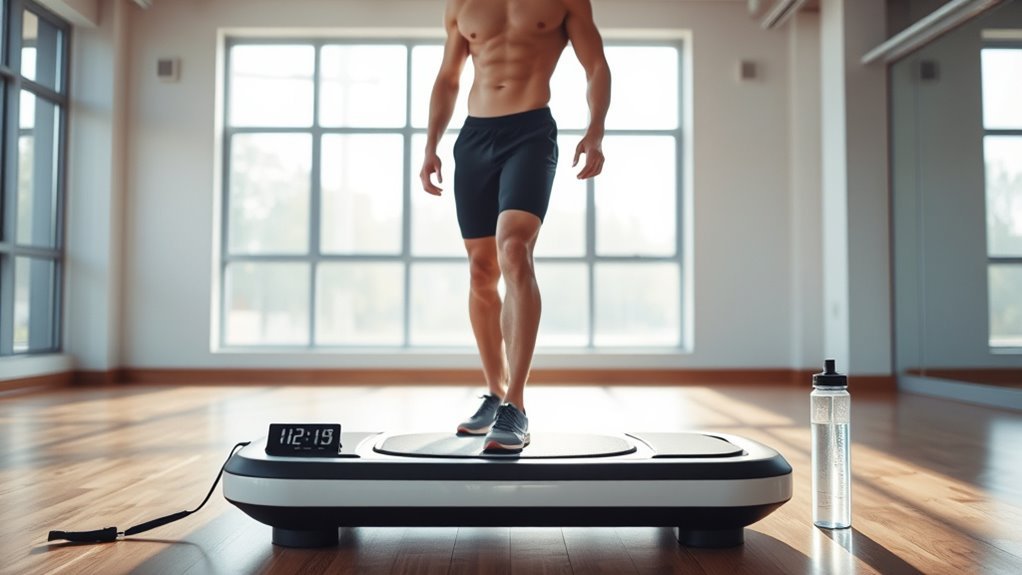
Although vibration plate training might seem simple, it offers a range of benefits that can really enhance your fitness routine. When you use a vibration plate, your muscles contract and relax rapidly, which improves strength and endurance more efficiently than some traditional exercises.
You’ll also notice better balance and coordination as your body adjusts to the vibrations. Plus, this type of training boosts circulation, which can help reduce muscle soreness and speed up recovery.
It’s particularly helpful if you’re short on time but still want effective results. You’ll find it supports flexibility and may even aid in weight management by increasing metabolism.
In short, vibration plate training can complement your workouts by targeting multiple fitness aspects simultaneously. So, it’s a valuable tool for your overall health and performance.
Recommended Usage Frequency for Beginners
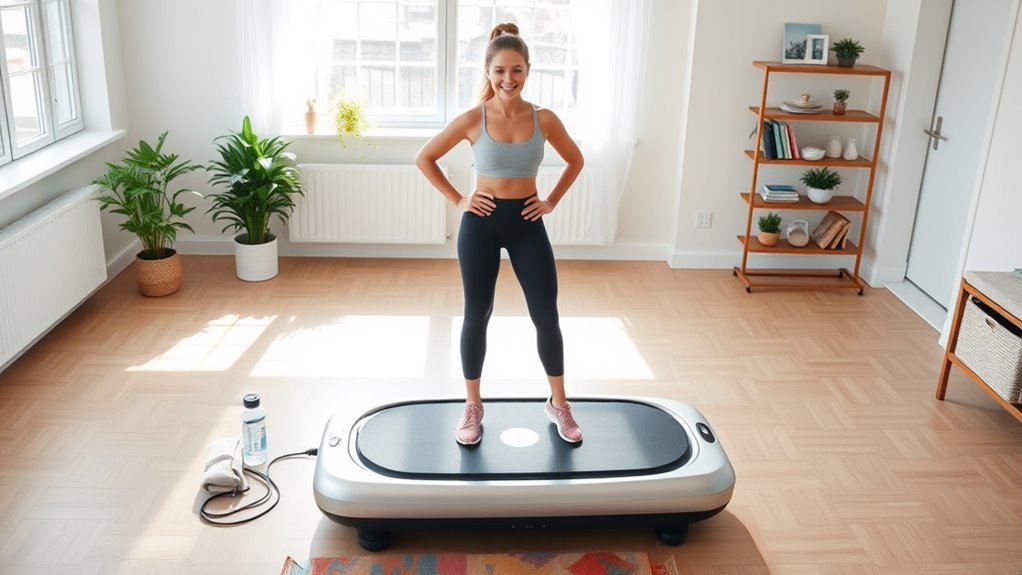
When you’re just starting with a vibration plate, it’s best to keep your sessions short and manageable. You’ll want to gradually increase the time as your body gets used to the vibrations.
This approach helps you avoid overdoing it and maximizes the benefits safely. Just take it step by step, and you’ll be good to go!
Starting Slow Benefits
Since your body needs time to adjust to the vibrations, you should start using the vibration plate for just a few minutes a day. This careful approach helps you avoid muscle soreness and prevents overexertion.
Here are three key benefits of starting slow:
- Reduced Risk of Injury – Gradual exposure allows your muscles and joints to adapt, lowering the chance of strains or discomfort.
- Improved Muscle Activation – Short sessions help your nervous system learn how to engage muscles effectively without overwhelming them.
- Better Consistency – Starting with manageable sessions encourages you to stick with the routine, building a sustainable habit.
Gradual Time Increase
After starting with short sessions to let your body adjust, you can begin increasing your time on the vibration plate gradually. Begin by adding just a minute or two every few days, aiming to reach about 15 minutes per session.
This slow increase helps prevent muscle fatigue and reduces the risk of injury. Consistency matters more than intensity at the start, so focus on regular use rather than long sessions.
Pay attention to how your body feels—if you experience discomfort or excessive soreness, scale back your time. Remember, your muscles and joints need time to adapt to the vibrations.
How Often Should Intermediate Users Train on a Vibration Plate
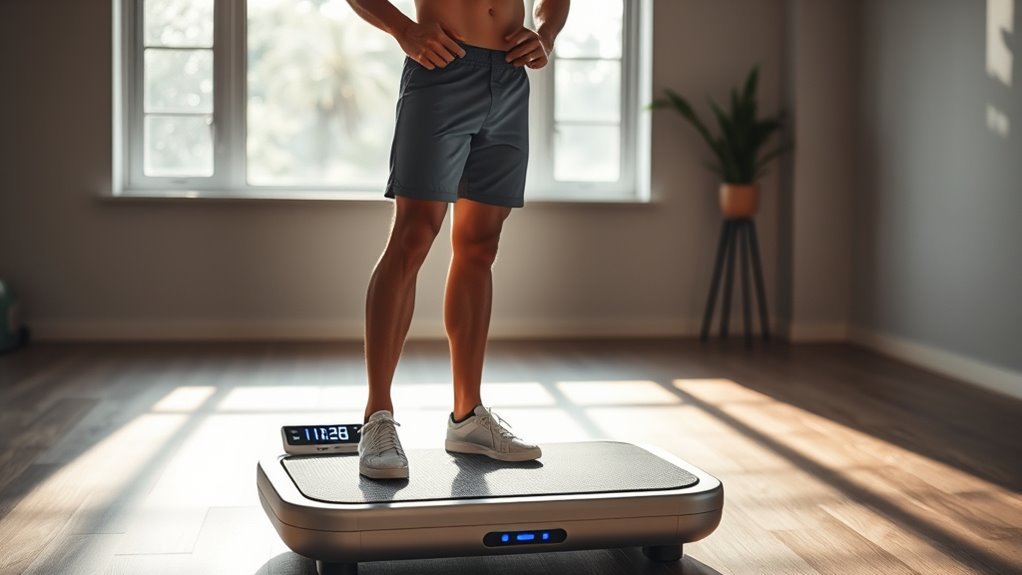
As you progress beyond the beginner stage, you’ll want to increase your vibration plate sessions carefully to avoid overtraining. Intermediate users typically train 3 to 4 times per week, allowing muscles adequate recovery between sessions.
Increase vibration plate sessions gradually to 3-4 times weekly, ensuring proper muscle recovery and avoiding overtraining.
Here’s how to structure your routine:
- Session Length: Aim for 15 to 20 minutes per workout. This helps balance intensity with rest periods.
- Exercise Variety: Try to mix things up by incorporating different exercises. This way, you target various muscle groups and prevent plateaus.
- Intensity Adjustment: Gradually increase vibration frequency or amplitude. But always listen to your body — don’t push too hard and risk strain.
Advanced Vibration Plate Training Schedules
As an advanced user, you can increase the frequency of your vibration plate sessions to maximize results. It’s key to balance higher intensity workouts with adequate recovery to prevent overtraining.
Let’s explore how to structure your schedule for ideal performance and recovery. This way, you get the most out of every session without burning out.
Frequency for Experienced Users
Though you’ve already built a solid foundation with vibration plate workouts, increasing your frequency requires careful planning to avoid overtraining.
As an experienced user, you can push your limits while staying mindful of your body’s signals. Here’s how to approach it:
- Start with 4-5 sessions per week – This frequency allows you to maintain progress without overwhelming your muscles and nervous system.
- Alternate workout types – Mix strength, flexibility, and balance exercises to engage different muscle groups and prevent fatigue.
- Monitor your body daily – If you notice persistent soreness or fatigue, reduce frequency or take rest days to recover properly.
Intensity and Recovery Balance
Once you’ve settled into a consistent vibration plate routine, balancing workout intensity with proper recovery becomes key to advancing your training. Push yourself during sessions by increasing vibration frequency, duration, or incorporating more challenging exercises. But don’t overdo it.
Your muscles need time to repair and adapt, so schedule rest or low-intensity days between intense workouts. Listen to your body—if you feel excessive soreness or fatigue, scale back. Recovery isn’t just about avoiding injury; it helps improve strength and prevent burnout.
Aim for 3-4 high-intensity vibration sessions weekly, complemented by active recovery like stretching or light cardio. This balance ensures you maximize benefits while staying energized. It makes your vibration plate training both effective and sustainable in the long run.
Signs You Might Be Overusing Your Vibration Plate
If you start feeling unusual soreness or persistent fatigue after using your vibration plate, it could be a sign you’re overdoing it. Your body needs time to adapt and recover, so pay attention to these signs:
- Extended Muscle Pain – Soreness lasting more than 48 hours or sharp pain indicates you’re stressing your muscles too much.
- Decreased Performance – If your strength or balance worsens instead of improving, it’s a red flag that recovery isn’t happening.
- Persistent Fatigue or Dizziness – Feeling constantly tired or lightheaded after sessions suggests your nervous system is overwhelmed.
Listen to your body and reduce frequency or intensity if these symptoms appear. Proper rest guarantees you gain the full benefits without injury.
Combining Vibration Plate Workouts With Other Exercises
When you combine vibration plate workouts with other exercises, you can boost your overall fitness and target different muscle groups more effectively. Start by using the vibration plate for warm-ups or cooldowns to increase blood flow and reduce soreness.
Pair it with strength training, like squats or lunges, to enhance muscle activation and improve balance. You can also integrate it with yoga or stretching routines to deepen stretches and increase flexibility.
Remember to alternate between vibration plate sessions and traditional workouts to prevent fatigue and avoid overuse. This mix keeps your routine dynamic and helps you achieve better results.
Factors That Influence How Often You Should Use a Vibration Plate
Because everyone’s fitness level and goals differ, how often you should use a vibration plate depends on several key factors. You need to take into account your current physical condition, the intensity of your sessions, and the specific outcomes you want to achieve.
Frequency of vibration plate use varies based on fitness level, session intensity, and your personal goals.
- Fitness Level: Beginners should start with shorter, less frequent sessions to avoid overexertion. Meanwhile, experienced users might handle daily use without any issues.
- Session Intensity: High-intensity workouts require more recovery time. So, using the plate less often can help prevent fatigue or injury.
- Goals: If you aim for muscle toning, frequent use might be beneficial. But for relaxation or circulation, shorter, less frequent sessions may be enough.
Tips for Maximizing Results With Proper Vibration Plate Use
Understanding how often to use your vibration plate sets the foundation for achieving your fitness goals. To maximize results, start with shorter sessions—about 10 to 15 minutes—and gradually increase as your body adapts.
Focus on proper form by standing or performing exercises with slightly bent knees to reduce joint stress. Incorporate a variety of positions like squats, lunges, or planks to engage different muscle groups.
Stay consistent by scheduling regular sessions, ideally three to four times a week. Don’t forget to combine vibration plate workouts with strength training and cardio for balanced fitness.
Finally, listen to your body; if you feel discomfort or fatigue, take a break to prevent injury. Proper use guarantees you get the most from your vibration plate safely and effectively.
Frequently Asked Questions
Can Vibration Plates Help With Weight Loss on Their Own?
Vibration plates alone won’t melt away pounds. You’ll need to combine them with a healthy diet and regular exercise for real weight loss.
They can boost your workouts but aren’t a magic solution by themselves. So, think of them as a helpful tool rather than a quick fix.
Are Vibration Plates Safe for Pregnant Women?
You might think vibration plates are harmless, but they aren’t safe during pregnancy.
You should avoid using them because the vibrations can stress your baby and body.
Always consult your doctor before trying new exercises while pregnant.
How Do Vibration Plates Affect Bone Density?
Vibration plates stimulate your bones by applying mechanical signals. This can help increase bone density over time.
Using them regularly may strengthen your bones. But it’s best to combine this with weight-bearing exercises.
And don’t forget to consult your doctor first before starting. It’s always good to get professional advice!
Can Vibration Plates Replace Traditional Cardio Workouts?
No, vibration plates can’t fully replace traditional cardio workouts. They’ll supplement your routine by improving muscle tone and circulation.
But you still need aerobic exercises like running or cycling for heart health and endurance. So, think of vibration plates as a helpful addition, not a complete substitute.
What Maintenance Is Required for a Vibration Plate?
You know what they say, “A stitch in time saves nine.” You should regularly wipe down your vibration plate, check bolts, and keep it dust-free to guarantee smooth operation and longevity.
Don’t skip routine inspections! Taking just a few minutes to maintain your equipment can save you a lot of trouble down the road.
Conclusion
Using a vibration plate is like tuning a fine instrument—you need the right rhythm to get the best results. Whether you’re just starting or an advanced user, listening to your body and sticking to recommended frequencies will keep you in harmony with your fitness goals.
Don’t overdo it; balance your sessions with other workouts and rest. This approach helps prevent fatigue and maximizes the benefits of vibration plate training.
Follow these tips, and you’ll turn vibration plate training into a powerful part of your routine. Regular use, combined with proper rest and varied exercise, ensures you make the most of your vibration plate workouts while staying safe and effective.