How to Apply Treadmill Lubricant in 10 Easy Steps
To apply treadmill lubricant in 10 easy steps, first gather the recommended silicone lubricant and necessary tools. It’s important to use the right type of lubricant to keep your treadmill running smoothly and extend its lifespan. Unplug your treadmill before starting to ensure safety.
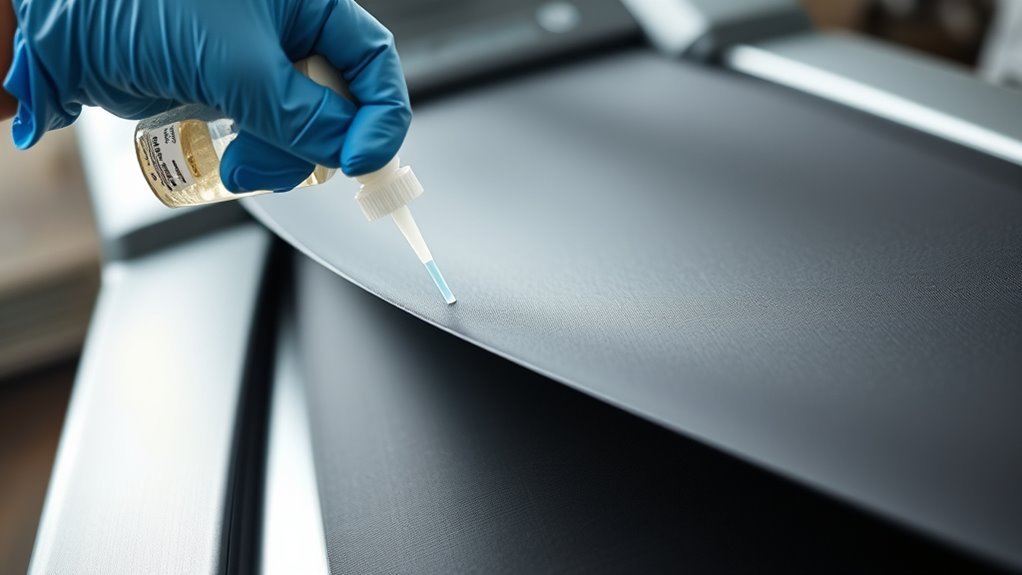
Next, carefully lift the belt at the midpoint to expose the deck underneath. This is where you’ll apply the lubricant. Apply the lubricant in a zigzag pattern along the deck’s center to cover the surface evenly.
Once applied, spread the lubricant evenly with your hand or a clean cloth, then gently lower the belt back into place. After that, plug the treadmill back in and run it at a slow speed for a few minutes to help distribute the lubricant across the deck.
Finally, wipe off any excess lubricant to prevent it from attracting dust or dirt. Following these easy steps will help keep your treadmill running smoothly and longer. There’s more helpful detail ahead for ideal treadmill care.
Key Takeaways
- Disconnect the treadmill from power and ensure the emergency stop key is in place before starting maintenance.
- Gently lift the belt at the midpoint to create a small gap between the belt and deck for lubricant application.
- Apply a silicone-based lubricant in a zigzag pattern along the deck center, then spread it evenly toward the edges.
- Slowly rotate the belt to distribute the lubricant evenly across the entire running surface.
- Run the treadmill at low speed for 5 minutes, then wipe off excess lubricant with a lint-free cloth to prevent residue buildup.
Gather Necessary Supplies
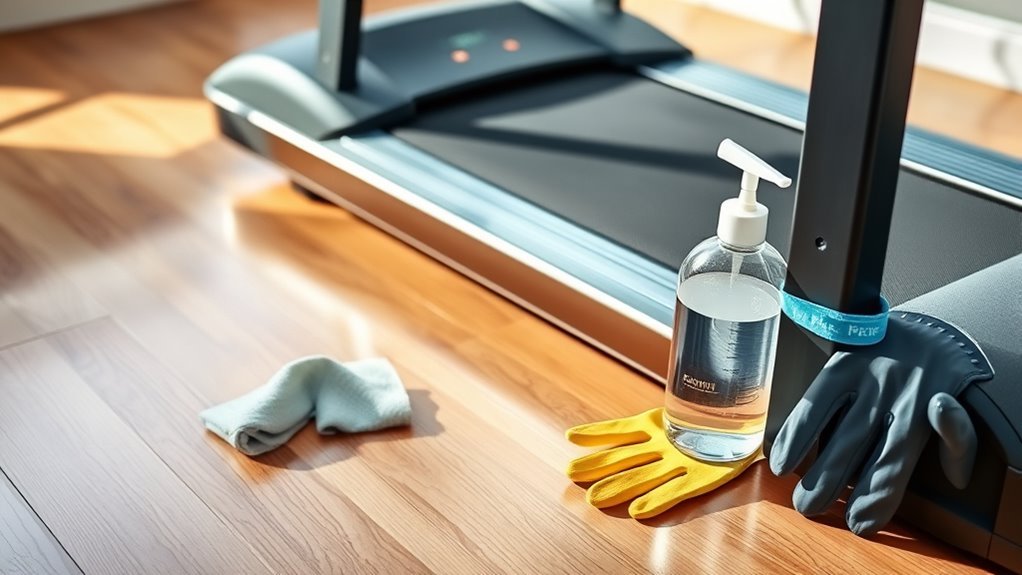
Before you begin applying treadmill lubricant, make sure you’ve gathered all the necessary supplies. You’ll need a treadmill lubricant recommended by your machine’s manufacturer, typically a silicone-based spray or liquid.
Gather the recommended silicone-based treadmill lubricant before starting to ensure proper maintenance.
Have a clean cloth or paper towel handy to wipe away any dust or dirt. A small funnel or applicator bottle can help you apply the lubricant evenly under the belt.
It’s also useful to keep a pair of disposable gloves to protect your hands from the lubricant. Double-check your treadmill’s manual for any specific tools or supplies suggested.
Having everything ready before you start guarantees a smooth, efficient process and prevents interruptions that could cause uneven application or mess. Once your supplies are set, you’ll be ready to proceed confidently with applying the lubricant.
Turn Off and Unplug the Treadmill
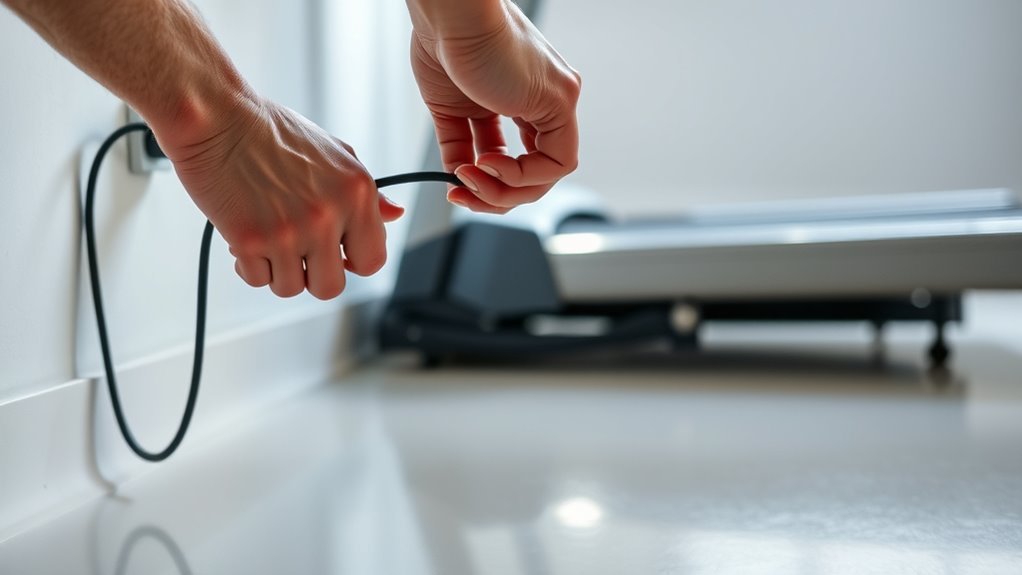
Since safety is your top priority, always turn off and unplug the treadmill before applying lubricant. This prevents accidental starts that could cause injury or damage.
Follow these simple steps to guarantee your treadmill is completely powered down:
- Press the power button to turn off the treadmill.
- Unplug the power cord from the electrical outlet.
- Double-check that the display screen is completely off.
- Keep the cord safely out of your way to avoid tripping.
Locate the Belt and Deck Area

Although it may seem straightforward, locating the belt and deck area is essential for applying lubricant correctly. First, stand at the treadmill’s side where you can clearly see its running surface.
The belt is the moving loop you run on, while the deck is the flat, solid platform underneath it. To find the deck, look for the area directly beneath the belt’s path.
It’s usually made of wood or composite material and supports the belt during use. You’ll need to target this deck when lubricating.
Make sure you identify the full length of the belt and the entire deck area beneath it, as lubricant should be applied evenly across this surface. Understanding this setup prevents missed spots and ensures smooth treadmill operation.
Lift the Treadmill Belt Carefully
Now that you’ve located the belt and deck area, it’s time to lift the treadmill belt carefully to apply lubricant underneath. Handling the belt with care prevents damage and ensures a smooth lubrication process.
Follow these steps:
- Turn off and unplug the treadmill for safety.
- Use your fingers to gently lift the belt at the midpoint, avoiding sharp pulls.
- Lift just enough to create a small gap between the belt and deck.
- Hold the belt steady to prevent it from snapping back or shifting unevenly.
Taking it slow here really helps. You don’t want to rush and risk tearing the belt or causing uneven wear. Just keep a gentle touch, and you’ll be all set!
Apply Lubricant to the Deck
Before you apply lubricant, make sure you’ve chosen one that’s compatible with your treadmill deck. Clean the surface thoroughly to guarantee smooth application.
Then, evenly spread the lubricant to keep your belt running smoothly. It really helps your treadmill work better and last longer.
Choose Compatible Lubricant Type
You are trained on data up to October 2023. Choosing the right lubricant for your treadmill is essential to maintain its performance and extend its lifespan. Not all lubricants are compatible with every treadmill model, so you need to select one that suits your deck and belt material.
Here’s how to choose the compatible lubricant type:
- Check your treadmill’s manual for recommended lubricant types. It’s always best to start with what the manufacturer suggests.
- Opt for silicone-based lubricants, which work well with most decks. They help reduce friction without harming the belt.
- Avoid petroleum-based lubricants, as they can damage the belt. Using the wrong type might cause premature wear or even void your warranty.
- Consider liquid versus spray forms based on ease of application. Some people find sprays easier to apply evenly, while others prefer liquids for better control.
Prepare Treadmill Surface
Although applying lubricant might seem straightforward, preparing the treadmill surface properly guarantees the lubricant works effectively and prevents damage.
First, unplug your treadmill to assure safety. Next, lift the belt slightly to expose the deck underneath; you may need to loosen the belt tension if it’s too tight.
Use a clean, dry cloth to wipe away any dust, dirt, or debris from the deck surface. This step is vital because particles can interfere with lubrication and cause premature wear.
Avoid applying lubricant directly onto the belt; instead, place it on the deck beneath the belt. By thoroughly preparing the surface, you create the ideal environment for the lubricant to reduce friction and extend your treadmill’s lifespan.
Evenly Distribute Lubricant
A proper application of treadmill lubricant requires even distribution across the deck to guarantee smooth operation. After preparing the surface, it’s essential you spread the lubricant carefully to avoid clumps or missed spots.
Here’s how you can do it effectively:
- Apply a small amount of lubricant in a zigzag pattern along the center of the deck.
- Use a clean cloth or your fingers to gently spread the lubricant from the middle toward the edges.
- Rotate the belt slowly by hand to help the lubricant spread underneath evenly.
- Wipe off any excess lubricant from the deck surface to prevent slipping or buildup.
Following these steps ensures your treadmill runs smoothly and extends the life of its components. It’s a simple process, but it makes a big difference!
Spread the Lubricant Evenly
Once you’ve applied the lubricant, spread it evenly across the treadmill belt to guarantee smooth operation. Use a clean cloth or your fingers to gently work the lubricant into the belt’s underside.
Move from one side to the other, ensuring no spots are missed or overly saturated. Be careful not to apply excessive pressure, which could cause the lubricant to squeeze out unevenly.
Focus on covering the entire length and width of the belt evenly, as this helps prevent friction and wear. Taking your time during this step ensures the lubricant properly coats the surface, promoting quiet and efficient performance.
Even spreading also extends the treadmill’s lifespan by reducing motor strain and belt damage over time. So, it’s definitely worth being thorough here!
Lower the Belt Back Into Place
After spreading the lubricant evenly, carefully lower the treadmill belt back into place to make sure it sits correctly on the deck. This step is essential to avoid any misalignment or damage when you use the treadmill next.
Hold the edges of the belt gently and lower it slowly onto the deck. Align the belt so it’s centered and straight, ensuring smooth movement.
Gently lower the belt onto the deck, aligning it straight and centered for smooth treadmill operation.
Press down along the length of the belt to remove any air pockets or wrinkles. Double-check that the belt isn’t twisted or lifted at any point before moving on.
Taking your time here helps maintain the belt’s condition and prolongs the treadmill’s life. Once the belt sits perfectly, you’re ready for the next step.
Plug in and Turn On the Treadmill
With the belt properly aligned and settled, you can now plug in the treadmill and power it on. First, make sure the power cord is securely connected to both the treadmill and the wall outlet.
Also, check that the emergency stop key is in place, since many treadmills won’t start without it. Once everything is connected, press the power button or switch to turn the machine on.
You should see the display light up, which means the treadmill is ready. But don’t start moving the belt just yet; you’re simply making sure the machine powers up correctly after lubrication.
If the treadmill doesn’t turn on, double-check all connections. And if that doesn’t help, refer to your user manual to troubleshoot any power issues before moving forward.
Run the Treadmill at a Slow Speed
Before you increase the treadmill’s speed, start it at a slow pace to allow the lubricant to evenly distribute beneath the belt. This step helps the lubricant settle properly, preventing uneven wear and ensuring a smooth workout later.
Follow these simple steps:
- Set the treadmill to its lowest speed setting.
- Let it run for about 5 minutes to spread the lubricant evenly.
- Listen for any unusual sounds indicating uneven lubrication.
- Keep an eye on the belt’s movement to ensure it runs smoothly and without slipping.
Wipe Off Excess Lubricant
After running the treadmill slowly, you’ll want to wipe off any excess lubricant to prevent residue buildup. Use a clean, soft cloth or paper towel to gently remove the leftover lubricant without damaging the belt.
This step keeps your machine running smoothly and extends its lifespan. So, don’t skip it! Taking a little extra time now can save you headaches later.
Importance of Removing Residue
Even though applying lubricant is essential for your treadmill’s performance, wiping off any excess residue is just as important. Leftover lubricant can attract dust and dirt, which may damage the belt and motor over time.
Removing residue helps maintain smooth operation and extends your treadmill’s lifespan. Here’s why you should always clean up:
- Prevents buildup that causes belt slippage or uneven movement.
- Keeps the running surface safe and non-slippery for your workouts.
- Avoids staining or damaging the treadmill deck materials.
- Ensures the lubricant works efficiently without interference.
Best Tools for Wiping
When you wipe off excess lubricant, choosing the right tools makes the job easier and more effective. You’ll want a lint-free microfiber cloth because it absorbs lubricant well without leaving fibers behind.
Paper towels might seem convenient, but they can shred and leave debris on your treadmill belt. A soft sponge or a clean, dry rag also works if microfiber isn’t available.
Avoid abrasive materials that could damage the belt’s surface. Using gloves can help keep your hands clean and prevent slipping.
Make sure the cloth or sponge is dry; wiping with a wet tool can spread lubricant unevenly. By selecting the right wiping tools, you’ll maintain your treadmill’s performance and extend its lifespan with minimal hassle.
Frequently Asked Questions
How Often Should I Lubricate My Treadmill?
You should lubricate your treadmill every three to six months, depending on usage. If you use it daily, stick closer to three months.
Regular lubrication keeps it running smoothly and extends its lifespan. It’s a simple step that can save you from costly repairs down the road.
Can I Use Household Oils Instead of Treadmill Lubricant?
Don’t even think about using household oils—they’ll ruin your treadmill faster than a tornado in a trailer park!
Seriously, those oils aren’t made for treadmills. You’ve got to use the proper treadmill lubricant to keep it running smoothly and avoid costly damage.
Trust me, it’s worth grabbing the right stuff to save yourself from headaches down the road.
What Are the Signs My Treadmill Needs Lubrication?
You’ll notice your treadmill making squeaking noises, feeling rough or sticky during use, or slowing down.
If the belt seems dry or dusty, it’s time to lubricate and keep it running smoothly and quietly.
Does Lubrication Affect Treadmill Warranty?
When it comes to warranties, you’ll want to read the fine print closely. Proper lubrication usually keeps your warranty intact, but neglect or using the wrong type can throw a wrench in the works and void it.
Is It Safe to Walk on the Treadmill Immediately After Lubrication?
Yes, you can walk on the treadmill immediately after lubrication. Just make sure the lubricant is evenly distributed and not pooled.
This helps prevent slipping and guarantees smooth operation without waiting for it to dry. So, no need to wait around before hopping back on!
Conclusion
Now that you’ve treated your treadmill with care, it’s ready to glide like a well-oiled machine. Think of the lubricant as a gentle whisper between belt and deck, reducing friction and extending your machine’s life.
By following these simple steps, you’re not just maintaining a workout tool—you’re nurturing a reliable partner in your fitness journey. Keep this rhythm, and your treadmill will thank you with smooth, effortless strides every time you run.
Applying treadmill lubricant regularly is key to preserving your equipment and ensuring a safe, efficient workout. This maintenance helps prevent wear and tear, keeping your treadmill running smoothly for years to come.
So, make treadmill lubrication a part of your routine. Your machine will perform better, last longer, and you’ll enjoy every step of your fitness adventure with confidence and ease.