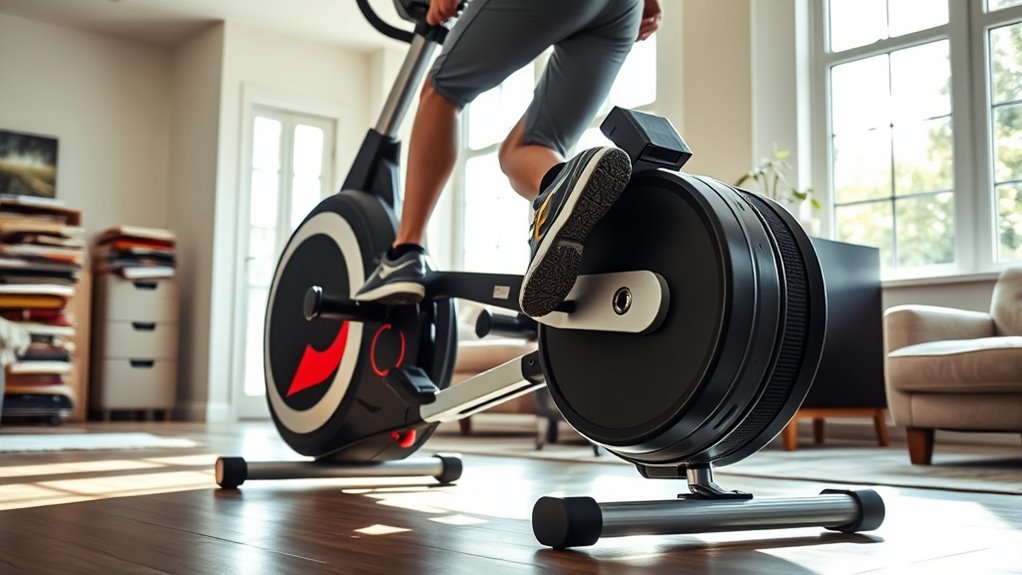
How to Move an Elliptical Machine in 5 Easy Steps
To move your elliptical machine in five easy steps, start by clearing the area around it and unplugging the device. This helps make sure you have plenty of space and avoid any accidents with cords or obstacles.
Next, gather some help and tools like a dolly or sliders to make handling the elliptical safer and easier. You definitely don’t want to try moving it alone—it’s heavy and awkward!
Then, disconnect any loose parts and secure them so they don’t get damaged during the move. This step is key to keeping your elliptical in good shape.
When lifting, use your legs and ask for assistance to evenly distribute the weight. This will help prevent injury and make the process smoother.
Finally, set the elliptical up on a level surface and test its functions to ensure everything is working properly. Following these simple steps will make moving your elliptical machine much safer and less stressful.
Key Takeaways
- Unplug the elliptical and remove or secure loose parts like pedals and accessories for safe handling. This keeps everything safe and prevents any parts from getting lost.
- Enlist help and prepare tools like a dolly or sliders to ease the moving process. Having the right tools really makes a big difference.
- Bundle cables and secure moving parts with straps or padding to prevent damage during transport. This way, nothing gets scratched or broken while you move it.
- Use proper lifting techniques and move slowly, communicating clearly with helpers to avoid injury. Teamwork is key here, so keep talking as you go.
- Set up the elliptical on a flat surface, reconnect cables, and test all functions before use. Make sure everything works smoothly before you jump back on!
Prepare the Elliptical for Moving
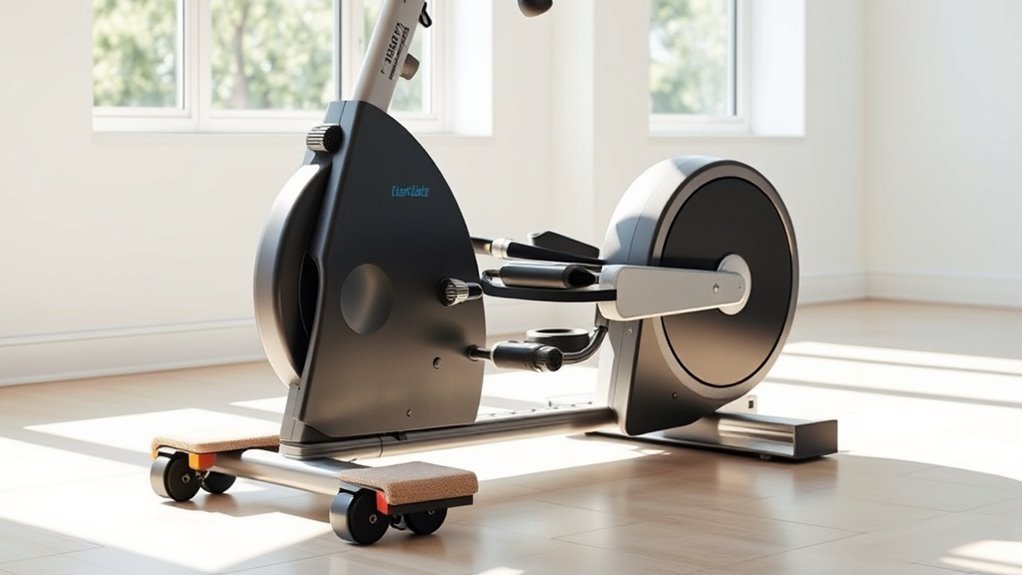
Before you move your elliptical machine, make sure to unplug it and clear the surrounding area. This guarantees safety and prevents tripping hazards.
Unplug your elliptical and clear the area first to ensure safety and avoid tripping hazards.
Next, check for any loose parts or accessories like water bottle holders or tablet stands, and remove them to avoid damage during the move. If your elliptical has pedals that can be locked or detached, secure or remove them as well.
Wipe down the machine to remove dust and sweat, which can make it slippery to handle. Finally, if your elliptical has a display or control panel, cover it with a soft cloth or bubble wrap to protect it from scratches or impact.
Taking these steps helps you prepare the elliptical efficiently and reduces the risk of damage or injury. It’s a bit of extra effort, but totally worth it!
Gather Necessary Tools and Assistance
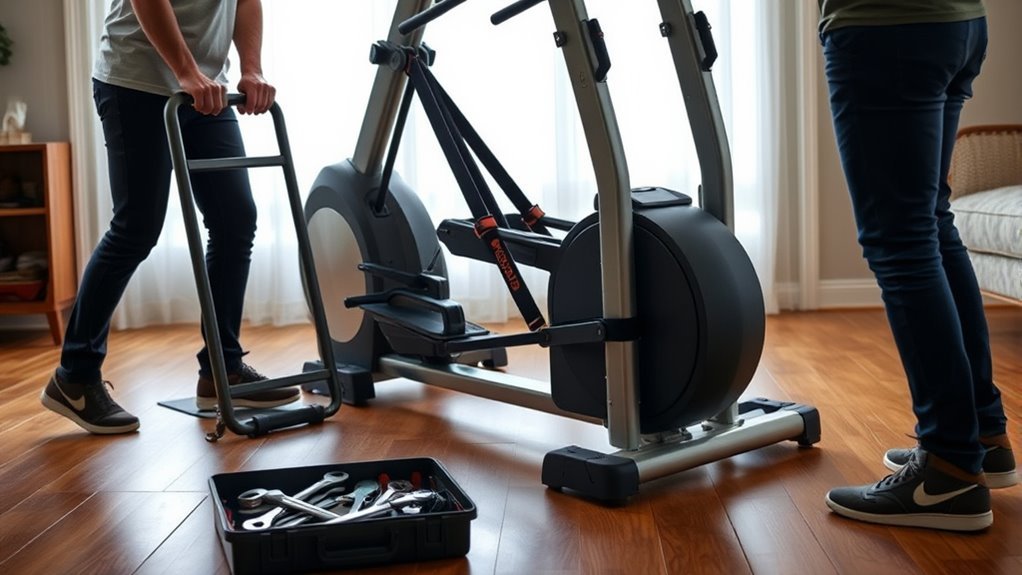
Although moving an elliptical machine can be manageable on your own, gathering the right tools and enlisting help makes the process much safer and smoother. First, ask a friend or family member to assist you—ellipticals are bulky and heavy, so an extra pair of hands reduces strain and risk of injury.
Next, prepare basic tools like a dolly or furniture sliders to ease movement, especially on hard floors. Have straps or ropes ready to secure the machine during transport.
Wear comfortable, supportive shoes and gloves for grip and protection. Finally, clear the pathway to avoid obstacles that could cause trips or damage.
Disconnect and Secure Loose Parts
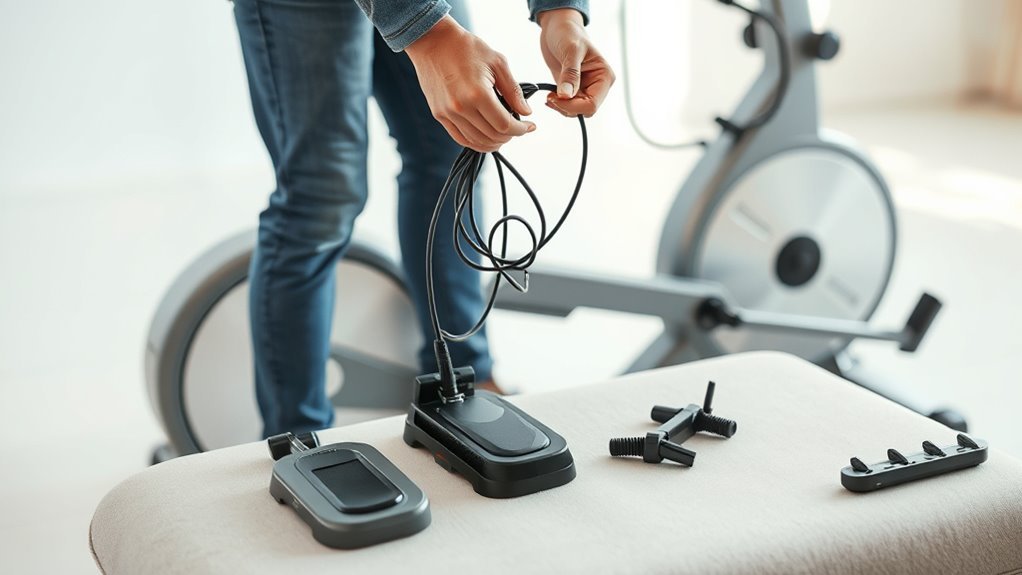
Since elliptical machines have several moving parts, you’ll want to disconnect and secure any loose components to prevent damage during the move. Start by unplugging the machine from the power source to avoid electrical hazards.
Next, remove any accessories like water bottle holders, heart rate sensors, or tablet holders that can detach easily. Check the pedals, arms, and console for loose screws or parts; tighten or detach them as needed.
Use zip ties or tape to bundle cables and cords neatly, keeping them from snagging or tangling. Secure moving parts, such as pedals or arms, with straps or padding to minimize movement.
Taking these steps ensures your elliptical stays intact and prevents damage while you’re relocating it to its new spot. It’s a bit of extra work, but totally worth it for peace of mind!
Lift and Transport the Elliptical Safely
When you’re ready to move the elliptical, make sure you lift with your legs—not your back—to prevent injury. Position yourself close to the machine, bend your knees, and keep your back straight as you grip the frame firmly.
If the elliptical is heavy, enlist help to distribute the weight evenly. Use a dolly or furniture sliders if available to ease transport across floors and avoid damage.
Move slowly and communicate clearly with anyone assisting you to coordinate each step. Watch out for obstacles and tight corners, planning your path ahead of time.
Once lifted, keep the elliptical balanced and steady. Taking these precautions ensures you move the machine safely and protect both yourself and your equipment during the process.
Set Up and Test the Elliptical in Its New Location
Before you start using your elliptical, set it up carefully in its new spot to guarantee stability and proper function. Begin by placing the machine on a flat, sturdy surface to prevent wobbling during workouts.
Adjust the leveling feet if your model has them, making sure all four points contact the floor evenly. Next, reconnect any cables or power cords securely.
Once assembled, switch the elliptical on and test all functions, including resistance levels, display panel, and pedals. Listen for unusual noises that could indicate loose parts.
Finally, perform a short trial workout to confirm smooth motion and comfort. If anything feels off, double-check connections and alignment before regular use.
Taking these steps ensures your elliptical operates safely and effectively in its new location. It’s worth the extra bit of effort to get everything just right!
Frequently Asked Questions
Can I Disassemble the Elliptical for Easier Transport?
Yes, you can disassemble the elliptical for easier transport. Just make sure to keep track of all parts and screws.
Follow the manual carefully, and it’s a good idea to take photos during disassembly. This will help you when it’s time to put everything back together later.
How Do I Protect the Floor While Moving the Elliptical?
You can protect the floor by placing moving blankets or thick towels under the elliptical’s feet. Using furniture sliders or cardboard also helps prevent scratches.
Be careful when lifting to avoid dragging the machine across the floor. This way, you keep both your floor and elliptical safe during the move.
What Is the Average Weight of a Typical Elliptical Machine?
Imagine lifting a hefty gym buddy—elliptical machines typically weigh between 100 to 150 pounds.
You’ll want to brace yourself and use proper technique so you don’t strain your back or drop it during the move.
Better safe than sorry, right? Taking your time with the lift can save you a lot of trouble later on.
Are There Special Moving Blankets Recommended for Fitness Equipment?
Yes, you’ll want moving blankets designed for heavy, bulky items—they’re thicker and more durable.
These fitness-specific blankets protect your elliptical from scratches and damage during moves. It makes the whole process safer and easier for you.
How Often Should I Lubricate the Elliptical After Moving?
Like clockwork, you should lubricate your elliptical every three to six months after moving it. This keeps the machine running smoothly and prevents wear, ensuring your workouts stay as efficient as possible.
It might seem like a bit much, but trust me, it’s worth it. Regular lubrication helps your elliptical last longer and feel better when you use it. So, mark your calendar and don’t skip it!
Conclusion
Now that you know how to move your elliptical in just five easy steps, you can trust that relocating it doesn’t have to be overwhelming. You might’ve believed it’s too heavy or complicated, but with the right prep and care, it’s completely manageable.
Moving your machine safely guarantees you’ll keep enjoying your workouts without interruption. So go ahead—make that move confidently, knowing your elliptical and your fitness routine are in good hands.
By following these simple steps, moving your elliptical machine becomes stress-free and efficient. This way, you protect your investment and maintain your exercise momentum. Remember, proper planning and careful handling are key to a smooth transition.
With these tips, you can confidently relocate your elliptical anywhere in your home or gym. Keep your fitness routine on track and enjoy your workouts without missing a beat!