How Much Weight Does a Bench Press Bar Have?
A standard bench press bar typically weighs 45 pounds.
On the other hand, an Olympic bench press bar usually comes in at 44 pounds (20 kg).
The difference might seem small, but it can definitely influence your lifts and training goals.
Specialty bars can weigh more or less, depending on their design and purpose.
Knowing your bar’s exact weight is super important to track your progress accurately and lift safely.
If you want to understand how your choice of bench press bar impacts your workouts, keep exploring these details.
Picking the right bar can make a big difference in your training experience and results.
Key Takeaways
- Standard bench press bars usually weigh about 45 pounds (20.4 kg). Olympic bench press bars typically weigh 20 kilograms (44 pounds).
- But the weight can vary quite a bit. For example, lighter or beginner bars might weigh anywhere from 15 to 35 pounds.
- The exact weight depends on things like the material quality, length, and design of the bar.
- It’s important to know the bar weight so you can track your strength accurately and lift safely as you progress.
Standard Bench Press Bar Weight
Although bench press bars come in various types, the standard bench press bar typically weighs 45 pounds (20.4 kilograms). When you pick up this bar, you’ll notice it’s designed to fit most gym setups, making it a reliable choice for your workouts.
This bar usually measures about 7 feet long and has a diameter of 28 millimeters, providing a comfortable grip. You’ll appreciate that its weight is consistent, so you can accurately track your progress without surprises.
If you’re setting up for a workout, knowing this bar’s weight helps you calculate the total load you’re lifting. Remember, the standard bar is versatile, suitable for beginners and experienced lifters alike, ensuring you can focus on improving your bench press safely and effectively.
Olympic Bench Press Bar Weight
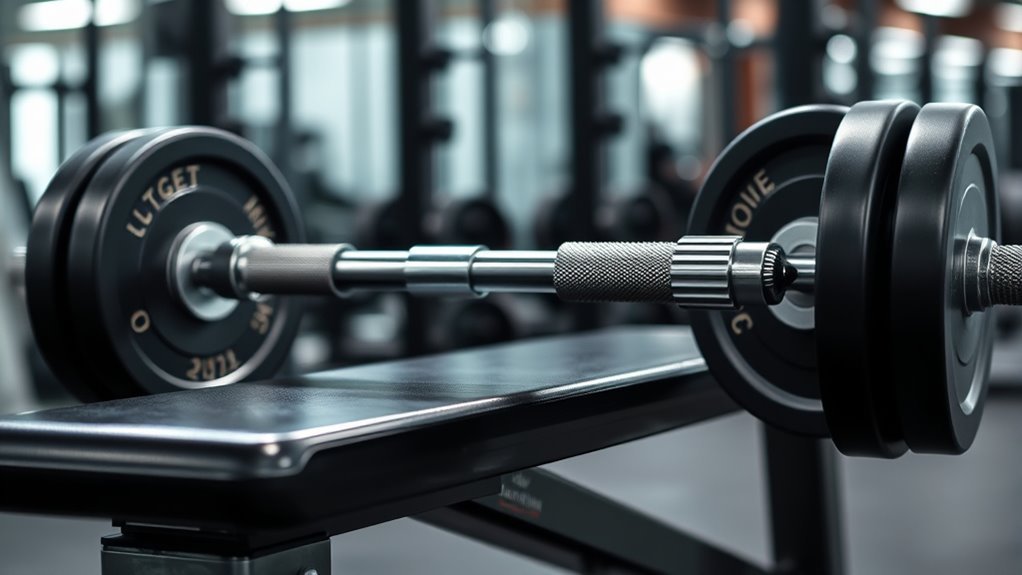
When you pick up an Olympic bench press bar, you’ll notice it’s built to specific standards, usually weighing 20 kilograms (about 44 pounds). These bars are made from high-quality steel with precise construction to handle heavy loads.
Keep in mind, the weight can vary slightly depending on the country or manufacturer. So, it’s always a good idea to check the exact weight if you’re planning your workout.
Standard Bar Specifications
A standard Olympic bench press bar typically weighs 20 kilograms (44 pounds), and knowing this helps you track your lifting progress accurately. These bars measure about 7 feet (2.2 meters) in length and have a diameter of 28 millimeters.
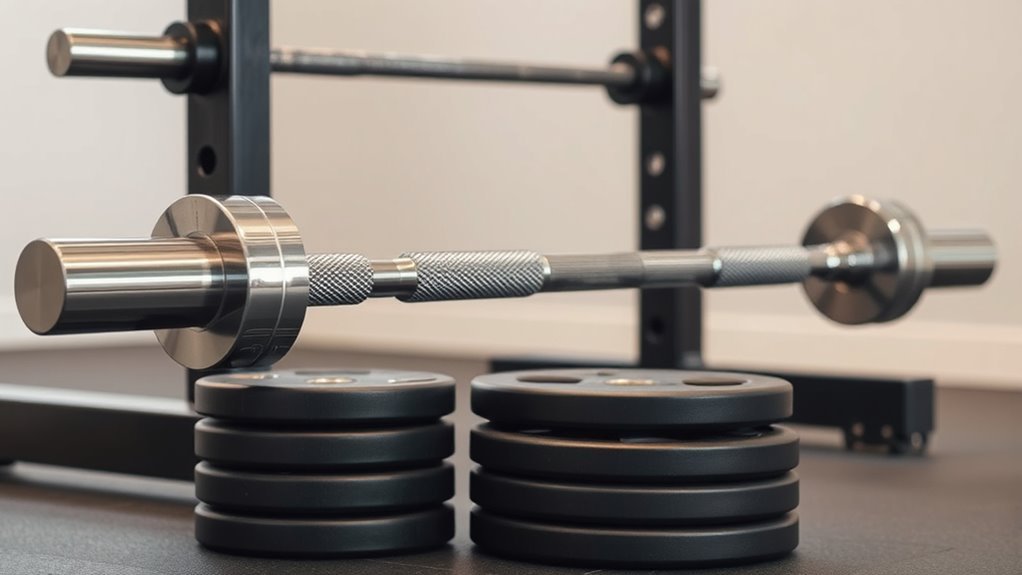
The sleeves on each end rotate smoothly to reduce strain on your wrists and shoulders during lifts. They’re designed to hold standard Olympic plates, which fit securely onto the sleeves using collars or clips.
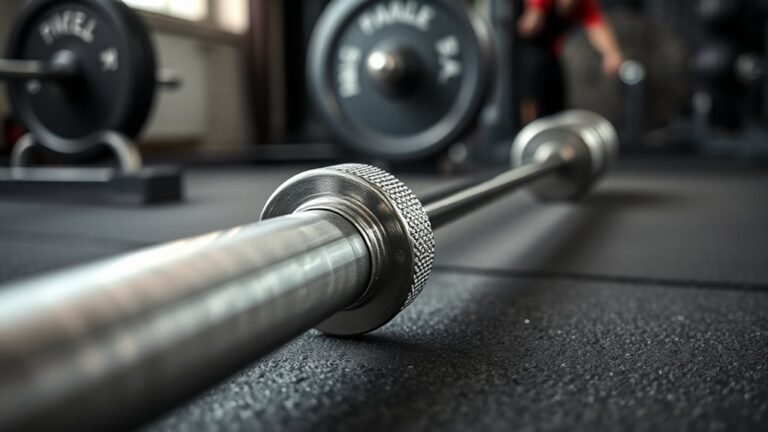
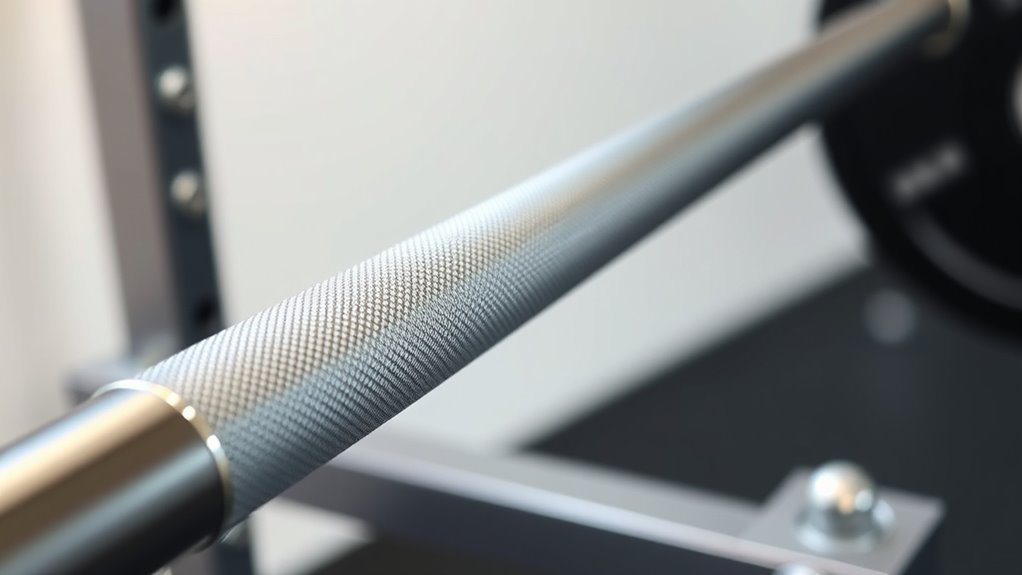
The bar’s knurling pattern is usually moderate—not too aggressive—to give you a firm grip without causing discomfort. Most bars also feature center knurling to help stabilize your back during heavier lifts.
Understanding these specifications guarantees you pick the right bar and maintain consistent training standards every time you hit the bench. It’s all about making your workout safer and more effective!
Material and Construction
Knowing the standard dimensions and features of an Olympic bench press bar sets the stage for understanding how its material and construction impact performance and weight. When you pick up a bar, its feel and durability come from these key aspects:
- Steel Quality: Most bars use high-tensile steel, offering strength without adding unnecessary weight. This means you can lift safely and confidently.
- Knurling and Grip: The bar’s textured surface helps you maintain a firm hold. This is vital for control during heavy lifts.
- Sleeve Construction: The rotating sleeves reduce torque on your wrists. That makes lifts smoother and helps prevent injury.
These factors not only determine the bar’s standard 20 kg weight but also influence how comfortable and effective your bench press sessions will be.
Weight Variations Worldwide
Although Olympic bench press bars generally weigh around 20 kilograms, you’ll find variations depending on the region and specific standards. For example, in some parts of Europe, bars might weigh slightly less, around 15 to 17 kilograms, to accommodate local competition rules.
In the United States, the standard Olympic barbell used in bench press competitions typically sticks to 20 kilograms (44 pounds). However, you might encounter specialty bars designed for different weights, especially in training gyms or for adaptive lifting.
When competing internationally, it’s essential to check the exact bar weight, as small differences can affect your total lift. Understanding these regional variations helps you prepare better, ensuring fair comparisons and accurate tracking of your progress worldwide.
Differences Between Standard and Olympic Bars
You’ll notice that standard and Olympic bars differ in length, with Olympic bars usually being longer. They also vary in weight capacity, so choosing the right one depends on how much load you plan to lift.
Plus, the grip diameter can affect your comfort and control during your bench press. It’s worth considering these factors to pick the bar that suits your workout best.
Bar Length Variations
When comparing standard and Olympic bench press bars, you’ll notice that their lengths differ markedly, impacting your lifting experience. Standard bars typically measure around 5 to 6 feet long, while Olympic bars stretch to about 7 feet.
This difference affects bar stability and the amount of space you have for weight plates.
Here are three key points to contemplate about bar length variations:
- Grip Width – Olympic bars offer more space for wider hand placements, which may suit different bench press techniques.
- Bar Flexibility – Longer Olympic bars have more whip or flex, which can influence how the bar feels during lifts.
- Gym Compatibility – Standard bars fit smaller racks and home gyms better, while Olympic bars require larger setups.
Understanding these length differences helps you choose the right bar for your training needs. It’s all about what fits your space and lifting style best!
Weight Capacity Differences
The length and design differences between standard and Olympic bars also impact how much weight they can safely hold. When you pick up a standard bar, typically around 5 to 6 feet long, you’ll notice it usually supports less weight—often up to 200-300 pounds. This limitation comes from its thinner diameter and simpler construction.
On the other hand, Olympic bars, which are longer at about 7 feet and feature more advanced materials and engineering, can hold considerably more weight, often between 600 to 1,500 pounds. If you’re serious about heavy lifting, an Olympic bar’s higher weight capacity offers the durability and safety you need.
Choosing the right bar depends on your training goals and the amount of weight you plan to lift consistently. So, think about what you want to achieve before making your pick!
Grip Diameter Comparison
Although both standard and Olympic bars serve similar purposes, their grip diameters differ markedly, affecting how comfortable and secure you feel during lifts. Choosing the right grip size can influence your control and performance.
- Standard Bars: These typically have a grip diameter of about 25mm (1 inch), making them thinner and easier to hold, especially if you have smaller hands.
- Olympic Bars: These bars usually feature a thicker grip diameter of 28mm (1.1 inches) or more, providing a sturdier feel but requiring a stronger grip.
- Impact on Training: Thicker bars can enhance grip strength over time but might feel challenging initially, while thinner bars allow for quicker adjustments and more precise hand placement.
Understanding these differences helps you select a bar that matches your comfort and training goals. So, think about what feels right for you before making a choice.
Specialty Bench Press Bars and Their Weights
Since not all bench press bars are created equal, you’ll find specialty bars designed for specific training goals or competition standards.
For example, a cambered bench press bar, which curves downward, usually weighs around 20 to 25 pounds. It offers a different range of motion that targets your chest differently.
You might also encounter Swiss bars or football bars, typically weighing between 15 to 25 pounds. These bars feature multiple grip options to reduce shoulder strain.
Additionally, deadlift bars, while not traditional for bench pressing, can weigh slightly more or less depending on length and material.
When training or competing, knowing the exact weight of your specialty bar helps you track progress accurately. Plus, it guarantees your routine fits your strength goals perfectly.
Factors Affecting Bench Press Bar Weight
When you choose a bench press bar, several factors influence its weight, affecting your workout and progress. Understanding these can help you pick the right bar for your strength goals and safety.
- Material: Most bars are made from steel, but the grade and treatment impact weight. Higher-quality steel often means a heavier, more durable bar.
- Length and Diameter: Longer bars generally weigh more. The bar’s diameter also affects weight and grip comfort, influencing your lifting experience.
- Knurling and Sleeves: The presence and design of knurling (the textured grip) and the type of sleeves (where plates load) add to the bar’s overall weight. Some bars have thicker sleeves for heavier plates, increasing total mass.
Consider these factors to ensure your bench press bar matches your training needs perfectly. It’s all about finding what works best for you and your goals.
How to Measure Your Bench Press Bar Weight
If you want to know the exact weight of your bench press bar, measuring it yourself is straightforward and guarantees accuracy. First, remove any plates or collars from the bar.
Then, use a reliable scale—preferably a gym or bathroom scale. Place the bar carefully on the scale, ensuring it’s balanced. Record the weight displayed. Repeat a couple of times for consistency.
Here’s a simple checklist to help you measure accurately:
| Step | Action | Tip |
|---|---|---|
| 1 | Remove plates | Avoid extra weight |
| 2 | Use a reliable scale | Calibrate if possible |
| 3 | Place bar on scale | Center it to balance |
| 4 | Record the weight | Note down reading |
| 5 | Repeat for accuracy | Average multiple readings |
Pretty easy, right? Just take your time, and you’ll get a precise number in no time!
Impact of Bar Weight on Your Lifting Progress
Knowing the exact weight of your bench press bar helps you understand how it affects your overall lifting progress. When you factor in the bar’s weight, you can accurately track your strength gains and avoid plateaus caused by miscalculating total load.
Understanding your bench press bar’s weight is key to tracking true strength gains and avoiding progress plateaus.
Here’s how bar weight impacts your lifting progress:
- Accurate Load Tracking: Knowing the bar’s weight ensures you record the true weight lifted. This way, you can monitor improvements precisely without guessing.
- Proper Progression: It helps you plan incremental weight increases effectively. That means you avoid over- or under-training, which can really hold you back.
- Technique Adjustment: The bar’s weight influences your form and muscle engagement. So, accounting for it helps you maintain proper technique as weights increase, keeping you safe and efficient.
Choosing the Right Bench Press Bar for Your Training
Selecting the right bench press bar can substantially influence your training results and safety. You need to weigh the bar’s weight, length, and grip type to match your strength level and workout goals.
Standard bars typically weigh 45 pounds, but lighter bars around 15-35 pounds suit beginners or those focusing on form. If you’re training for powerlifting, a stiffer, thicker bar can handle heavier loads without bending.
Olympic bars offer better grip and durability, ideal for serious lifters. Don’t overlook the knurling pattern—it affects how secure your grip feels.
Choosing a bar that fits your experience and goals helps prevent injury and makes your workouts more effective. Always test different bars to find what feels best for your training style.
Frequently Asked Questions
How Often Should I Replace My Bench Press Bar?
You should replace your bench press bar when you notice bending, rust, or damaged knurling.
Regularly inspect it every few months, especially if you use it a lot. This helps guarantee safety and peak performance during your workouts.
Can Bench Press Bars Bend Permanently?
Yes, your bench press bar can bend permanently if you overload it or drop heavy weights repeatedly.
Always use proper technique and don’t exceed the bar’s weight limit to keep it straight and safe for your workouts.
Taking care of your equipment helps it last longer and keeps you safe during your lifts.
What Maintenance Is Required for a Bench Press Bar?
You might think maintenance’s complicated, but it’s simple. You just clean the bar regularly, lubricate the sleeves to prevent rust, and inspect for bends or damage.
This keeps your bench press bar safe and effective. Just a little care goes a long way!
Are There Any Safety Certifications for Bench Press Bars?
Yes, you’ll find bench press bars certified by organizations like the International Weightlifting Federation (IWF) or ASTM International. These certifications guarantee the bars meet safety and quality standards, so you can lift confidently and safely.
It’s pretty reassuring to know that these bars have been tested and approved by trusted groups. That way, you’re not just guessing if your equipment is up to par. Safety first, right?
How Does Bar Knurling Affect Grip During Bench Press?
Bar knurling directly improves your grip by adding texture that prevents slipping. Without it, your hands might slide, risking control and safety.
Conclusion
The bench press bar is more than just metal; it’s the foundation of your strength journey. Like a steadfast bridge, its weight supports every lift, balancing challenge with stability.
Understanding the differences in bench press bar weights helps you choose the right path. This ensures your progress isn’t just measured in pounds but also in confidence and growth.
So, as you grasp the bar, remember—it’s not just weight you’re lifting; it’s the weight of your own potential. Knowing how much weight a bench press bar has is key to tracking your workouts and improving safely.
In the end, the bench press bar’s weight plays a crucial role in your training. It sets the baseline for every lift and helps you build strength steadily and effectively.