5 Best Tips for How You Put a Treadmill on Carpet
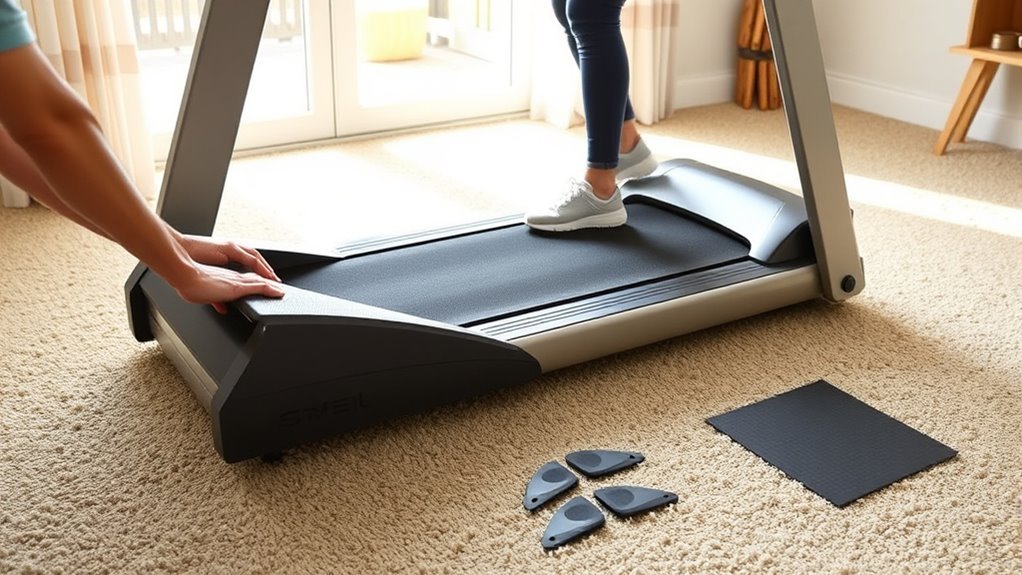
To set up your treadmill on carpet, start with a durable mat to protect the carpet and reduce noise. This simple step helps prevent damage to both your floor and machine, making your workout space safer and quieter.
Make sure there’s enough space around the treadmill for proper airflow to prevent overheating. Good ventilation keeps your treadmill running smoothly and extends its lifespan.
Check that your treadmill sits level to avoid wobbling. You can adjust the stabilizers if needed to keep it steady and comfortable while you exercise.
Keep both the carpet and treadmill underside clean to maintain performance. Dust and debris can affect how well your treadmill functions, so regular cleaning is a must.
Following these steps will help keep your equipment stable and your space tidy. Plus, you’ll enjoy a better workout experience on your carpeted floor.
You can discover more ways to optimize your setup and make the most of your treadmill.
Key Takeaways
– Use a durable heavy-duty PVC or rubber treadmill mat to protect carpet fibers and reduce noise and vibration during workouts.
It really helps keep things quieter and your carpet looking nice.
– Position the treadmill on a level surface and adjust stabilizer feet to prevent wobbling and ensure stability on carpet.
A stable treadmill means a safer, more comfortable workout for you.
– Leave at least 2 feet of space around the treadmill for proper ventilation and airflow to avoid overheating.
This little extra room can make a big difference in how well your treadmill runs.
– Regularly clean both the carpet beneath and the treadmill underside to reduce dust buildup and maintain performance.
Dust can sneak in and slow things down, so keeping it clean is key.
– Frequently check and adjust treadmill stabilizers to maintain firm contact with the carpet and keep the treadmill balanced.
Doing this often keeps everything steady and helps your treadmill last longer.
Choose a Durable Treadmill Mat for Carpet Protection
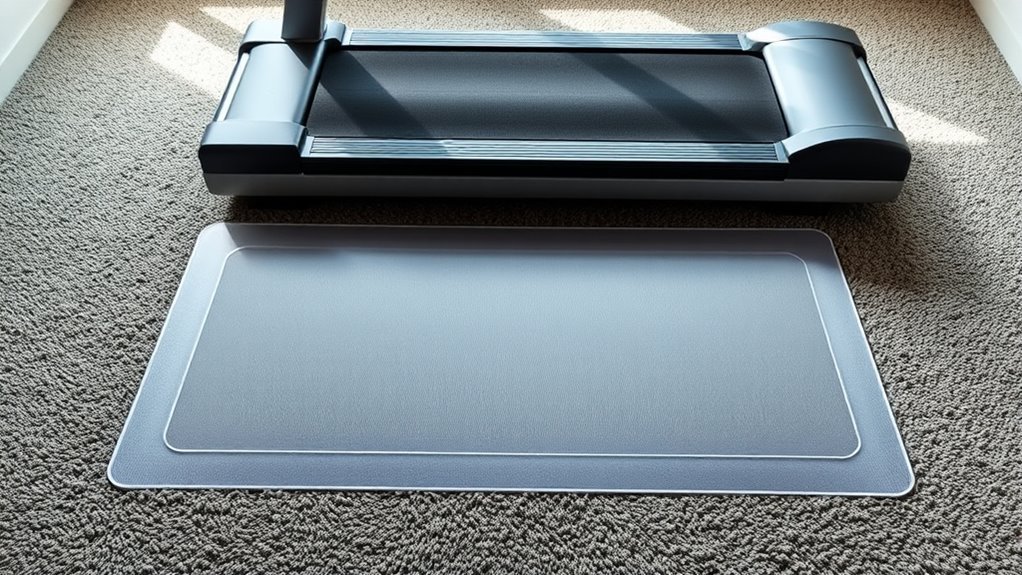
When you place a treadmill on carpet, choosing a durable treadmill mat is essential to protect your flooring and keep your machine stable. A quality mat prevents carpet fibers from getting crushed and reduces wear over time.
It also minimizes noise and vibration, making your workout quieter and more comfortable. Look for mats made from heavy-duty PVC or rubber, as they offer excellent grip and durability.
Make sure the mat covers the entire treadmill footprint, extending a few inches beyond to catch sweat and debris. This setup helps maintain your carpet’s appearance and ensures the treadmill doesn’t shift during use.
Investing in a reliable mat safeguards your carpet from damage and provides a safer, more enjoyable exercise experience. So, it’s definitely worth getting one that fits well and holds up over time.
Ensure Proper Ventilation and Airflow Around the Treadmill
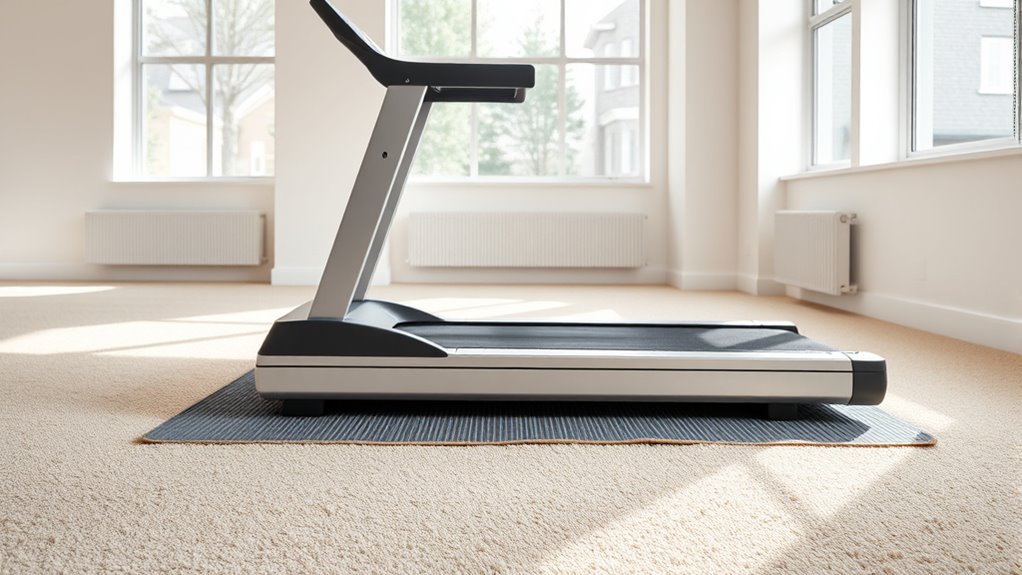
How can you keep your treadmill running smoothly and safely on carpet? Proper ventilation and airflow are key to preventing overheating and extending your machine’s life.
Proper ventilation and airflow are essential for keeping your treadmill running smoothly and safely on carpet.
Here’s what you should do:
- Leave at least 2 feet of clear space around the treadmill to allow air to circulate freely.
- Avoid placing the treadmill in a cramped corner or next to walls that block ventilation.
- Use a fan or open a window nearby to keep fresh air moving during workouts.
- Regularly clean the treadmill’s air vents and motor housing to prevent dust buildup.
Position the Treadmill on a Level Surface to Prevent Wobbling
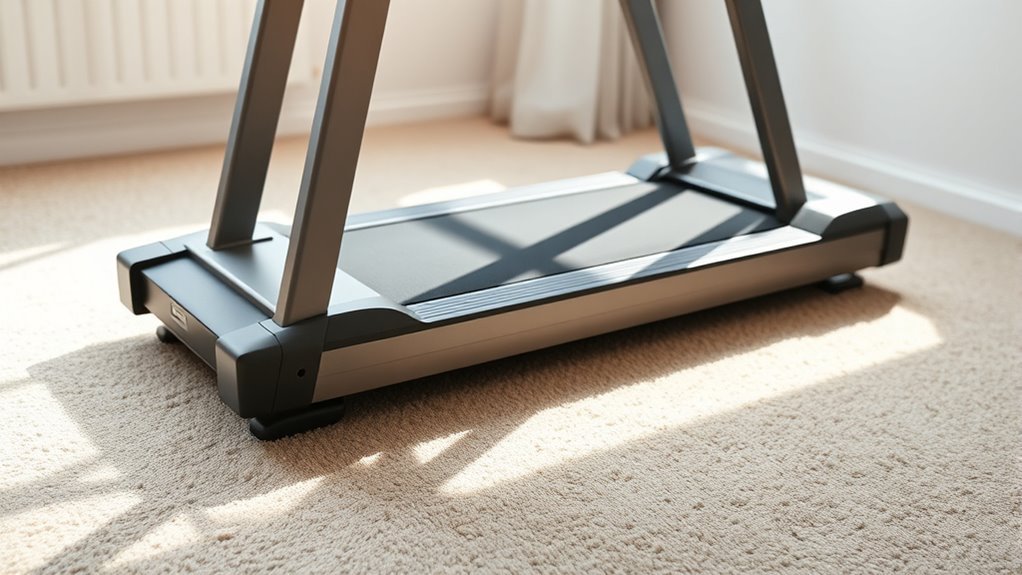
Although carpets provide cushioning, they can create an uneven surface that causes your treadmill to wobble during use. To prevent this, start by checking the carpet’s level where you plan to place your treadmill.
Use a small level tool to identify any slopes or dips. If you find uneven spots, consider using a treadmill mat designed for carpets or adjustable feet to stabilize the machine.
Position the treadmill so all four feet make solid contact with the surface. This ensures even weight distribution and reduces movement during workouts.
Taking these steps keeps your treadmill steady, protects it from damage, and improves your safety while exercising. Remember, a stable treadmill delivers a smoother, more enjoyable running experience.
Regularly Clean Both the Carpet and Treadmill Underside
Keeping your treadmill stable on carpet is important, but maintaining cleanliness beneath and around it also plays a big role in its performance. Dust, debris, and pet hair can accumulate under your treadmill, interfering with its mechanics and causing unnecessary wear.
Here’s how you can keep things clean:
- Unplug the treadmill before cleaning to ensure safety.
- Lift or tilt the treadmill carefully to vacuum or sweep underneath.
- Use a damp cloth to wipe down the treadmill’s underside and frame.
- Regularly vacuum the carpet area surrounding the treadmill to reduce dust buildup.
Doing this regularly helps your treadmill last longer and run smoother. Plus, it keeps your workout area looking neat and tidy!
Monitor and Adjust Treadmill Stabilizers as Needed
Since carpet can create uneven surfaces, you’ll need to monitor your treadmill’s stabilizers regularly to prevent wobbling or shifting during use. Check the stabilizer feet often to verify they’re firmly in contact with the floor.
Regularly check treadmill stabilizers on carpet to prevent wobbling and ensure steady, safe workouts.
If you notice any instability, adjust the stabilizers by turning their leveling screws until the treadmill sits evenly. This helps maintain a smooth workout and protects your equipment from unnecessary wear.
Don’t forget to recheck after moving the treadmill or changing carpet thickness. Using a spirit level can make it easier to confirm the treadmill is balanced.
Staying proactive with these adjustments ensures your treadmill remains secure, reduces noise, and prevents damage to both the machine and your carpet over time. It’s a simple step that really pays off!
Frequently Asked Questions
Can Placing a Treadmill on Carpet Affect My Workout Quality?
Yes, placing your treadmill on carpet can affect your workout quality by reducing stability and causing uneven wear.
You’ll want to use a treadmill mat to protect the carpet and guarantee a safer, smoother exercise experience. It really helps keep things steady and prevents damage.
Is It Safe to Use a Treadmill on Thick, Shaggy Carpet?
It’s not safe to use a treadmill on thick, shaggy carpet. It can cause instability, overheating, and damage.
You’ll want to choose a firm surface, add a mat, and guarantee proper ventilation instead.
How Do Carpet Fibers Impact Treadmill Motor Life?
Carpet fibers can clog your treadmill motor’s cooling vents, causing it to overheat and wear out faster.
You’ll want to use a protective mat to reduce fiber buildup and keep airflow steady, extending motor life.
Will Treadmill Noise Increase When Placed on Carpet?
Yes, treadmill noise can increase on carpet because fibers absorb vibrations unevenly, causing more movement and rattling.
You’ll want to use a treadmill mat to reduce noise and protect both your machine and carpet effectively. It really helps keep things quieter and more stable.
Can Carpet Cause Treadmill Belt Slippage or Tracking Issues?
Yes, carpet can cause treadmill belt slippage or tracking issues because it creates an uneven surface.
You should use a treadmill mat or place the machine on a firm, flat base to prevent these problems effectively.
This way, your treadmill will stay stable and work smoothly. It’s a simple fix that can save you a lot of hassle!
Conclusion
Putting your treadmill on carpet? Remember, using a durable treadmill mat can reduce noise by up to 70%, keeping both your machine and floor in great shape.
Make sure you position it on a level surface and allow proper airflow to prevent overheating.
Don’t forget to clean regularly and adjust stabilizers to avoid wobbling.
Following these tips will help you enjoy a safer, quieter workout space right on your carpet.
By placing your treadmill on carpet with these simple steps, you protect your equipment and flooring while enhancing your exercise experience. A quality treadmill mat not only minimizes noise but also prevents damage to your carpet and treadmill base. Ensuring the treadmill sits evenly and has enough ventilation keeps it running smoothly without overheating. Plus, regular cleaning and stabilizer adjustments reduce wear and tear, providing a steady, wobble-free workout. So, if you want a quiet, stable, and safe treadmill setup on your carpet, these tips are your go-to guide for maintaining your machine and creating an enjoyable fitness zone right at home.