Blog

  • How to Use Vibration Plates Safely for Good Hypermobility

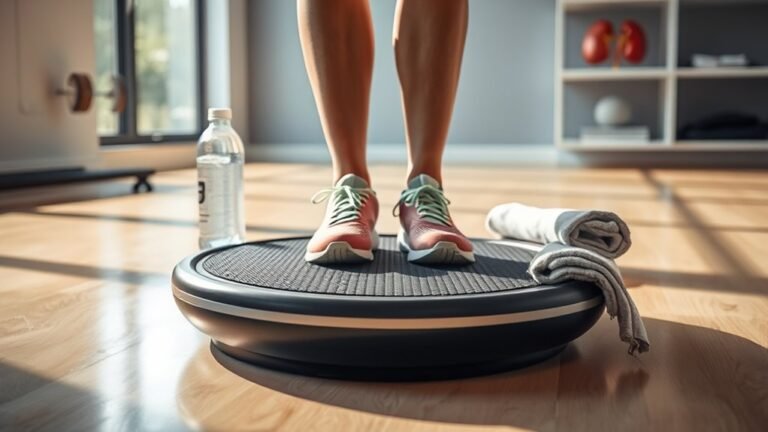
    To use vibration plates safely with good hypermobility, start with low frequencies (15-20 Hz) and moderate amplitude. Keep your knees slightly bent and your core engaged to protect your joints.

    Limit sessions to 5–10 minutes, two to three times weekly. Avoid locking your joints or pushing through pain.

    Gradually increase intensity as your stability improves. Proper posture and controlled movements are key to strengthening muscles without overstressing your joints.

    Take your time and explore more to build a safe, effective routine that supports your flexible joints.
  • Are Vibration Plates Good for Arthritis Relief?

    You can use vibration plates to help ease arthritis pain and improve joint mobility by stimulating blood flow and reducing stiffness. They gently engage muscles, which may enhance flexibility and support smoother joint function.

    However, you’ll need to start slowly, use proper posture, and consult your healthcare provider to avoid risks like aggravating your symptoms. If you want to better understand how to safely incorporate this therapy and explore other helpful options, there’s more to contemplate.

  • Are Vibration Plates Eligible for FSA?

    You can use your FSA funds for a vibration plate only if your doctor prescribes it as medically necessary to treat a specific condition like muscle rehab or circulation issues. General fitness or wellness use won’t qualify.

    To get reimbursed, keep all documentation, including the prescription and receipts, and submit a claim. Planning around your FSA timeline helps avoid losing funds.

    Want to explore eligibility criteria, submission tips, and alternative funding options?

  • Are Vibration Plates Bad for Kidneys and How to Use Them Safely?

    You’re generally safe using vibration plates without harming your kidneys if you follow guidelines. Keep sessions to 10-15 minutes at low to moderate intensity, stay hydrated, and maintain good posture.

    Avoid overusing them, especially if you have kidney issues or health concerns—consult your doctor first. Watch for signs like unusual fatigue or changes in urination.

    Using vibration plates wisely supports fitness without kidney risk. Learn what else you can do to protect your kidneys and stay fit.

  • How to Determine If Treadmills Are HSA Eligible

    You can use your HSA funds to buy a treadmill only if your healthcare provider prescribes it as medically necessary to treat a specific condition, like arthritis or cardiovascular disease.

    You’ll need detailed documentation, including a prescription and proof that the treadmill supports your treatment plan. Without this, treadmills for general fitness won’t qualify.

    To guarantee eligibility and smooth reimbursement, keep all your medical notes and receipts handy.

    Keep going to uncover what else you should know.

  • Are Treadmills Bad for Your Knees and How Can You Protect Them While Running?

    Treadmills aren’t inherently bad for your knees if you use them correctly. You can protect your joints by running on cushioned treadmill surfaces, maintaining proper form with a slight knee bend and upright posture, and keeping your speed moderate with a gentle incline around 1-3%.

    Avoid overextending your stride to reduce impact. These habits minimize strain and help prevent common knee injuries. Keep these tips in mind, and explore more ways to safeguard your knees while running.

  • How to Verify If Your Treadmill Accurately Measures Distance

    To verify your treadmill’s distance accuracy, start by running on a known, measured track or use a GPS device to record your distance. Then, compare it to the treadmill’s display.

    You can also time your runs at steady speeds to estimate distance and check for consistency. If you spot discrepancies, access your treadmill’s calibration settings to adjust sensor readings.

    Testing speed and incline variations can also reveal measurement issues. Keep exploring to discover detailed calibration and troubleshooting steps.

  • How to Calibrate Your Treadmill for Accurate Distances

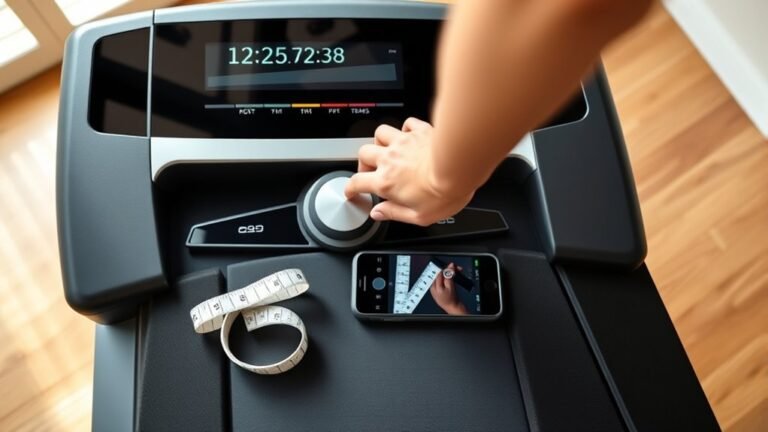
    To calibrate your treadmill for accurate distances, start by gathering tools like a measuring tape, stopwatch, and your treadmill’s manual. Make sure the treadmill is clear and level before you begin.

    Next, mark a known distance on the belt. Walk or run that distance at a steady pace, paying attention to any discrepancies between the display and the actual distance.

    You’ll want to adjust settings via the treadmill’s calibration menu to correct any errors you notice. After that, test the accuracy again to see if it matches up better.

    Don’t forget to maintain your treadmill regularly by cleaning and lubricating it. This helps keep those distance readings as precise as possible.

    Keep going to uncover detailed steps and expert tips!

  • Are RDLS Better With Dumbbells or Barbell?

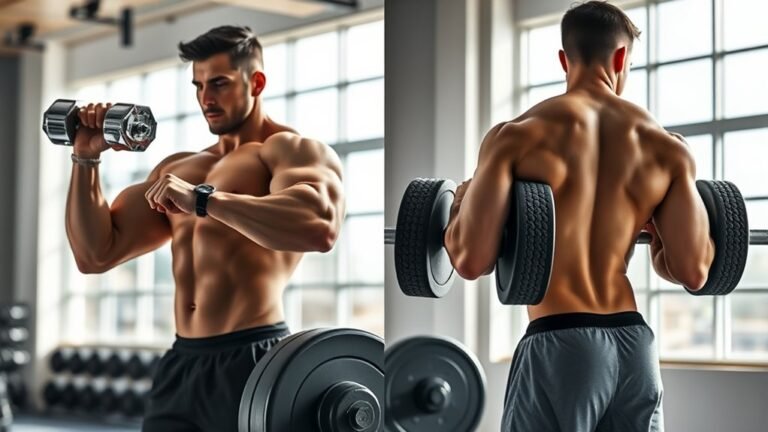
    If you want to improve muscle balance, control, and engage stabilizers, Romanian deadlifts (RDLs) with dumbbells are your best bet because they allow a greater range of motion and fix imbalances.

    However, barbells let you lift heavier weights more safely with better stability, helping you build strength faster, especially in primary muscles.

    Your choice depends on your goals and experience level.

    Keep exploring to find which option suits your training style and needs best.

  • 10 Reasons Kettlebells Are Better Than Dumbbells

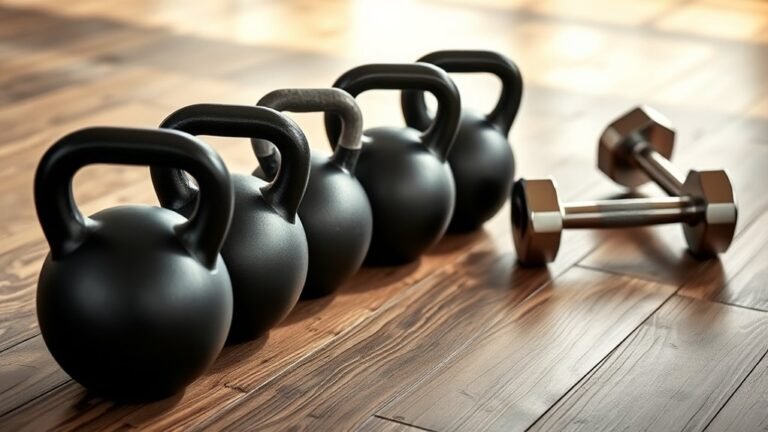
    Kettlebells give you a total-body workout that improves functional strength, stability, and coordination more than dumbbells. They boost your heart rate with dynamic swings, burning more calories while building serious grip and core strength.

    Their off-center weight challenges your balance and joint mobility, reducing injury risk. Plus, kettlebells require less space and offer versatile moves you can’t do with dumbbells.

    Keep exploring, and you’ll find how kettlebell training can transform your fitness routine. It’s pretty amazing what a difference they can make!