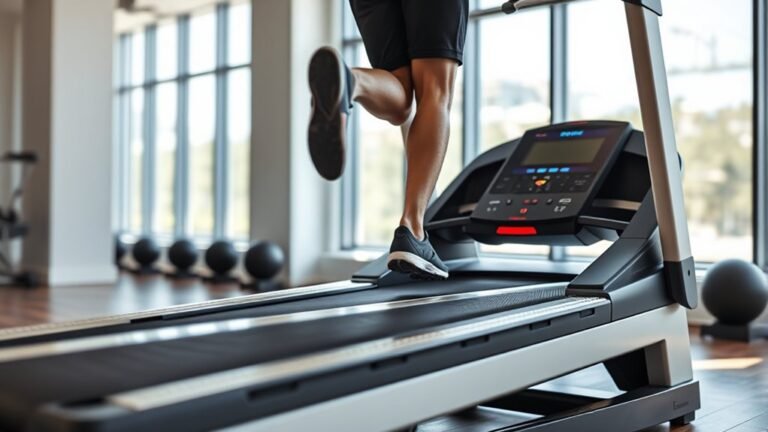
How Fast Can a Treadmill Go?
You can typically set most treadmills to speeds between 0.5 mph for walking up to around 12 mph for running.
Some high-end or commercial models go faster, reaching 15 mph or even beyond, ideal for intense sprints.
Your treadmill’s motor power and belt size influence its top speed, so heavier users or different workout goals might require sturdier machines.
Keep in mind, adjusting speed safely helps improve your fitness.
If you want to understand speed ranges and safety tips better, there’s more to explore.
Key Takeaways
- Most home treadmills reach top speeds between 10 and 12 mph, which is perfect for walking, jogging, and running.
- Commercial and high-end treadmills can go up to 15-20 mph, great for sprinting and advanced training sessions.
- Beginner treadmill speeds typically range from 7 to 9 mph. On the other hand, elite sprinters can exceed 15 mph.
- Factors like motor horsepower, belt size, and frame quality play a big role in determining a treadmill’s maximum speed capability.
- For safety, it’s best to gradually increase your speed. Also, always use the safety clip during high-speed workouts to stay protected.
Typical Speed Ranges for Home Treadmills
While home treadmills vary, most offer speeds between 0.5 and 12 miles per hour, giving you plenty of options whether you want to walk, jog, or run. You can start slow at half a mile per hour to warm up or recover, then gradually increase your pace to a brisk walk or light jog.
If you’re training for a race or want a more intense workout, speeds around 8 to 10 miles per hour let you run comfortably. Some high-end home models even push close to 12 miles per hour, providing a solid challenge for serious runners.
These speed ranges cover a wide spectrum of fitness levels, so you can adjust your treadmill workouts to fit your goals without needing commercial-grade equipment. It’s all about finding the pace that works best for you.
Maximum Speeds of Commercial Treadmills
When you step into a commercial gym, you’ll notice treadmills that can reach much higher speeds than typical home models. Some high-speed commercial treadmills can hit upwards of 15 miles per hour or more, designed for serious runners and athletes.
Keep in mind, factors like motor power and treadmill belt quality play a big role in how fast these machines can go. So, it’s not just about the top speed but also how smoothly the treadmill runs at those speeds.
Typical Speed Ranges
Although treadmill speeds vary by model, most commercial treadmills can reach maximum speeds between 10 and 12 miles per hour. This range suits a wide variety of users—from casual walkers to serious runners.
If you’re just starting out, speeds around 3 to 4 mph offer a comfortable walking pace. For jogging or running, you’ll likely find yourself between 6 and 9 mph.
Speeds above 10 mph are typically reserved for sprinting or high-intensity interval training. Keep in mind that the treadmill’s speed settings are designed to accommodate different fitness levels and workout goals.
Understanding these typical speed ranges helps you choose a treadmill that fits your exercise routine without pushing beyond your limits. Pretty handy, right?
High-Speed Treadmill Models
If you’re looking to push your limits beyond typical treadmill speeds, high-speed treadmill models can reach impressive maximums well above the standard 10 to 12 mph range. Some commercial treadmills designed for athletes or rehabilitation purposes can hit speeds up to 15 or even 20 mph.
These machines feature powerful motors and reinforced belts to handle the increased stress and maintain stability at such high velocities. When choosing a high-speed treadmill, you’ll want to contemplate models used in professional training facilities or sports medicine clinics, as they’re built for durability and precision.
Keep in mind, these treadmills often come with advanced cushioning and safety features to protect you during intense workouts at top speeds. So, if you’re serious about speed, it’s worth investing in one of these specialized machines.
Factors Affecting Maximum Speed
Since maximum treadmill speed depends on several key factors, understanding them can help you choose the right machine for your needs. First, the motor’s horsepower plays a vital role; stronger motors can sustain higher speeds without overheating.
Second, the treadmill’s belt size and quality affect how smoothly it runs at top speeds—wider and longer belts typically handle faster paces better. Third, the treadmill’s frame and build quality determine its stability; a sturdy frame prevents wobbling when you push for high speeds.
Keep these in mind when shopping:
- Motor horsepower (usually 2.5 HP or higher for high speeds)
- Belt dimensions and material quality
- Frame sturdiness and overall build
Knowing these factors guarantees you pick a treadmill that safely supports your speed goals.
Factors Affecting Treadmill Speed
When you choose a treadmill, you’ll find that several factors influence how fast it can go. The motor power plays a key role; more horsepower usually means the treadmill can reach higher speeds smoothly.
The belt length and width also matter—longer and wider belts allow for comfortable strides at faster paces. Additionally, the treadmill’s build quality affects its speed capabilities; sturdier frames handle higher speeds without wobbling.
Your own weight and running style impact performance too, as heavier users may experience slower acceleration. In the end, the treadmill’s intended use—whether for walking, jogging, or sprinting—determines its top speed settings.
Your weight and running style influence treadmill speed, with intended use shaping top speed settings.
Understanding these factors helps you pick a treadmill that matches your speed goals without sacrificing safety or comfort. It’s all about finding the right balance for what you need!
Speed Settings for Walking and Jogging
When you set your treadmill for walking, speeds usually range between 2 to 4 mph, while jogging speeds typically fall between 4 to 6 mph. You can adjust these settings to match your fitness level and goals, making your workout more effective.
It’s all about finding the pace that feels right for you. Understanding these ranges helps you choose the right pace for comfort and progress.
Typical Walking Speeds
Although treadmill speeds vary, typical walking settings usually range between 2 to 4 miles per hour, allowing you to maintain a comfortable pace without overexerting yourself. This range suits most beginners and those focused on light cardio or warm-ups.
You can easily adjust the speed to match your fitness level or recovery needs. Here’s what you can expect at different walking speeds:
- 2 mph: Ideal for slow, relaxed walking or gentle warm-ups
- 3 mph: Moderate pace suitable for brisk walking and calorie burning
- 4 mph: Fast walking that challenges endurance without jogging
Jogging Speed Range
Since jogging requires more effort than walking, treadmill speeds typically increase to a range between 4 and 6 miles per hour. When you jog within this range, you engage your cardiovascular system more intensely, boosting endurance and calorie burn.
Most treadmills offer precise controls to help you find your ideal jogging pace, whether you’re a beginner or more experienced. Staying within 4 to 6 mph lets you maintain a steady rhythm without overexerting yourself.
If you push faster, you’ll shift into running territory, which demands greater stamina and strength. By adjusting your speed carefully, you can safely improve your fitness level, avoid injury, and enjoy your workout.
Adjustable Speed Benefits
Because treadmills offer adjustable speed settings, you can tailor your workout to match your fitness level and goals precisely. Whether you’re warming up with a gentle walk or pushing through a brisk jog, the ability to change speeds guarantees you stay in control and maximize your session’s effectiveness.
This flexibility lets you gradually build endurance without overexerting yourself too soon. Plus, adjusting speeds keeps your routine fresh and challenging.
Here’s why adjustable speed benefits you:
- Customize pace for walking or jogging based on your stamina
- Easily switch speeds to include intervals or recovery periods
- Progressively increase speed to improve cardiovascular fitness
With these options, your treadmill becomes a versatile tool that adapts as you grow stronger.
Speeds Suitable for Sprint Training
When you train for sprints on a treadmill, you need to reach speeds that closely resemble your outdoor running pace. Most treadmills designed for sprint training can reach between 10 to 15 mph, which is ideal for short bursts.
Beginners might start around 7 to 9 mph. Meanwhile, advanced sprinters push beyond 12 mph. Adjusting speed guarantees you challenge yourself without risking injury.
Here’s a quick guide to treadmill speeds for sprint training:
| Skill Level | Speed Range (mph) | Recommended Duration |
|---|---|---|
| Beginner | 7 – 9 | 15-20 seconds |
| Intermediate | 9 – 12 | 20-30 seconds |
| Advanced | 12 – 15+ | 30-40 seconds |
| Elite Sprinter | 15+ | 40+ seconds |
Use these ranges to tailor your sprint workouts efficiently. It’s all about finding the right pace that pushes you but keeps you safe.
How Treadmill Speed Impacts Workout Intensity
Adjusting your treadmill speed directly affects how hard your body works during a workout. When you increase speed, your heart rate rises, and your muscles demand more oxygen and energy.
Conversely, slowing down reduces intensity, making it easier to recover or warm up. Understanding these effects helps you tailor workouts to your fitness goals.
For example, consider how speed impacts your session:
- Higher speeds boost cardiovascular endurance and calorie burn.
- Moderate speeds improve aerobic capacity without excessive strain.
- Lower speeds aid in recovery and maintain joint health.
Choosing a Treadmill Based on Speed Needs
If you want to match your workouts to your treadmill’s capabilities, you’ll need to contemplate the maximum speed it offers. Think about your fitness goals and current running pace—are you a casual walker, a steady jogger, or a serious sprinter?
If you mostly walk or jog, a treadmill with speeds up to 7 or 8 mph might suffice. But if you plan to run faster or do interval training, look for models that reach 10 mph or higher.
Also, consider future progress; a treadmill that can go faster than your current pace gives room to improve. Don’t forget to check if the speed increments are adjustable for fine-tuning your workouts.
Choosing the right speed range ensures your treadmill stays useful and challenging over time.
Safety Considerations at High Treadmill Speeds
Pushing your treadmill speed beyond casual jogging brings added risks that you need to be aware of. When you increase the pace, your balance, coordination, and reaction time are all put to the test.
To stay safe, consider these key points:
- Use the safety clip: Always attach the emergency stop clip to your clothing. It halts the machine instantly if you fall or lose control.
- Start slow and build up: Don’t jump to high speeds immediately. Gradually increase your pace to let your body adjust.
- Maintain focus: Avoid distractions like phones or TV. Concentrate on your stride and posture to prevent missteps.
Frequently Asked Questions
How Do Treadmill Speeds Compare to Outdoor Running Speeds?
You’ll find treadmill speeds often match or even exceed your outdoor pace. But running outside feels different because of things like wind resistance and uneven terrain.
Treadmills give you a lot of control over your speed and environment. On the other hand, outdoor running challenges your balance and makes you adapt to your surroundings.
Can Treadmill Speed Affect Calorie Burn Rates?
Yes, treadmill speed directly affects calorie burn rates. The faster you run, the more calories you’ll burn per minute because your body works harder.
Adjusting speed helps you control workout intensity and calorie expenditure effectively. So, if you want to burn more calories, just pick up the pace a bit!
Are There Treadmills Designed Specifically for Seniors?
Like a gentle breeze on a calm day, yes, you’ll find treadmills designed specifically for seniors. They feature lower speeds, easy-to-read displays, and extra safety measures to keep your workouts comfortable and secure.
These treadmills make exercising feel less like a chore and more like a pleasant part of your day. Plus, they often come with handy features that cater to the needs of older adults. So, if you’re looking for something safe and simple, these are definitely worth checking out!
How Does Treadmill Speed Influence Joint Impact?
You’ll notice that higher treadmill speeds increase joint impact, potentially causing stress or injury.
Slower speeds reduce this impact, making workouts gentler on your joints. This is especially helpful if you have arthritis or other joint concerns.
What Maintenance Is Needed for High-Speed Treadmills?
Think of your high-speed treadmill like a race car—it needs regular oiling and belt checks. You’ll want to lubricate the deck every 150 miles and tighten bolts monthly.
This helps keep it running smoothly and safely. Regular maintenance really makes a difference in performance and longevity.
Conclusion
Now that you know most home treadmills max out around 10 to 12 mph, you can see why they’re perfect for walkers and casual joggers. But commercial models can hit speeds up to 20 mph, ideal if you’re serious about sprint training.
Remember, pushing beyond your comfort zone ramps up workout intensity but also increases risk. So choose a treadmill that matches your goals and always prioritize safety while challenging yourself.
When it comes to how fast a treadmill can go, it really depends on the type you have. Home treadmills are great for everyday use, while commercial treadmills offer higher speeds for intense workouts. Always consider your fitness level and workout goals before selecting a treadmill. That way, you get the best performance without compromising safety.