How Long Do Gym Pumps Last?
You can expect your gym pump to last between 30 minutes and two hours after your workout. This depends on factors like the muscle size you’re targeting, how hydrated you are, and how intense your session was.
Smaller muscles usually hold the pump for less time, while bigger muscles keep it longer. Staying well-hydrated and fueling your body properly can extend that feeling of fullness.
If you want to learn the best ways to maximize and prolong your pump, keep exploring these tips. It’s all about understanding your body and how to make the most of your gym sessions!
Key Takeaways
- Muscle pumps typically last between 30 minutes to 2 hours after a workout, depending on muscle size and workout intensity.
- Smaller muscles like arms hold pumps for about 30-45 minutes, while larger muscles like legs can retain pumps for up to 2 hours.
- Hydration and nutrition, especially pre- and post-workout carbs and protein, significantly influence pump duration and fullness.
- High-rep sets, short rest periods, and training techniques like drop sets help maximize and prolong muscle pump effects.
- Individual factors such as genetics, conditioning, and workout volume also affect how long the muscle pump lasts.
What Is a Muscle Pump?
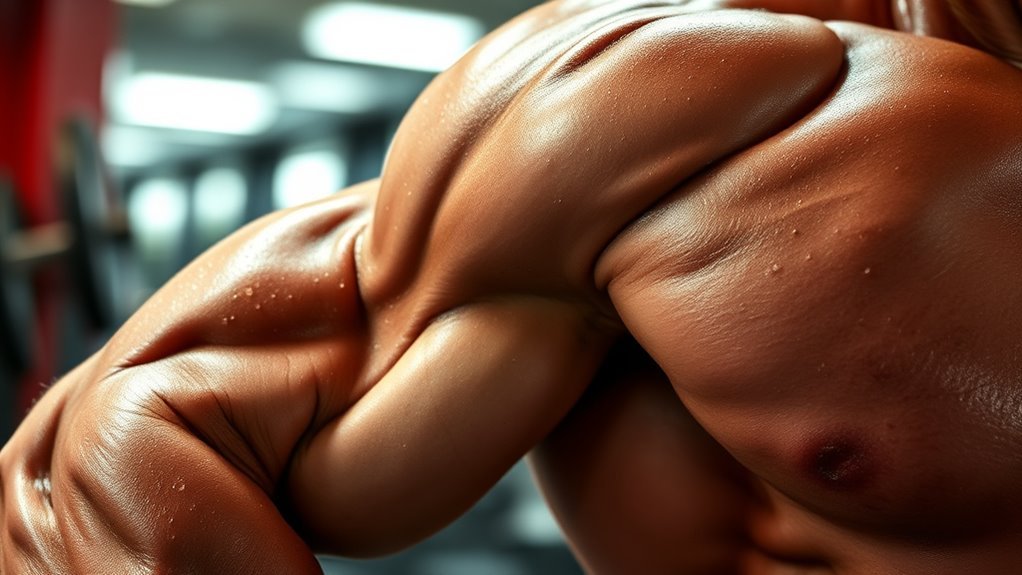
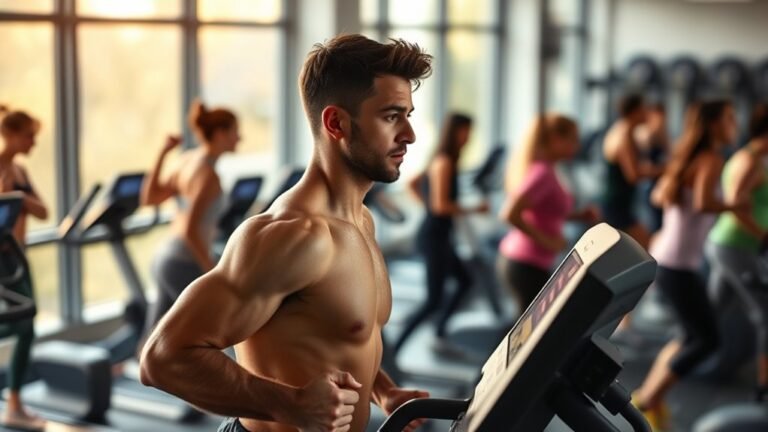
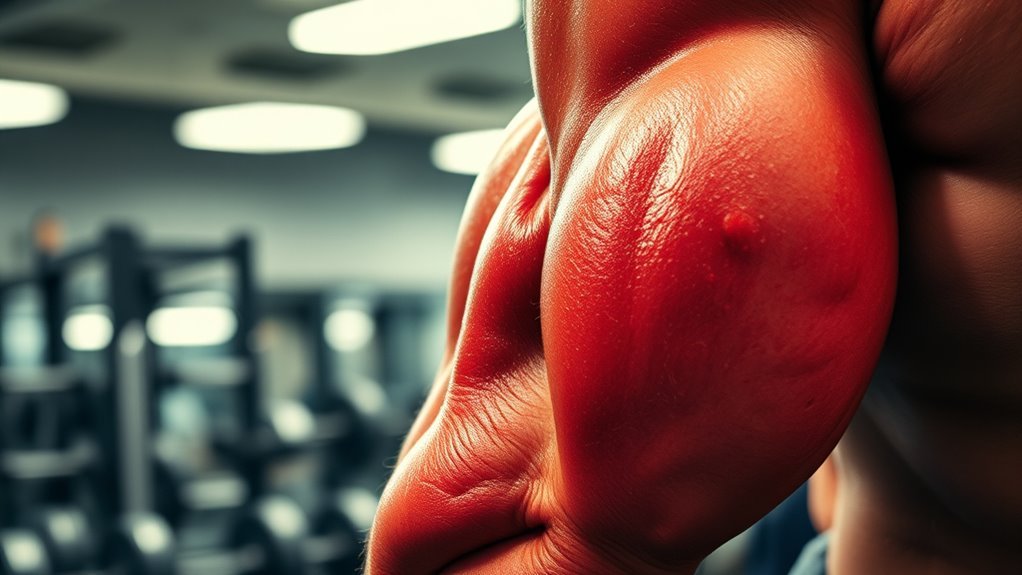
Although you might have felt it many times during your workouts, a muscle pump is the swelling and tightness you experience when blood rushes into your muscles as you exercise. This sensation happens because your body directs more blood to active muscles, delivering oxygen and nutrients to support your effort.
A muscle pump is the swelling and tightness from increased blood flow to active muscles during exercise.
You’ll notice your muscles look fuller and feel firmer, often motivating you to push harder. A muscle pump can vary in intensity depending on your workout type, volume, and how well you hydrate.
It’s a temporary state, not a permanent change in muscle size. When you stop exercising, the blood flow gradually returns to normal, and the tightness fades.
Understanding what a muscle pump feels like helps you recognize progress during your training sessions. It’s a handy way to know your workout is really working!
The Science Behind Gym Pumps

When you work out, your muscles get increased blood flow that fuels the pump you feel. This rush of blood causes your muscle cells to swell, which adds to that tight, pumped sensation.
It’s pretty cool how understanding these changes helps explain why the pump feels so intense right after exercise. Basically, your body is just reacting to all the hard work you’re putting in!
Muscle Blood Flow
Because your muscles demand more oxygen and nutrients during exercise, your body boosts blood flow to them, creating the familiar gym pump. When you lift weights or perform resistance training, your heart pumps faster, pushing more blood through your arteries.
This increased blood flow delivers oxygen and nutrients to working muscles while removing waste products like carbon dioxide. As blood vessels dilate, they become more permeable, allowing plasma to seep into surrounding tissues, which contributes to muscle swelling.
This vascular response not only enhances your muscles’ size temporarily but also improves endurance and performance by sustaining energy production. Understanding muscle blood flow helps you appreciate why that tight, full feeling occurs and why it fades as circulation returns to normal after you finish your workout.
Cellular Swelling Effects
The increased blood flow during exercise sets the stage for cellular swelling, a key factor behind the gym pump. When you work out, your muscle cells absorb more fluid, causing them to swell and create that tight, full sensation you crave.
This swelling triggers several important responses: it enhances nutrient delivery to muscle fibers and activates anabolic signaling pathways that promote growth. Plus, it reduces muscle protein breakdown and increases muscle cell hydration, which improves function and endurance. Pretty cool, right?
Typical Duration of a Muscle Pump
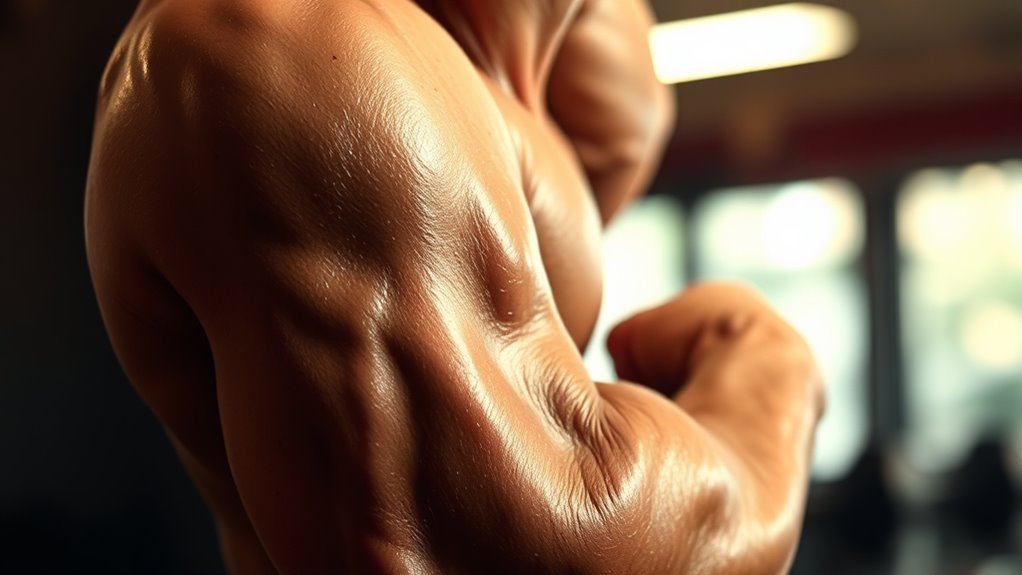
You’ll usually notice your muscle pump lasts anywhere from 30 minutes to a few hours after your workout. How long it sticks around depends on factors like your hydration, workout intensity, and nutrition.
Understanding these can help you maximize the pump’s duration. So, keeping an eye on these things might just give you a longer-lasting pump!
Average Pump Duration
Although muscle pumps can feel intense during your workout, they usually last anywhere from 30 minutes to a couple of hours afterward. The average pump duration depends on the muscle group worked, workout intensity, and your body’s response.
Typically, you can expect smaller muscle groups like arms to pump for about 30-45 minutes. Larger groups such as legs or back may hold the pump for 1-2 hours. The sensation gradually fades as blood flow normalizes.
Stretching and light movement can help maintain the feeling longer. Understanding this average duration helps you appreciate the temporary boost in muscle fullness and vascularity you get after training.
Keep in mind that while the pump is exciting, it’s a short-lived phase that signals effective blood flow and muscle engagement. So enjoy it while it lasts!
Factors Influencing Longevity
Since several factors impact how long your muscle pump lasts, understanding them can help you maximize this effect. Your hydration level plays a big role—if you’re well-hydrated, your muscles stay fuller longer.
Nutrition matters too; consuming carbs and nitric oxide boosters can enhance blood flow and extend your pump. The type and intensity of your workout also influence duration.
High-rep, moderate-weight exercises typically create a longer-lasting pump than heavy, low-rep sets. Individual factors like genetics, muscle size, and conditioning affect how quickly your pump fades.
Finally, rest and recovery between sets and workouts help maintain vascularity. By paying attention to these factors, you can better control how long that satisfying muscle fullness sticks around after your gym session.
Factors That Affect How Long a Pump Lasts
When you finish a workout, several factors influence how long your gym pump will last. Understanding these can help you maximize the satisfying muscle fullness you get after training.
Here are key elements that affect pump duration:
- Workout intensity: Higher intensity with more reps and volume usually prolongs the pump.
- Muscle group worked: Larger muscles tend to hold pumps longer than smaller ones.
- Nutrition timing: Consuming carbs and protein around your workout supports sustained muscle fullness.
- Rest periods: Shorter rest times keep blood flow elevated, extending the pump’s lifespan.
How Hydration Influences Muscle Pumps
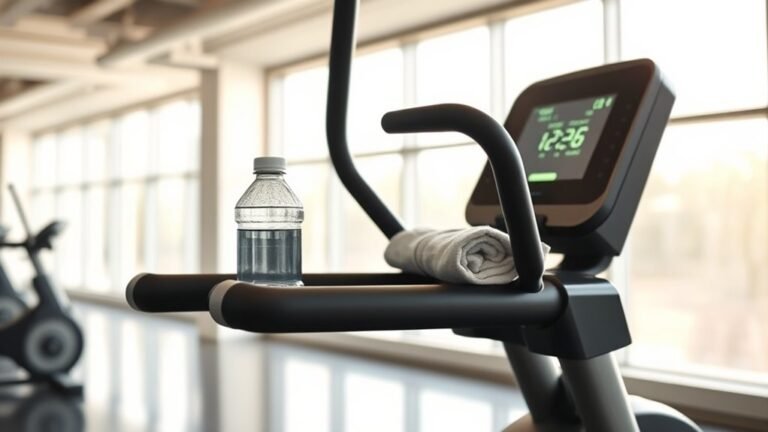
Proper hydration plays a crucial role in maintaining and enhancing your muscle pump during and after workouts. When you’re well-hydrated, your blood volume increases, allowing more oxygen and nutrients to reach your muscles.
Staying well-hydrated boosts blood flow, delivering more oxygen and nutrients to fuel your muscle pump.
This boosts the swelling effect that creates the pump, making your muscles look fuller and feel tighter. Dehydration, on the other hand, reduces blood flow and limits your body’s ability to sustain that pumped-up feeling.
Drinking water before, during, and after exercise helps flush out waste products and supports muscle recovery, prolonging the pump’s duration. So, staying hydrated isn’t just about overall health—it directly impacts how long you can enjoy that satisfying muscle fullness post-workout.
Make hydration a priority, and you’ll maximize your pump’s effectiveness and longevity.
Nutrition Tips to Enhance Your Pump
Although staying hydrated is essential, what you eat before and after your workout can substantially impact the quality and duration of your muscle pump.
Fueling your body with the right nutrients helps increase blood flow and muscle fullness. Focus on meals rich in carbohydrates, proteins, and certain key supplements.
To enhance your pump, try these nutrition tips:
- Eat complex carbs like oats or sweet potatoes pre-workout to boost glycogen and sustain energy.
- Include lean protein sources such as chicken or whey to support muscle repair and growth.
- Consume nitrate-rich foods like beets or spinach to promote nitric oxide production and vasodilation.
- Consider a small serving of healthy fats post-workout to reduce inflammation and aid recovery.
Training Techniques to Maximize Muscle Pumps
Nutrition sets the stage, but how you train directly influences the intensity and duration of your muscle pump. To maximize your pump, focus on high-rep sets with moderate weights—think 12 to 15 reps per set. This approach increases blood flow and muscle swelling.
Incorporate short rest periods, around 30 to 60 seconds, to keep blood pooling in the muscles. Use techniques like drop sets and supersets to push muscles beyond fatigue, further enhancing the pump. Also, emphasize slow, controlled movements to maximize muscle tension and promote capillary expansion.
Don’t neglect compound exercises; they engage multiple muscle groups and encourage greater overall circulation. By combining these strategies, you’ll not only boost your muscle pump but also improve your workout’s effectiveness and muscle growth potential.
When to Expect Your Pump to Fade
While you’re still feeling that satisfying fullness in your muscles right after training, you should know that your pump won’t last forever. Typically, pumps start to fade within 30 minutes to 2 hours post-workout, but this varies.
That muscle pump feels great but usually fades within 30 minutes to 2 hours after training.
Several factors influence how quickly it diminishes. For example, hydration levels matter a lot. Dehydration can cause your muscles to lose volume faster.
Nutrition plays a big role too. Consuming carbs and protein post-workout helps maintain the pump longer.
Workout intensity also affects it. Higher intensity sessions often yield longer-lasting pumps.
And don’t forget individual differences. Genetics and muscle fiber composition play a role.
If you want to prolong that pumped feeling, focus on staying hydrated and eating properly after your session. Remember, the pump is temporary, so enjoy it while it lasts!
Frequently Asked Questions
Can Muscle Pumps Improve Long-Term Muscle Growth?
Yes, muscle pumps can boost long-term growth by increasing blood flow and nutrient delivery to muscles.
When you train consistently, those pumps help enhance muscle size and recovery over time. They support your overall gains effectively.
Are Gym Pumps Safe for People With Heart Conditions?
Feeling your muscles swell like balloons during a gym pump can be thrilling. But if you have heart conditions, you should avoid intense pumps without consulting your doctor.
Your heart deserves careful attention and safe workouts. So, always check in with a healthcare professional before trying anything too intense.
Do Supplements Like Nitric Oxide Boosters Really Enhance Pumps?
Yes, supplements like nitric oxide boosters can enhance your pumps by increasing blood flow and muscle fullness.
However, their effects vary, so you should combine them with proper nutrition and training for the best results.
Think of them as a helpful extra, not a magic fix.
Keep your diet and workouts on point, and the supplements can give you that little boost you’re looking for.
How Do Different Types of Workouts Affect Muscle Pumps?
Different workouts affect your muscle pumps differently; high-rep, moderate-weight training boosts blood flow and pump duration, while heavy lifting with low reps creates less sustained pumps but builds strength faster.
So, if you want that lasting pump, going lighter and doing more reps might be your best bet. But if strength is your goal, heavier weights with fewer reps will get you there quicker.
Adjust your routine based on what you’re aiming for. It’s all about matching your workout style to your goals!
Can Muscle Pumps Reduce Muscle Soreness After Exercise?
You know what they say, “No pain, no gain.”
While muscle pumps don’t directly reduce soreness, they do increase blood flow. This helps flush out toxins and deliver nutrients.
Conclusion
Your gym pump is like a fleeting spark—bright and energizing but bound to fade. Typically lasting anywhere from 30 minutes to a couple of hours, how long it sticks around depends on factors like hydration, nutrition, and your training style.
By fueling your body right and staying consistent with your workouts, you can stretch that pump’s glow longer and make every session feel more rewarding.
So, keep pushing and enjoy the burn while it lasts! Remember, the key to maximizing your gym pumps is staying hydrated, eating well, and training smart. With these in mind, your gym pump won’t just be a short burst—it can become a lasting part of your fitness journey.