How Much Does a Weight Bench Bar Weigh
A standard weight bench bar usually weighs around 20 kg (44 lbs), but this can vary based on the type and design. Understanding how much a weight bench bar weighs is key if you’re looking to optimize your workouts or set up your home gym correctly.
Men’s bars tend to be heavier and longer than women’s, which is something to keep in mind when choosing your equipment. Specialty bars like curl or trap bars can weigh anywhere from 10 to 75 lbs, depending on their intended use.
Material also plays a role—steel bars are heavier and more durable, while aluminum bars are lighter. So, whether you want to lift heavier or just want something easier to handle, knowing these details helps.
Keep exploring, and you’ll find the right bar for your training needs!
Key Takeaways
- A standard weight bench bar, often an Olympic bar, typically weighs 20 kg (44 lbs).
- Women’s bars are lighter, around 15 kg (33 lbs), designed for comfort and ergonomics.
- Specialty bars like curl bars weigh significantly less, generally between 10 to 25 lbs.
- Fixed bars have a set weight, usually 20 kg, while adjustable bars vary based on plates added.
- Accurate bar weight is essential for tracking progress and ensuring safe, effective workouts.
Standard Olympic Weight Bench Bar Sizes and Weights
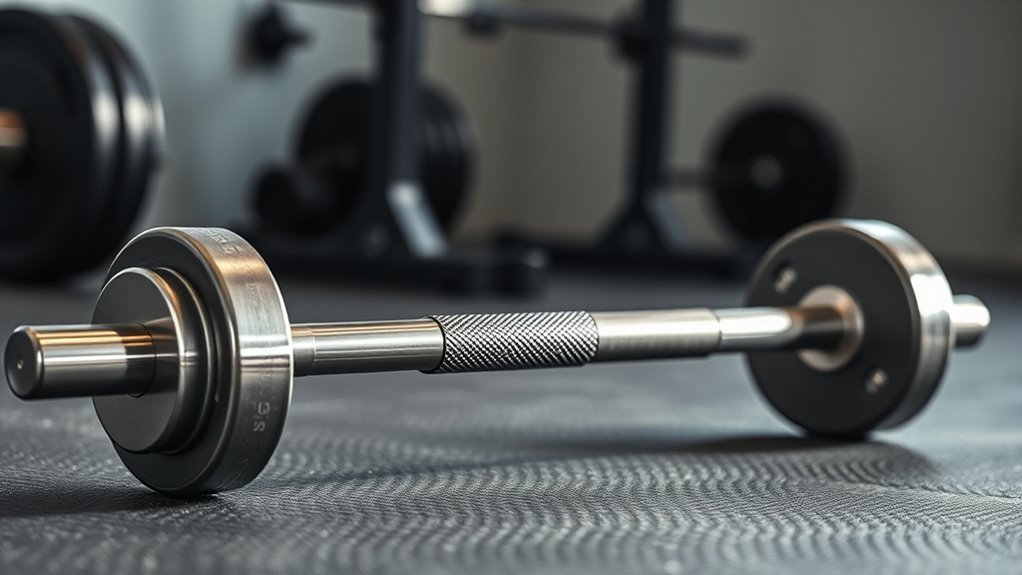
Although you might find various types of bars, standard Olympic weight bench bars typically weigh 20 kilograms (about 44 pounds) and measure 7 feet in length. When you pick up this bar, you’ll notice it’s designed for balanced weight distribution and durability.
The diameter of the grip area usually stays around 28 millimeters, which feels comfortable in your hands whether you’re pressing or curling. The sleeves where you load the weight plates measure about 2 inches in diameter, fitting standard Olympic plates securely.
These bars often have knurling patterns to improve grip without causing discomfort. Knowing these specifics helps you understand what to expect when training with a standard Olympic bar and ensures you select the right bar for your workout needs.
Differences Between Men’s and Women’s Weight Bench Bars
You’ll notice that men’s and women’s weight bench bars often differ in weight and design. Women’s bars usually weigh less and have ergonomic features tailored for smaller hands and grip comfort.
Knowing these differences can really help you pick the right bar for your workout needs. It makes a big difference when you’re aiming for the best grip and control during your lifts.
Bar Weight Variations
When comparing men’s and women’s weight bench bars, you’ll notice key differences in weight and dimensions designed to suit varying strength levels and biomechanics. Typically, men’s bars weigh around 20 kilograms (44 pounds), while women’s bars are lighter, usually about 15 kilograms (33 pounds). These weight variations help you handle the bar comfortably and safely during your workouts.
Men’s bars also tend to be longer and thicker to accommodate greater strength and grip size, while women’s bars are slightly shorter and thinner. Knowing these differences ensures you pick the right bar to match your training needs and avoid injury.
Understanding bar weight variations helps you optimize your lifting technique and progress effectively without compromising safety or performance. It’s all about finding what works best for you and training smart.
Ergonomic Design Differences
Because men’s and women’s bodies differ in size and strength, weight bench bars are designed with distinct ergonomic features to enhance comfort and performance. When you pick up a men’s bar, you’ll notice it’s typically thicker and heavier—usually around 20 kilograms (44 pounds)—to accommodate greater upper body strength and grip size.
Women’s bars, on the other hand, tend to be lighter, often weighing about 15 kilograms (33 pounds), with a slightly smaller diameter to fit your hand better and reduce strain. These differences help you maintain proper form and reduce injury risk during lifts.
Specialty Bars: Curl Bars, Trap Bars, and Their Weights
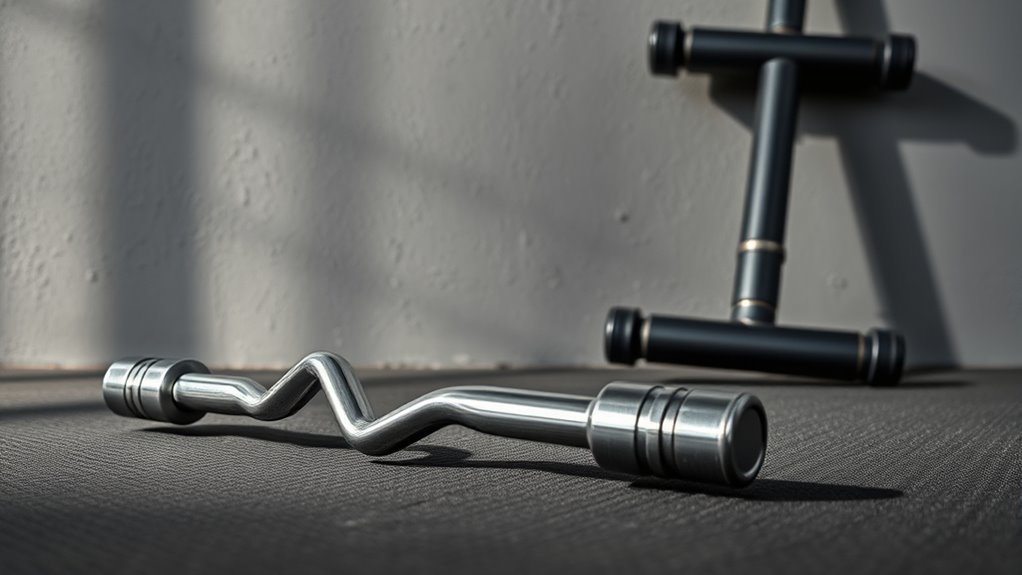
When choosing specialty bars like curl bars or trap bars, you’ll notice their weights vary quite a bit. Curl bars usually weigh between 10 to 25 pounds, making them lighter and easier to handle.
Trap bars, on the other hand, tend to be heavier, often ranging from 45 to 75 pounds depending on their design and material. So, it really depends on what you’re looking for and how you plan to use the bar.
Curl Bar Weight Range
Although curl bars may look similar to standard barbells, they typically weigh less to accommodate targeted arm exercises. Most curl bars weigh between 15 to 25 pounds, making them lighter than the standard 45-pound barbell.
This lighter weight helps you focus on bicep and tricep workouts without overloading your muscles. Some specialty curl bars designed for beginners or home gyms can weigh as little as 10 pounds, while professional-grade bars might reach up to 30 pounds for added durability and stability.
The reduced weight also improves maneuverability, letting you perform controlled, precise movements that maximize muscle engagement. When choosing a curl bar, consider your strength level and exercise goals to select the ideal weight that supports effective, safe training.
Trap Bar Weight Details
If you’re looking to add variety to your lifting routine, the trap bar offers a unique design that affects its weight and usability. Unlike standard straight bars, trap bars are hexagonal and allow you to stand inside. This design can reduce strain on your lower back during deadlifts.
Here’s what you should know about trap bar weights:
- Standard trap bars typically weigh around 45 to 55 pounds (20 to 25 kg).
- Some specialty trap bars designed for heavier loads can weigh up to 75 pounds (34 kg).
- Lighter trap bars, often used for beginners or rehab, may weigh as little as 33 pounds (15 kg).
- The weight varies due to materials and design, so always check before purchasing or using one.
Knowing this helps you plan your workouts effectively. It’s always good to be aware of the equipment you’re using, right?
How Material Affects the Weight of a Weight Bench Bar
Because the material directly influences the weight and durability of a weight bench bar, choosing the right one matters more than you might think. Steel is the most common choice, offering a solid balance between strength and weight.
If you pick a high-grade steel bar, it’ll be heavier but far more durable, lasting through intense workouts. Aluminum bars, on the other hand, are lighter, making them easier to handle and transport, but they might not hold up as well under heavy loads.
Some bars combine materials or use coatings to improve grip and rust resistance without adding much weight. When selecting your bar, consider how material affects not just weight, but also how it fits your training needs and longevity expectations.
Comparing Fixed Bars vs. Adjustable Weight Bench Bars
When choosing between fixed bars and adjustable weight bench bars, you’ll want to think about how each type fits your workout style and goals.
Fixed bars come with a set weight and size, offering simplicity and durability. Adjustable bars allow you to change the weight plates, giving you more flexibility.
Fixed bars offer simplicity and durability with set weight, while adjustable bars provide flexible weight options for varied workouts.
Consider these points:
- Weight Consistency: Fixed bars have a uniform weight, so you know exactly what you’re lifting.
- Versatility: Adjustable bars let you customize weight increments for progressive training.
- Convenience: Fixed bars require less setup, making them perfect for quick workouts.
- Space and Storage: Adjustable bars can save space since you only need one bar with plates.
Understanding these differences helps you pick the bar that matches your strength training routine best.
Factors to Consider When Choosing a Weight Bench Bar
Choosing between fixed and adjustable weight bench bars sets the foundation for your workout setup, but several other factors play a role in finding the right bar for you.
Consider the bar’s material, grip comfort, and weight capacity to make sure it matches your training needs and safety requirements.
Here’s a quick guide to help you weigh your options:
| Factor | Importance | What to Look For |
|---|---|---|
| Material | Durability & weight | Steel or aluminum |
| Grip Comfort | Handling & safety | Non-slip, padded grip |
| Weight Capacity | Support heavier loads | At least 300 lbs |
| Size & Length | Fit your bench & space | Compatible dimensions |
How Bar Weight Impacts Your Workout and Progress
Although the weight of the bar might seem like a minor detail, it directly affects your workout intensity and overall progress. Understanding this impact helps you optimize each session.
Here’s the thing: the bar’s weight adds to your total load. So, knowing it prevents you from underestimating your lifts.
Accurate bar weight ensures consistent tracking of improvements over time. Without that, it’s hard to see real progress.
Plus, a heavier bar increases resistance, pushing your muscles harder for better gains. That’s how you get stronger.
And don’t forget about form and safety. Using the right bar weight helps you maintain proper form, which reduces the risk of injury. It’s all connected.
Tips for Safely Handling and Transporting Weight Bench Bars
Since weight bench bars can be heavy and a bit awkward to carry, you really need to use proper techniques to avoid injury and damage. Always lift with your legs, not your back, and keep the bar close to your body.
Use both hands to maintain control and avoid dropping it. When transporting, think about using a gym bag or a padded case to protect both the bar and your surroundings.
| Tip | Reason |
|---|---|
| Lift with legs | Prevents back strain |
| Use both hands | Ensures better grip |
| Keep bar close | Maintains balance and control |
| Use padding | Protects bar and floors |
| Clear path | Avoids tripping hazards |
Frequently Asked Questions
Can I Use a Weight Bench Bar for Other Exercises Beyond Bench Pressing?
Yes, you can use a weight bench bar for other exercises like squats, overhead presses, and rows. It’s versatile, letting you target different muscle groups while maximizing your workout with just one piece of equipment.
Pretty handy, right? This way, you get more bang for your buck without needing a bunch of different gear. Give it a try and mix up your routine!
How Do I Clean and Maintain a Weight Bench Bar?
Think of your weight bench bar as a trusty steed; you clean it by wiping sweat and chalk away after each ride with a damp cloth. Then, oil the sleeves occasionally to keep it running smooth and rust-free.
It’s a simple routine, but it really helps keep your gear in top shape. Just a little care goes a long way!
Are Weight Bench Bars Compatible With All Types of Weight Plates?
Weight bench bars aren’t compatible with all weight plates. You’ll need to verify the bar’s sleeve diameter and your plates’ hole size to ensure they fit.
Most standard bars fit standard plates, but always double-check. It’s better to be safe than sorry when it comes to your equipment!
What Is the Average Lifespan of a Weight Bench Bar?
You can expect your weight bench bar to last 5 to 10 years with regular use and proper care.
Make sure to clean and inspect it often, and avoid overloading to extend its lifespan.
Taking a little time for maintenance really pays off in the long run!
Can I Customize the Grip or Knurling on My Weight Bench Bar?
You can customize your weight bench bar’s grip or knurling, symbolizing your personal strength and style. Many manufacturers offer options, or you can reknurl it yourself.
It’s a great way to forge a tool as unique as your fitness journey. Plus, having a customized grip can really boost your confidence during workouts.
Conclusion
Now that you know how much a weight bench bar weighs, you might realize the perfect bar for your workout could be closer than you think. Whether it’s a standard Olympic bar or a specialty curl bar, the right weight impacts your progress more than you’d expect.
And here’s the twist—you don’t have to guess or struggle with handling it anymore. Choosing wisely means lifting smarter, not just heavier.
Ready to make that lift count? Understanding the weight bench bar weight helps you pick the best option for your strength training goals. When you select a bar that matches your ability and workout style, you maximize efficiency and reduce injury risk. So, keep the weight bench bar weight in mind next time you shop or train—it’s a game changer for your fitness journey.