Do Gyms Accept Online Certification as Valid Training?
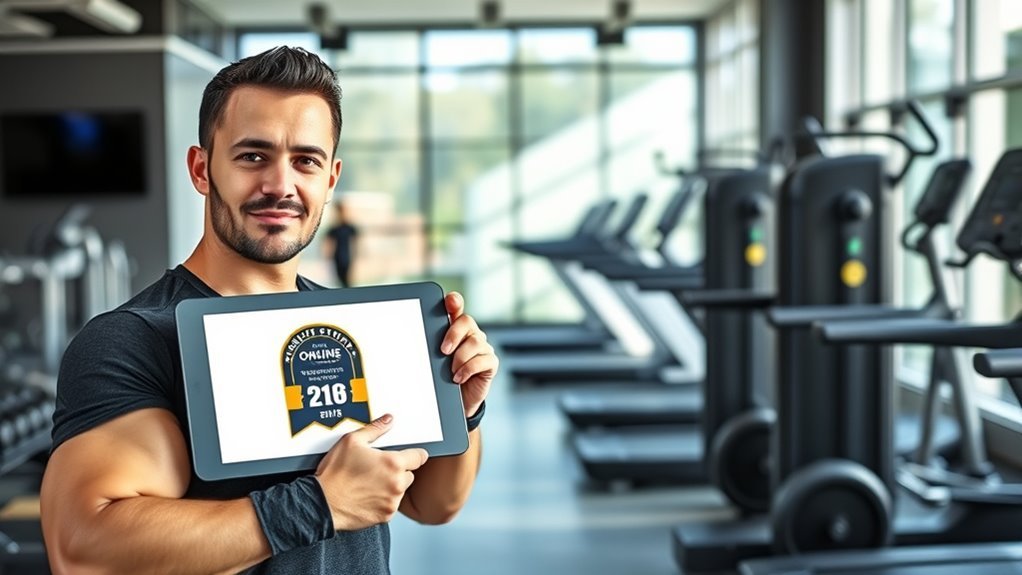
Yes, gyms do accept online certification as valid training, especially if you earn it from reputable, accredited organizations like NASM, ACE, or ISSA. These certifications carry weight because they meet industry standards and ensure you have the right knowledge.
Your certification’s credibility and your ability to showcase practical skills play a big role in acceptance.
Online courses offer great flexibility and updated content, which is a big plus. But remember, hands-on experience and networking can really boost your chances of getting hired.
If you want to understand how to maximize your certification’s value and navigate potential challenges, keep exploring these key insights.
Key Takeaways
- Gyms often accept online certifications if obtained from reputable, accredited organizations like NASM, ACE, ISSA, or NSCA. Accreditation by recognized bodies such as NCCA or DEAC significantly enhances online certification credibility and acceptance.
- That said, some gyms remain cautious about online credentials without hands-on training components or recognized practical experience. They want to be sure you can apply what you’ve learned in real-world settings.
- Combining online certification with real-world internships or volunteering can really improve your employability and build trust with gyms. It shows you’ve got the practical skills, not just the paperwork.
- At the end of the day, industry acceptance depends a lot on the certification provider’s reputation, your practical skills, and demonstrated client results—not just the credentials alone. So, it’s good to back up your online cert with real experience.
Overview of Online Fitness Certification
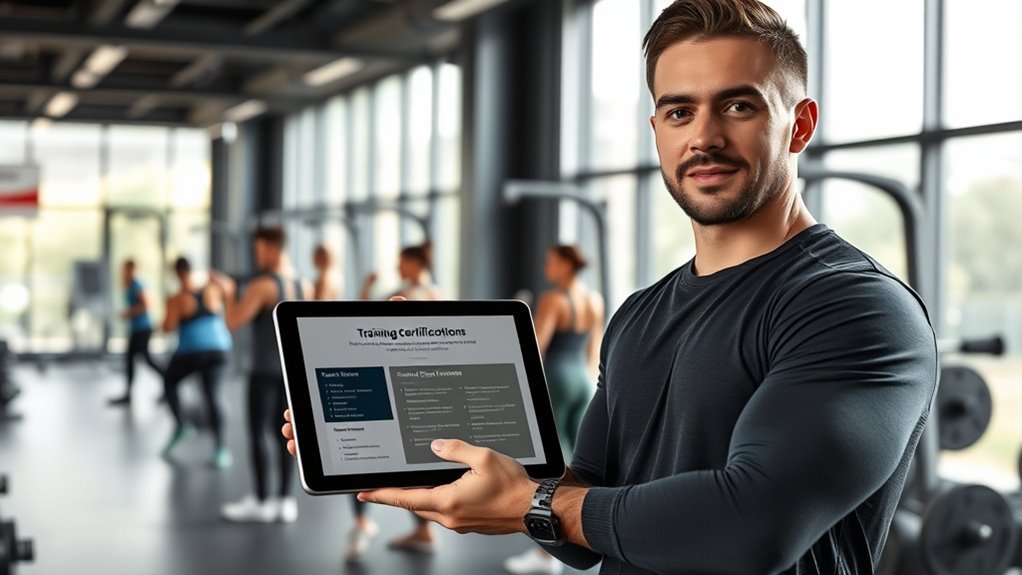
Although traditional in-person courses remain popular, online fitness certification has quickly become a convenient and effective way for you to earn credentials. You can access extensive coursework, video demonstrations, and quizzes from anywhere, fitting your studies around your schedule.
These programs often cover essential topics like anatomy, exercise science, nutrition, and client assessment, ensuring you gain a solid foundation. Plus, many accredited organizations offer online certifications recognized by industry professionals.
You’ll also find interactive support, such as virtual coaching and discussion forums, to enhance your learning experience. By choosing online certification, you save time and often reduce costs without compromising quality.
This flexible approach allows you to prepare thoroughly before entering the fitness industry with confidence. It’s a smart choice if you want to balance learning with your busy life.
Comparison Between Online and In-Person Training
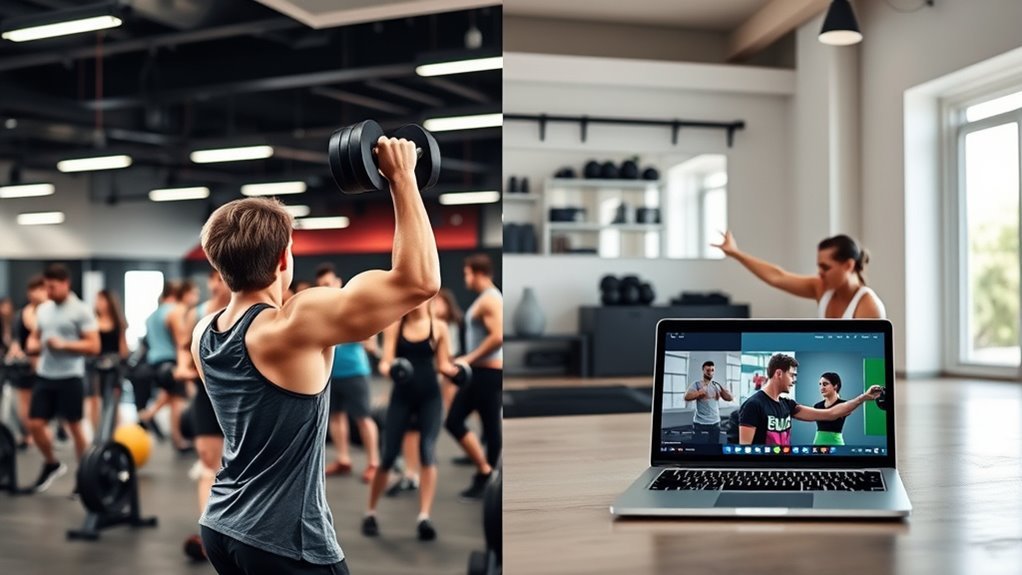
When you compare online and in-person training, you’ll find distinct advantages in each approach that cater to different learning styles and schedules. Online training offers flexibility, letting you study anytime and anywhere, which is perfect if you’ve got a busy life or prefer self-paced learning.
You can revisit materials as often as you like, helping reinforce knowledge. In-person training, on the other hand, provides hands-on experience and immediate feedback from instructors, which can be invaluable for mastering practical skills.
It also fosters networking and real-time interaction with peers. Ultimately, the best choice depends on your learning preferences and availability. Both methods can prepare you effectively, but understanding these differences helps you decide which suits your goals and lifestyle best.
Accreditation and Recognition of Online Programs
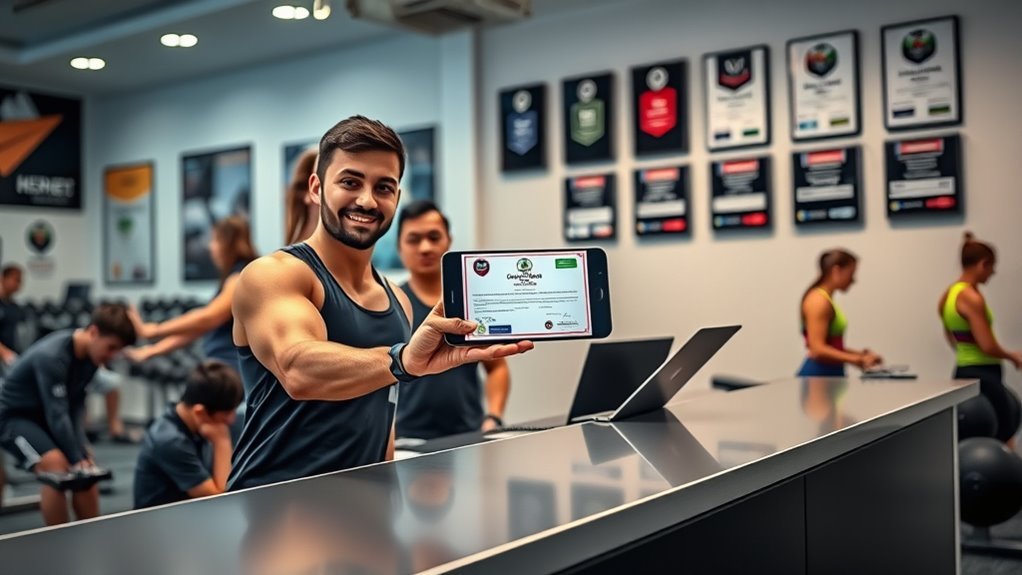
You’ll want to check which accreditation bodies back your online program, as their approval matters a lot. Gyms typically recognize certifications that meet industry standards, so not every online course will cut it.
Understanding these key factors helps you choose a program that’s respected and trusted. It’s all about making sure your certification holds weight where it counts!
Accreditation Bodies Overview
Since online certification programs vary widely, understanding the role of accreditation bodies is essential to guarantee your credentials hold weight with gyms and employers. These bodies evaluate and approve educational programs based on strict quality standards, ensuring the curriculum is thorough and instructors are qualified.
When you choose a program accredited by a reputable organization, like the National Commission for Certifying Agencies (NCCA) or the Distance Education Accrediting Commission (DEAC), you’re more likely to earn a credential gyms respect. Accreditation confirms your training meets industry benchmarks, making your certification credible.
Before enrolling, check if the program lists its accrediting body and verify its legitimacy online. This step helps you avoid programs with questionable value and boosts your confidence that your certification will open doors in the fitness industry.
Industry Recognition Standards
Understanding accreditation bodies sets the stage for appreciating how gyms recognize online certification programs. When you choose an online course, it’s vital to verify it meets industry recognition standards, meaning it’s accredited by reputable organizations like NASM or ACE.
Gyms typically accept certifications from programs that follow these standards because they guarantee a consistent curriculum and qualified trainers. Without proper accreditation, your certification might not hold much weight, limiting your job prospects.
You should look for programs that not only cover essential knowledge but also require practical assessments. This combination ensures that gyms see your training as credible and professional.
Key Factors Gyms Consider When Hiring Trainers
Although certifications are essential, gyms look beyond them when hiring trainers. You need to demonstrate practical skills, client rapport, and adaptability to different fitness levels.
Certifications matter, but gyms prioritize practical skills, client connection, and flexibility across fitness levels.
Gyms value your experience working with diverse clients and your ability to tailor programs effectively. Communication skills matter just as much as your knowledge.
Showing enthusiasm and professionalism during interviews can set you apart. Additionally, gyms often consider your willingness to continue learning and stay updated with fitness trends.
They want trainers who’re reliable, punctual, and able to motivate clients consistently. While credentials open doors, your attitude and proven results often weigh heavier in the hiring decision.
Popular Online Certification Providers Accepted by Gyms
Where can you find reputable online certifications that gyms actually accept? Start with well-known organizations like NASM (National Academy of Sports Medicine) and ACE (American Council on Exercise). Both offer thorough online courses that meet industry standards and are widely recognized by gyms.
ISSA (International Sports Sciences Association) is another trusted provider, offering flexible online certification programs that many gyms respect. NSCA (National Strength and Conditioning Association) also provides online options that focus on strength training and conditioning, favored by high-performance gyms.
When choosing a provider, verify their certification is accredited by a reputable body, like NCCA (National Commission for Certifying Agencies). By selecting certifications from these established providers, you’ll boost your chances of being hired, as gyms value credentials backed by solid reputations and rigorous standards.
Advantages of Online Certification for Fitness Professionals
You’ll appreciate how online certification lets you learn on your schedule, making it easier to balance work and study. It’s also more affordable, saving you money on travel and materials.
Plus, you’ll access the latest fitness information to keep your skills current. It’s a convenient way to stay ahead in your fitness career without the usual hassle.
Flexibility and Accessibility
Because online certification programs let you study anytime and anywhere, they offer unmatched flexibility for fitness professionals. You can fit your coursework around your existing schedule, whether you’re working full-time, caring for family, or traveling.
This flexibility helps you maintain balance without sacrificing your education or career goals. Plus, you can access a variety of resources, from videos to interactive quizzes, right from your device.
This accessibility means you don’t have to worry about commuting or relocating to attend classes. You can learn at your own pace, revisiting complex topics as needed.
Ultimately, this convenience makes it easier for you to earn certification without disrupting your life, helping you advance your fitness career on your own terms.
Cost-Effectiveness and Savings
Along with offering flexibility and accessibility, online certification programs also save you money. You won’t have to worry about expensive travel costs, lodging, or meals that come with in-person courses.
Most online programs charge considerably less than traditional ones because they cut down on overhead expenses. Plus, many platforms offer payment plans or bundle deals, making it easier to manage your budget.
You also avoid paying for extra materials or repeated exam fees since everything’s digital and included upfront. This cost-effectiveness means you can invest more in quality tools or continuing education later.
Up-to-Date Curriculum
While fitness trends and scientific research evolve rapidly, online certification programs update their curricula more frequently than traditional courses. This means you get access to the latest training methods, nutrition advice, and injury prevention techniques right away.
Staying current helps you provide clients with effective, science-backed guidance, boosting your credibility and results. Unlike some in-person programs that revise content every few years, online platforms can quickly integrate new findings and industry standards.
You won’t have to worry about outdated information holding you back. Plus, many online certifications offer ongoing education resources, so you can keep sharpening your skills without extra hassle.
Choosing an up-to-date online certification ensures you remain competitive and knowledgeable in the ever-changing fitness world. It’s a smart move if you want to stay ahead of the game!
Challenges and Limitations of Online Fitness Training Credentials
Although online fitness certifications offer convenience, they come with challenges that you need to take into account before relying on them fully. One major limitation is the lack of hands-on practical experience.
Without in-person training, you might miss vital real-time feedback on your technique and client interaction skills. Additionally, some gyms remain skeptical about the credibility of online programs, especially if the certification provider isn’t widely recognized.
Lacking in-person training may hinder real-time feedback and raise doubts about online certification credibility.
You’ll also face challenges staying motivated and disciplined without a structured classroom environment. Moreover, certain specialized skills—like manual assessments or corrective exercises—can be difficult to master through virtual learning alone.
While online certifications open doors, you should be aware that they might not fully prepare you for every aspect of professional fitness training. So, it’s good to weigh these points before making your decision.
Tips for Maximizing the Value of Your Online Certification
Online certifications can open many doors, but you’ll get the most out of them by being proactive. Engage with your course community and seek opportunities to apply your knowledge in real settings.
Networking is key too. Connect with local gyms and fitness professionals to showcase your skills and commitment. Keep your certification current and combine it with hands-on experience to boost your credibility.
| Tip | Action Step |
|---|---|
| Engage | Participate in forums and study groups |
| Apply Knowledge | Volunteer or intern at gyms |
| Network | Attend fitness events and workshops |
| Continue Learning | Update certifications and skills regularly |
Frequently Asked Questions
Can Online Certifications Be Used for Continuing Education Credits?
Yes, you can use online certifications for continuing education credits if the program is accredited and approved by the relevant professional organization.
Just make sure to verify that the course meets your certification body’s specific requirements before enrolling.
It’s always a good idea to double-check so you don’t waste time or money on something that won’t count.
Do Gyms Require Background Checks for Online-Certified Trainers?
Like a knight proving honor before the king, you’ll often need a background check despite online certification.
Gyms want to make certain of safety and trust, so don’t be surprised when they require it before you start training.
Are Online Certifications Recognized Internationally by Gyms?
You’ll find some gyms recognize online certifications internationally, but acceptance varies widely.
It depends on the certifying organization’s reputation and local regulations, so you should verify each gym’s requirements before relying on your online credentials.
Can Online-Certified Trainers Offer Specialized Classes Like Yoga or Pilates?
You can teach yoga, you can lead Pilates, and you can offer specialized classes if you’re online-certified.
Just make sure your certification is recognized, your skills are solid, and your gym supports your specialty.
How Do Gyms Verify the Authenticity of Online Certification Credentials?
Gyms usually verify your online certification by checking accreditation, contacting issuing organizations, and reviewing your credentials through official databases. They want to make sure your training is legitimate and meets industry standards before hiring you.
Basically, they’re just making sure you’ve got the real deal and not some sketchy certificate. It helps them trust that you know what you’re doing when training clients.
Conclusion
You might worry that online certification won’t be taken seriously by gyms, but many top facilities now recognize reputable online programs just like in-person ones. By choosing accredited courses and gaining hands-on experience, you’ll prove your skills and professionalism.
Don’t let doubts hold you back—online certification can open doors if you approach it right. Keep learning, stay confident, and you’ll show gyms you’re ready to lead their fitness community.
Remember, gyms value both your knowledge and your ability to connect with clients. So, combine your online certification with practical training and real-world experience. This approach will help you stand out and demonstrate that online certification is just as valid as traditional training. Stay dedicated, and you’ll find that many gyms accept online certification as valid training for fitness professionals.