How Much Does a Gym Bar Weigh?
A standard gym bar, like the Olympic barbell, usually weighs 20 kg (44 lbs). However, the weight can vary depending on the type of bar you’re using.
For example, women’s bars typically weigh 15 kg (33 lbs), while specialty bars can range widely in weight.
The bar’s material, length, and intended purpose all affect its overall weight. So, choosing the right bar depends a lot on your specific training needs.
If you want to understand how the weight of a gym bar impacts your workouts and progress, it’s worth exploring this topic further.
This way, you can make informed decisions and get the most out of your training sessions.
Key Takeaways
- A standard men’s Olympic barbell weighs 20 kg (44 lbs) and measures about 7 feet long.
- Women’s Olympic barbells typically weigh 15 kg (33 lbs) with a length of approximately 2.01 meters.
- Specialty bars like EZ curl bars weigh between 7-12 kg (15-25 lbs), while trap bars range from 20-25 kg.
- Bar weight varies based on material, coating, and design, affecting durability and workout feel.
- Choosing the correct bar weight is essential for safety, workout effectiveness, and training goals.
Standard Olympic Bar Weight
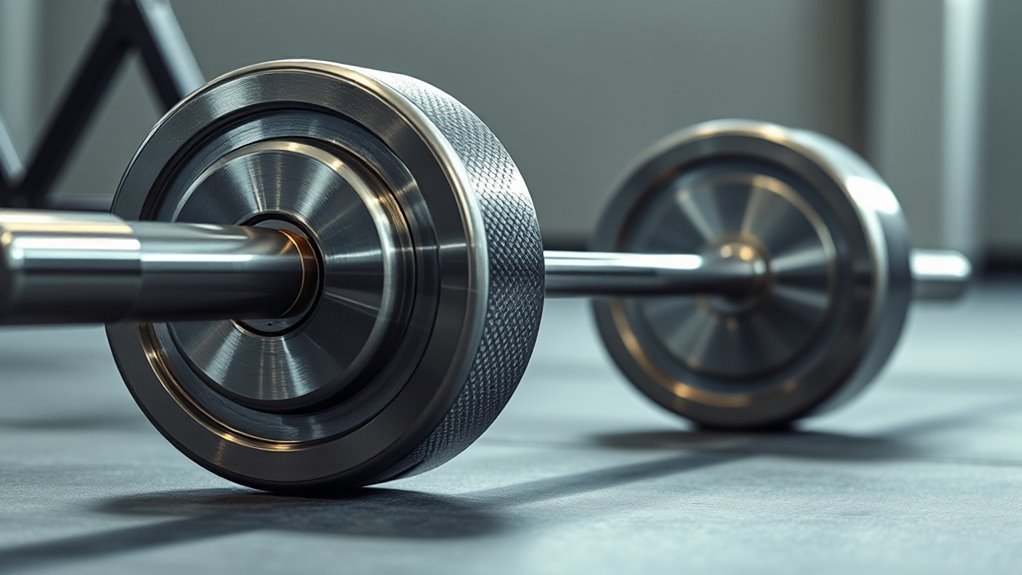
Although gym bars come in various types, the standard Olympic bar is the one you’ll most commonly encounter in gyms. This bar typically weighs 20 kilograms, or about 44 pounds, making it the go-to choice for most lifters.
Its length is around 7 feet, designed to accommodate standard weight plates. You’ll find it versatile for exercises like squats, deadlifts, and bench presses.
The bar’s diameter is usually 28 millimeters, providing a comfortable grip for most hands. It also has rotating sleeves to reduce stress on your wrists during lifts.
When you pick up a standard Olympic bar, you’re handling a piece of equipment built for both durability and performance. It ensures consistency in your workouts, which is pretty important.
Men’s and Women’s Bar Specifications

You’ll find that a standard men’s gym bar weighs 20 kilograms, while women’s bars are slightly lighter at 15 kilograms. Women’s bars also have different dimensions, making them easier to handle.
Understanding these specs helps you choose the right equipment for your workouts. It’s all about finding what feels best for you and supports your training goals.
Standard Men’s Bar Weight
A standard men’s gym bar typically weighs 20 kilograms (44 pounds), making it the go-to choice for most strength training exercises. When you pick up this bar, you’ll notice it’s designed to handle heavy loads, usually up to 700 pounds or more, depending on quality.
The bar’s length is about 7 feet (2.2 meters), giving you enough space to grip comfortably for various lifts like squats, deadlifts, and bench presses. Its diameter is roughly 28 millimeters, providing a solid grip without being too thick or thin.
This balance helps you maintain control and reduce fatigue during your workouts. Knowing this standard weight helps you estimate your total lifting load accurately and tailor your training effectively.
Women’s Bar Dimensions
When you select a women’s bar, you’ll notice it’s lighter and shorter than the standard men’s bar, typically weighing around 15 kilograms (33 pounds). The length usually measures about 2.01 meters (79 inches), compared to the men’s 2.2 meters (87 inches).
Women’s bars also have a smaller diameter, around 25 millimeters (0.98 inches), making them easier to grip if you have smaller hands. This diameter difference helps improve your control and comfort during lifts.
The knurling pattern on women’s bars is often less aggressive but still provides enough grip for most exercises. Additionally, the sleeve length where weights are loaded is shorter, reflecting the lighter total bar weight.
These specifications ensure you get a bar tailored to your strength and size, enhancing your workout experience. It’s all about making your lifting sessions more comfortable and effective.
Specialty Bars and Their Weights
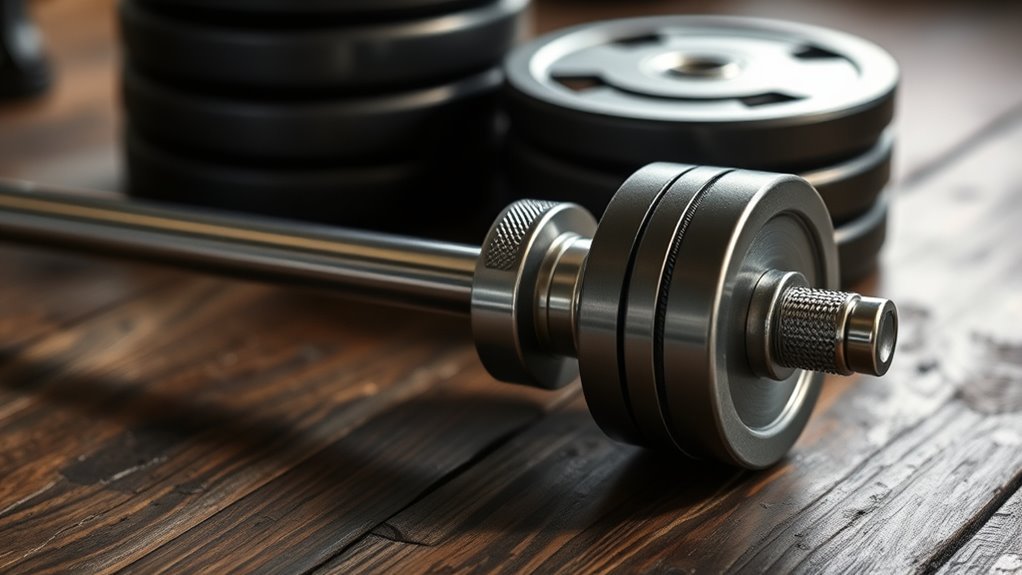
Wondering how specialty bars compare to standard gym bars in weight? These bars are designed for specific lifts and often differ from the typical 20 kg (44 lbs) men’s bar or 15 kg (33 lbs) women’s bar.
You’ll find variations that suit particular training needs, offering unique benefits.
| Specialty Bar | Weight |
|---|---|
| Trap Bar | 20-25 kg |
| EZ Curl Bar | 7-12 kg |
| Safety Squat Bar | 20-25 kg |
| Swiss Bar | 12-15 kg |
When choosing a specialty bar, consider its weight and how it affects your lift. These bars can add variety and target muscles differently.
Fixed Weight Bars vs. Adjustable Bars
Specialty bars come with set weights that influence your workout, but you might also encounter fixed weight bars and adjustable bars offering different flexibility.
Fixed weight bars have a predetermined weight, so you know exactly what you’re lifting every time. They’re great for consistency and easy to use, especially if you’re focusing on form or specific training goals.
On the other hand, adjustable bars let you add or remove weight plates, giving you more control over your resistance. This flexibility suits progressive training and various exercises, as you can customize the load to your strength level.
Choosing between them depends on your workout style: fixed bars simplify your routine, while adjustable ones adapt to your evolving fitness needs.
Factors Affecting Barbell Weight
You’ll notice that the weight of a gym bar can change depending on the materials used, like steel or aluminum. Standard bars usually have a consistent weight, but specialty bars can vary quite a bit.
Understanding these differences helps you choose the right bar for your workout. It’s pretty handy to know what you’re lifting!
Material Composition Variations
Although barbells might look similar at a glance, their weight can vary considerably based on the materials used in their construction. When you pick up a barbell, it’s often made from steel, but the type and grade of steel differ.
High-quality bars use alloy steel, which is strong yet lightweight, while cheaper bars might use lower-grade steel, making them heavier or less durable. Some bars also include coatings like zinc, chrome, or black oxide, which add slight weight differences and protect against rust.
Additionally, bars with stainless steel resist corrosion but might feel heavier than those with minimal coatings. Understanding these material variations helps you choose a barbell that matches your strength training needs and ensures you’re lifting exactly what you expect.
Standard vs. Specialty Bars
When choosing a barbell, you’ll find that standard bars and specialty bars differ not just in purpose but also in weight. Standard bars, like the Olympic barbell, typically weigh 20 kilograms (44 pounds) for men’s bars and 15 kilograms (33 pounds) for women’s bars. These bars are designed for general strength training and competitions.
Specialty bars, on the other hand, vary widely in weight because they serve specific functions. For example, trap bars usually weigh around 25-30 kilograms (55-66 pounds), while EZ curl bars are lighter, often around 10-12 kilograms (22-26 pounds). You should consider the bar’s intended use and weight since specialty bars might affect your lifting technique and overall workout intensity differently than standard bars do.
How to Accurately Weigh Your Gym Bar
Since gym bars come in various types and materials, accurately weighing yours guarantees you track your progress correctly. First, find a reliable scale capable of handling the bar’s weight—usually a bathroom or shipping scale works well.
Place the empty bar on the scale, making sure it’s centered and stable for an accurate reading. Write down the exact number shown.
Center the bar on the scale and ensure stability for an accurate weight measurement.
If your scale isn’t large enough, weigh the bar in parts: weigh one end, then double it, adding any additional weight from collars or attachments. Avoid estimating based on typical weights, as variations exist.
Knowing the precise weight helps you calculate total loads accurately, ensuring your workouts reflect true progress and prevent unintended over- or under-training.
Choosing the Right Barbell for Your Workout
Now that you know how to accurately weigh your gym bar, it’s time to pick the right barbell for your workout goals. Start by considering the type of exercises you’ll focus on—powerlifting, Olympic lifting, or general strength training—since each requires different barbell specs.
For heavy squats and deadlifts, a sturdier powerlifting bar with less whip is ideal. If you’re into Olympic lifts, choose a barbell that offers more flexibility and rotating sleeves to protect your wrists.
Also, check the bar’s weight capacity, length, and diameter to match your grip and lifting style. Don’t forget to factor in your experience level; beginners may want a standard 45-pound barbell, while advanced lifters might prefer specialty bars.
Selecting the right bar sets you up for safer, more effective workouts. So, take your time and choose wisely!
Impact of Bar Weight on Training Progress
Although many lifters focus on reps and sets, the weight of the bar itself plays an essential role in your training progress. Starting with a heavier bar can challenge your muscles more, while a lighter bar lets you perfect your form before adding plates.
Understanding how bar weight affects your lifts helps you track progress accurately and avoid plateaus. Here’s how bar weight impacts different aspects of your training:
| Training Aspect | Impact of Bar Weight |
|---|---|
| Muscle Activation | Heavier bars increase effort |
| Technique | Lighter bars improve form |
| Progress Tracking | Accurate load measurement |
| Injury Risk | Proper bar weight reduces risk |
| Endurance | Lighter bars allow higher reps |
Choose your bar wisely to maximize gains safely. It really makes a difference!
Frequently Asked Questions
How Do Barbell Weights Vary Between Different Manufacturers?
Barbell weights vary because manufacturers use different materials, designs, and quality standards. You’ll find slight differences in weight, grip texture, and durability.
Can Barbell Weight Affect My Lifting Technique?
Your lifting technique dances to the barbell’s rhythm; yes, barbell weight can sway your form.
If the bar feels heavier or lighter than usual, it’ll change your grip, balance, and ultimately, your lift’s success.
Are There Bars Specifically Designed for Beginners?
Yes, there are bars made for beginners that weigh less and have a smaller diameter. These bars help you learn proper form safely and comfortably before moving on to heavier, standard Olympic bars.
Starting with a lighter bar makes a big difference. It lets you focus on technique without feeling overwhelmed. Once you’re comfortable, you can gradually progress to the regular bars.
How Should I Store My Gym Bar to Prevent Damage?
You should store your gym bar horizontally on a rack; studies show improper storage causes 30% more wear.
Keep it off the floor, away from moisture, and clean it regularly to prevent rust and damage.
Doing these simple things really helps your bar last longer and perform better. So, it’s definitely worth the effort!
What Materials Are Gym Bars Typically Made From?
Gym bars are typically made from high-quality steel or stainless steel for strength and durability. Some have a chrome or zinc coating to prevent rust.
You’ll find knurled grips for better handling during lifts. This helps you keep a firm hold, especially when things get intense.
Conclusion
Now that you know the standard weights, the specialty bars, and how to measure them, you’re ready to choose the right bar for your workout. Lift with confidence, adjust with precision, and track your progress with clarity.
Whether you’re pushing heavier plates or fine-tuning your form, the barbell’s weight plays a vital role. Remember, understanding your bar is lifting smarter, training harder, and growing stronger every rep.
Knowing how much a gym bar weighs helps you plan your workouts better and avoid surprises during lifts. It’s not just about adding plates; the bar itself adds to the total weight, influencing your technique and results.
So, whether you’re using a standard barbell, Olympic bar, or specialty bars, make sure you factor in their weight. This knowledge lets you maximize your gym sessions, improve your strength safely, and get the most out of every workout. Keep lifting, stay consistent, and watch your progress soar!