Author: Admin

  • How to Calibrate Your Treadmill for Accurate Distances

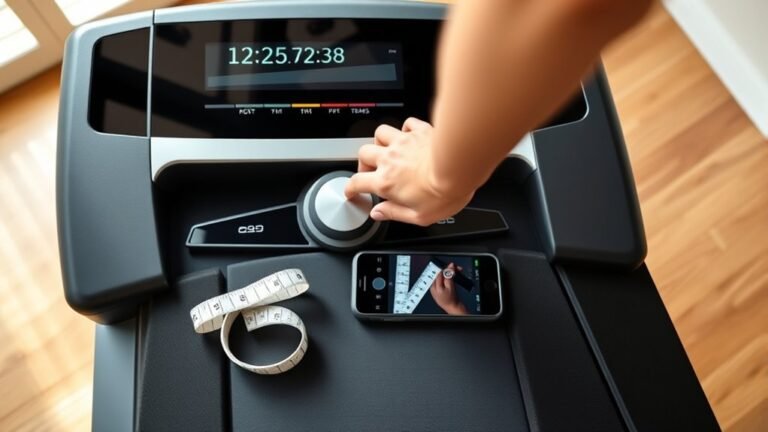
    To calibrate your treadmill for accurate distances, start by gathering tools like a measuring tape, stopwatch, and your treadmill’s manual. Make sure the treadmill is clear and level before you begin.

    Next, mark a known distance on the belt. Walk or run that distance at a steady pace, paying attention to any discrepancies between the display and the actual distance.

    You’ll want to adjust settings via the treadmill’s calibration menu to correct any errors you notice. After that, test the accuracy again to see if it matches up better.

    Don’t forget to maintain your treadmill regularly by cleaning and lubricating it. This helps keep those distance readings as precise as possible.

    Keep going to uncover detailed steps and expert tips!
  • Are RDLS Better With Dumbbells or Barbell?

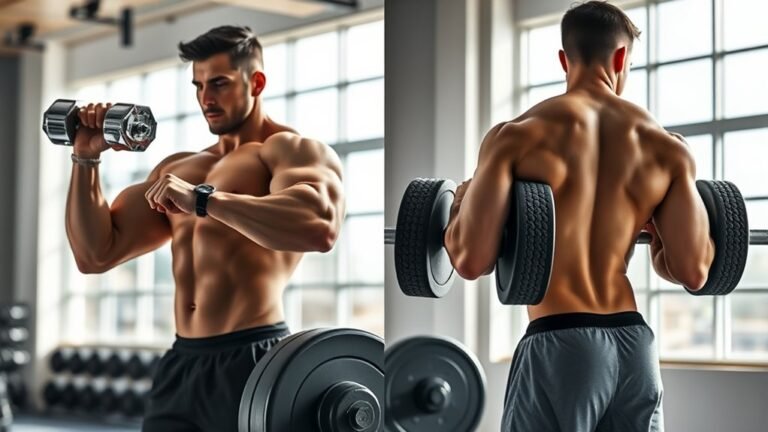
    If you want to improve muscle balance, control, and engage stabilizers, Romanian deadlifts (RDLs) with dumbbells are your best bet because they allow a greater range of motion and fix imbalances.

    However, barbells let you lift heavier weights more safely with better stability, helping you build strength faster, especially in primary muscles.

    Your choice depends on your goals and experience level.

    Keep exploring to find which option suits your training style and needs best.

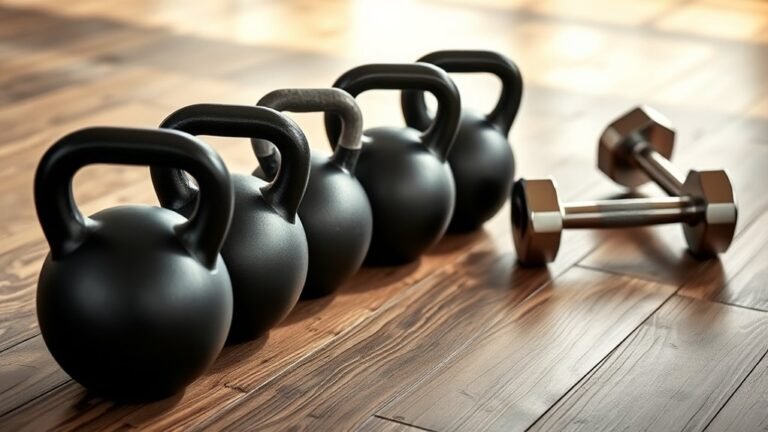
  • 10 Reasons Kettlebells Are Better Than Dumbbells

    Kettlebells give you a total-body workout that improves functional strength, stability, and coordination more than dumbbells. They boost your heart rate with dynamic swings, burning more calories while building serious grip and core strength.

    Their off-center weight challenges your balance and joint mobility, reducing injury risk. Plus, kettlebells require less space and offer versatile moves you can’t do with dumbbells.

    Keep exploring, and you’ll find how kettlebell training can transform your fitness routine. It’s pretty amazing what a difference they can make!

  • How to Determine If Gyms Are Profitable

    To determine if gyms are profitable, track member growth, retention rates, and reasons people leave to guarantee steady income. Analyzing these helps you spot trends and fix issues early.

    Also, look at diverse revenue streams like personal training, merchandise, and classes to boost margins. It’s not just about membership fees—these extras can really add up.

    Understand fixed and variable costs. Don’t forget to consider how the location impacts traffic and demand. A great spot can make a big difference.

    Measure marketing success and staff productivity to maximize efficiency. If your team is performing well, your gym will run smoother.

    Finally, focus on customer experience to build loyalty and community. Happy members tend to stick around and bring friends.

    Staying on top of these factors will give you deeper insights into your gym’s financial health. It’s all about keeping a close eye on the details.

  • How to Use Ellipticals Without Making Your Knees Bad

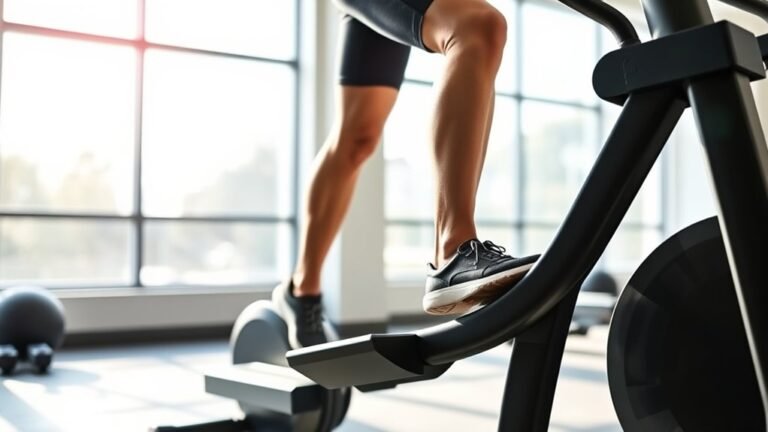
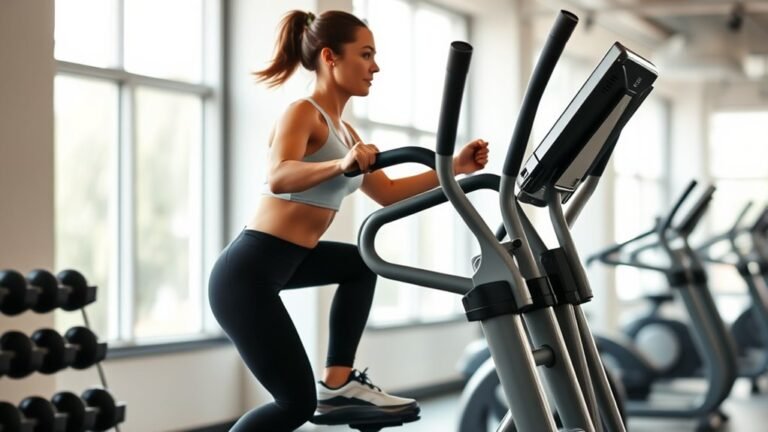
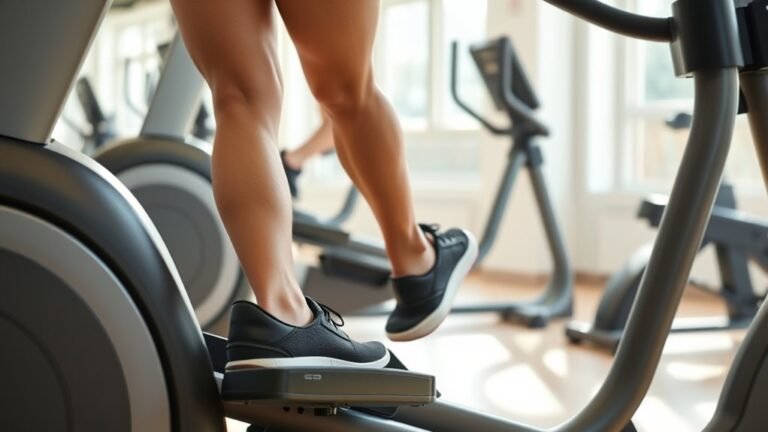
    To safeguard your knees on an elliptical, keep your knees slightly bent and aligned with your feet while pedaling smoothly and steadily. Use a machine with adjustable stride and low resistance to avoid strain.

    Also, place your feet flat and centered on the pedals. This helps keep everything balanced.

    Engage your core and maintain good posture with relaxed shoulders. It makes a big difference in how your knees feel.

    Don’t forget to warm up before and cool down after your workout to prevent injury.

    If you want to make sure your knees stay healthy, there are important techniques and tips worth exploring.

  • How to Use Elliptical Trainers for Good Knees Safely

    To protect your knees on an elliptical, keep your knees aligned over your toes and slightly bent throughout. Use a smooth, controlled motion with feet centered on pedals and toes pointing forward.

    Start at a low resistance and moderate incline to avoid joint strain, and engage your core for stability. Warm up before and cool down after your workout, and watch for any discomfort.

    If you want to master safe elliptical techniques and knee care, keep exploring essential tips ahead. It’s all about staying comfortable and injury-free while you exercise!

  • How to Protect Your Knees From Bad Effects on Elliptical Machines

    To protect your knees on an elliptical, choose a machine with smooth, adjustable resistance and a natural stride length. This helps reduce joint stress.

    Keep your feet flat and aligned straight ahead. Make sure your knees track over your toes to avoid unnecessary strain.

    Start with low resistance and a moderate incline. Maintain an upright posture with your core and hips engaged.

    Don’t forget to warm up before your workout and cool down afterwards. Strengthening your leg and hip muscles also supports your knees.

    Want to fully safeguard your knees? It helps to understand these strategies in detail.

  • Are Elliptical Machines Bad for Knees and How to Protect Joints

    Elliptical machines aren’t bad for your knees when you use them right—they offer low-impact exercise that’s gentle on joints. To protect your knees, keep your knees aligned with your feet, avoid locking joints, use smooth, controlled motions, and start with a low incline and resistance.

    Strengthening surrounding muscles like your quads and hamstrings also helps support your knees. If you want to extend your workout safely and prevent discomfort, there are simple adjustments and exercises to contemplate. Just take it slow and listen to your body!

  • Are Dumbbells HSA Eligible for Fitness Equipment?

    You can’t use HSA funds to buy dumbbells unless a doctor prescribes them for a specific medical condition.

    Generally, dumbbells used for general fitness or weight loss don’t qualify as medical expenses under IRS rules.

    To use your HSA on fitness equipment, it needs to be medically necessary, supported by a healthcare provider’s documentation.

    If you want to make smart HSA choices for your health, understanding what’s allowed can really help.

  • Are Dumbbells FSA Eligible and How to Use Your FSA for Fitness Equipment

    You generally can’t use your FSA to buy dumbbells unless a healthcare provider prescribes them for a specific medical condition, like physical therapy. FSAs cover medical expenses, not general fitness gear.

    But if you have a letter of medical necessity, some fitness equipment might qualify. Always keep receipts and documentation when submitting claims.

    If you want to explore how to maximize your FSA for fitness-related health needs and required paperwork, there’s more helpful information ahead.